When you’re a physical therapist, words matter as much as hands. The ability to explain pain, reassure a patient, or guide a recovery process depends on clear, confident communication. Now imagine doing that with Spanish-speaking patients—without the right language tools. Something feels missing.
That’s why Business Spanish for physiotherapists is most powerful when it’s learned through real life, not just textbooks. True fluency grows when medical Spanish becomes part of daily rhythm: talking, listening, asking questions, laughing, and even making mistakes.
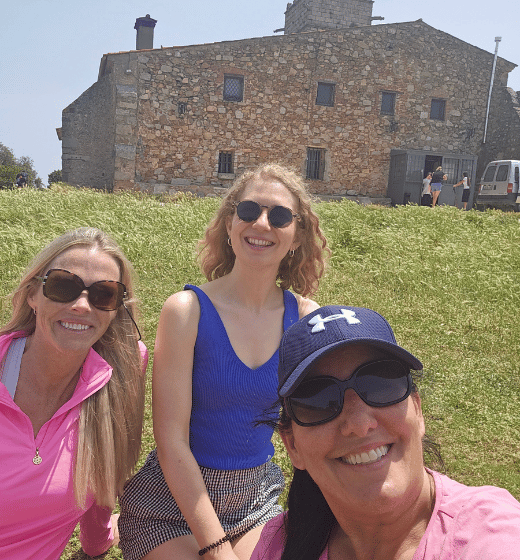
In this article, we share the story of Karen, a physiotherapist from California who chose a Spanish Homestay Immersion Program across two destinations, Valencia and Barcelona, to develop professional Spanish that truly works in clinical and human settings.
Meet Karen – A Physiotherapist with a Clear Vision
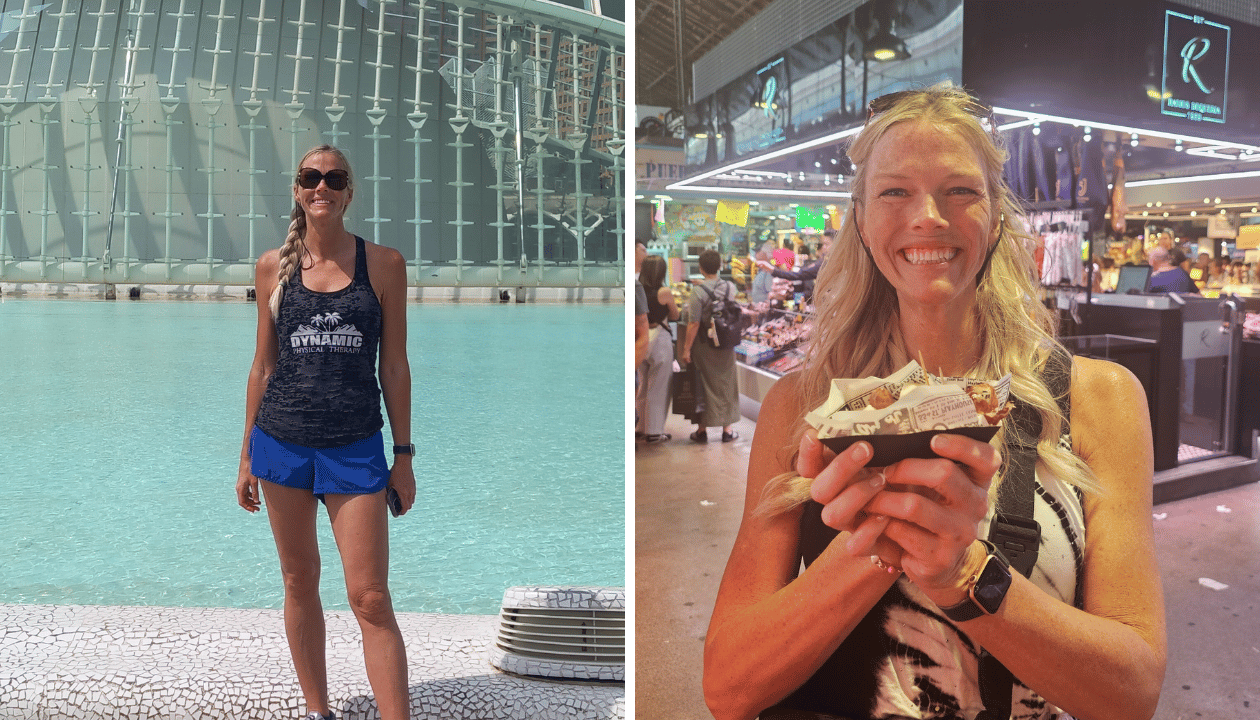
Karen arrived in Spain with curiosity, discipline, and a very clear goal. As a practicing physiotherapist, she wanted to communicate confidently with Spanish-speaking patients—both in California and during her future volunteer work in Latin America.
Her objective wasn’t speed or perfection. It was clarity, empathy, and real-world confidence. She wanted to:
- Explain treatment plans in Spanish
- Ask the right clinical questions
- Build trust with patients and families
- Feel natural using medical and business Spanish in daily professional situations
To support that vision, Karen chose a dual-destination immersion, working closely with two host teachers, each offering a different learning environment and cultural rhythm.
Two Teachers, Two Destinations, One Immersion Experience
Pilar in Valencia – Learning Spanish Through Movement, Culture & Precision
Pilar worked with Karen in Valencia, where the immersion focused on structured professional language, cultural interaction, and movement-based learning.
From the very beginning, Pilar observed Karen’s professional mindset.
“She didn’t want phrases just to memorize,” Pilar explains. “She wanted language she could use immediately with patients.”
Sessions blended:
- Medical Spanish vocabulary
- Business communication for appointments and reports
- Real-life practice through excursions and daily interactions
Valencia’s open spaces, markets, and coastal atmosphere made learning dynamic and practical.
Monica in Barcelona – Living the Language in Everyday Life
Karen’s second immersion took place in the Barcelona area, guided by Monica in Barcelona and the surrounding Maresme region.
Here, the focus shifted toward daily-life fluency, spontaneity, and confidence in fast-paced conversations.
“This wasn’t a typical course,” Monica recalls.
“It was a life experience. Spanish happened in kitchens, on walks, at the table—where language becomes real.”
Karen practiced:
- Patient intake conversations
- Phone calls and scheduling
- Writing short professional notes
- Navigating social and professional interactions naturally
Together, both destinations formed one continuous immersion, reinforcing the same professional goals through different cultural lenses.
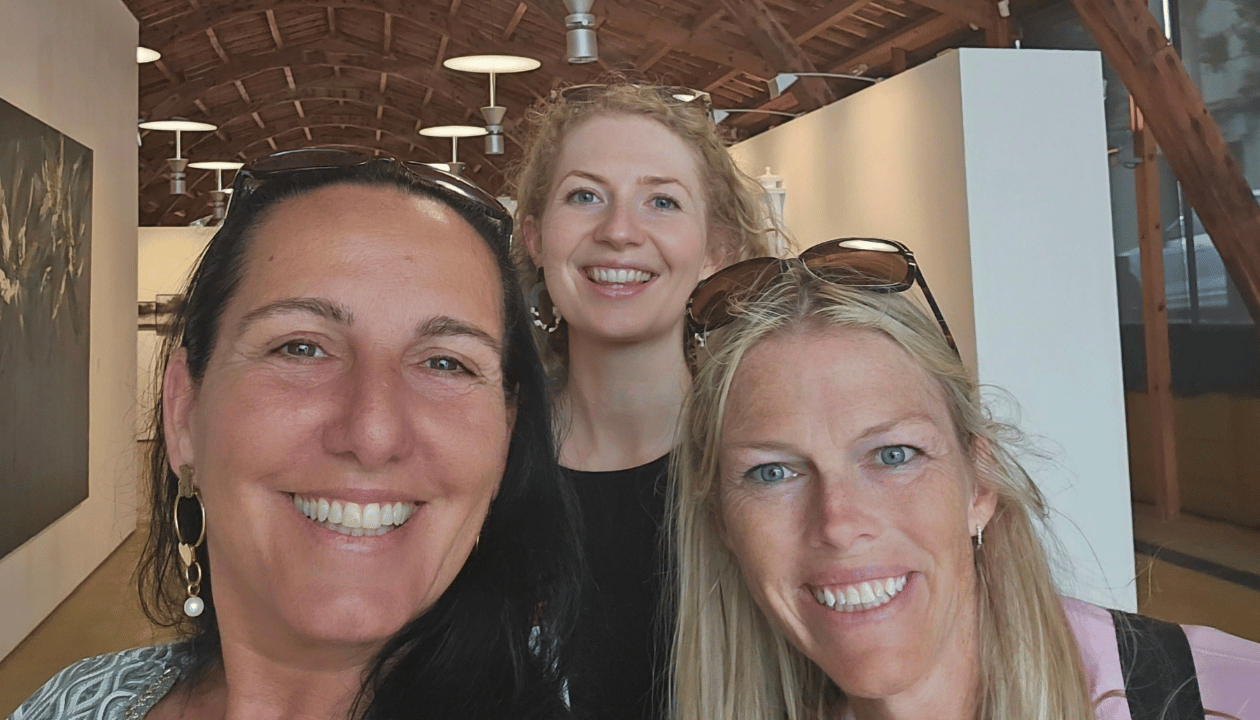
Immersion in Action: Karen’s Experience in Valencia with Pilar
Karen’s time in Valencia was designed to strengthen her professional Spanish through structure, clarity, and purposeful interaction. Working with Pilar, the immersion focused on using Spanish accurately and confidently in real contexts, always connected to Karen’s work as a physiotherapist. Valencia’s open spaces, cultural landmarks, and slower rhythm created the ideal environment to practice precise language without pressure.
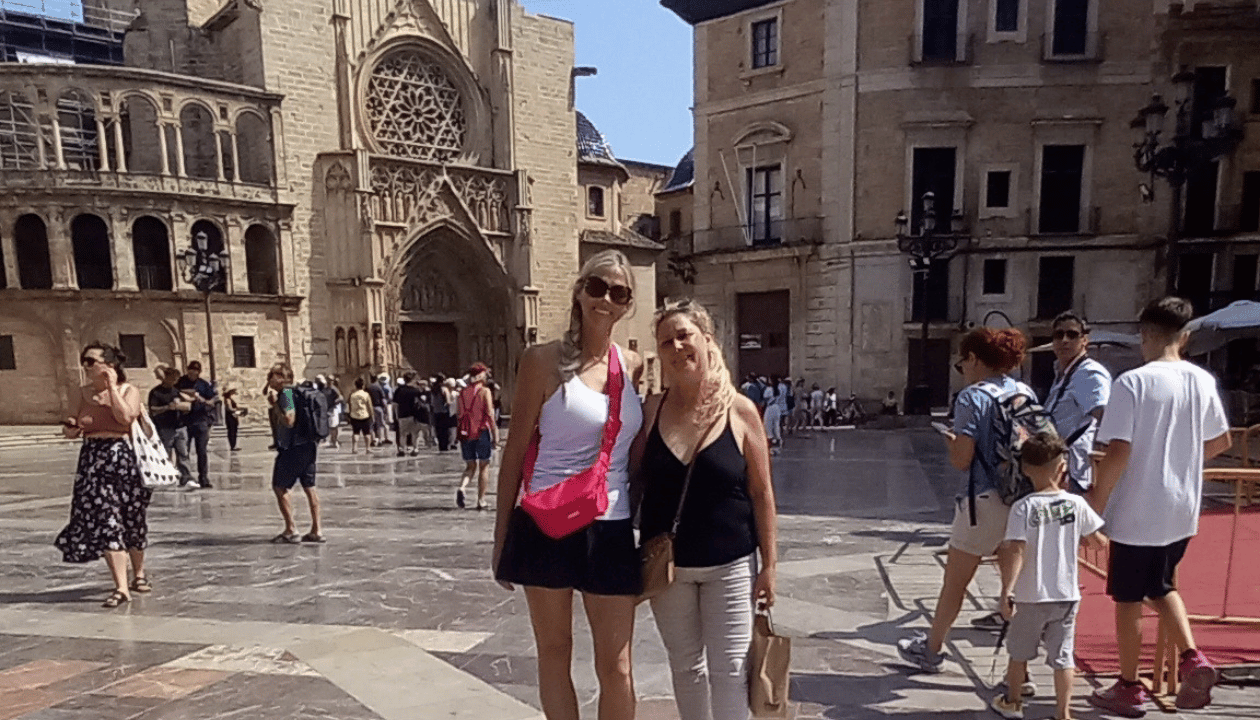
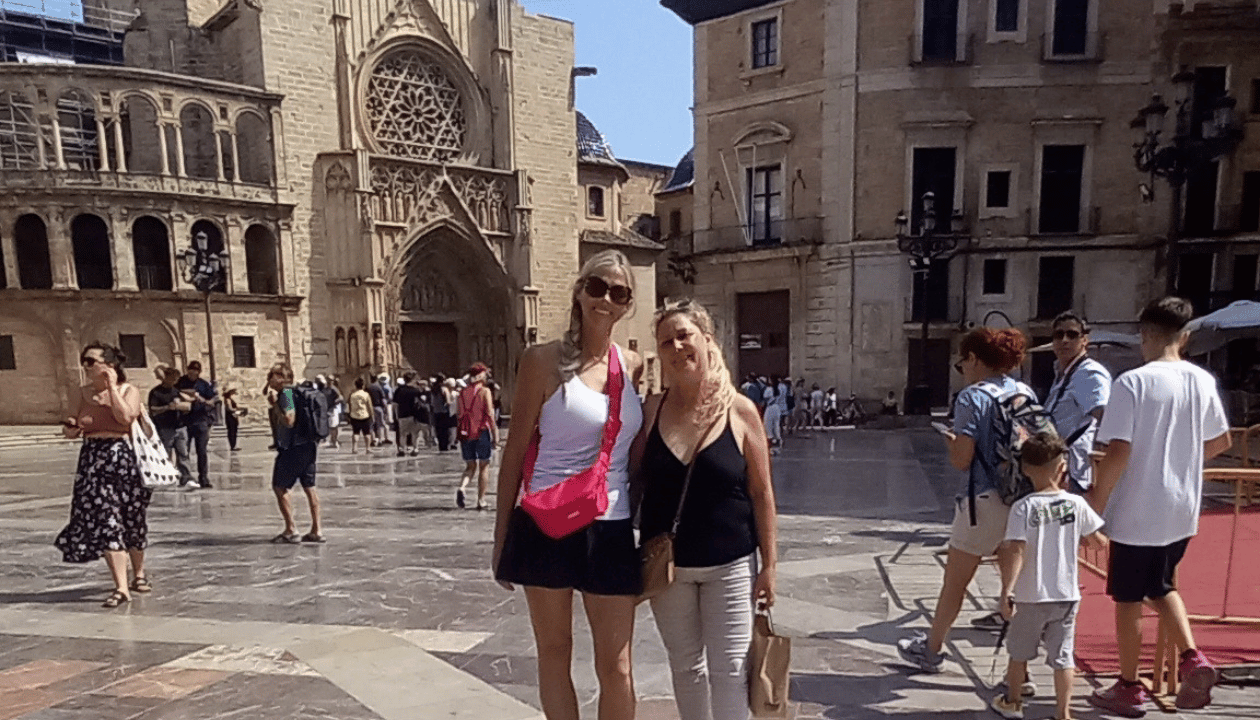
Valencia Historic Center
Walking through Valencia’s historic center became a daily exercise in clear, professional communication. As Karen moved through plazas, churches, and narrow streets, Pilar guided conversations that required careful listening and thoughtful responses. Asking for information, understanding explanations, and describing locations helped Karen refine the kind of Spanish she would later use with patients—calm, structured, and intentional. The historic setting encouraged slower conversations, allowing Karen to focus on accuracy, pronunciation, and polite professional tone, all essential when explaining procedures or responding to patient concerns.
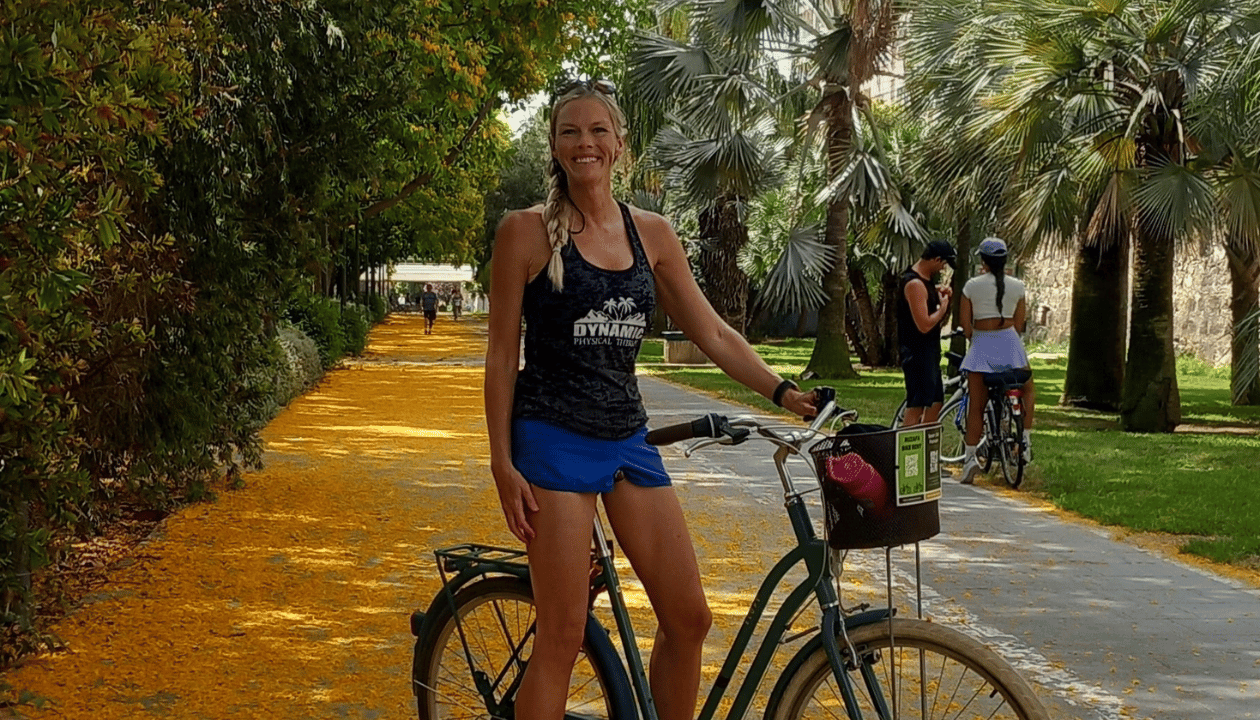
Turia Garden and Ciudad de las Artes y las Ciencias
The bike tour through the Turia Garden and the City of Arts and Sciences was especially meaningful for Karen as a physiotherapist. Movement naturally became part of the language practice. As she cycled, she described physical sensations, posture, balance, and fatigue, linking Spanish body-part vocabulary to real experience. Pilar used these moments to reinforce correct grammar and natural phrasing, helping Karen speak about the body in a way that sounded both professional and human. This excursion showed her how medical Spanish can feel intuitive when it is learned through action rather than memorization.
Paella Experience in Valencia
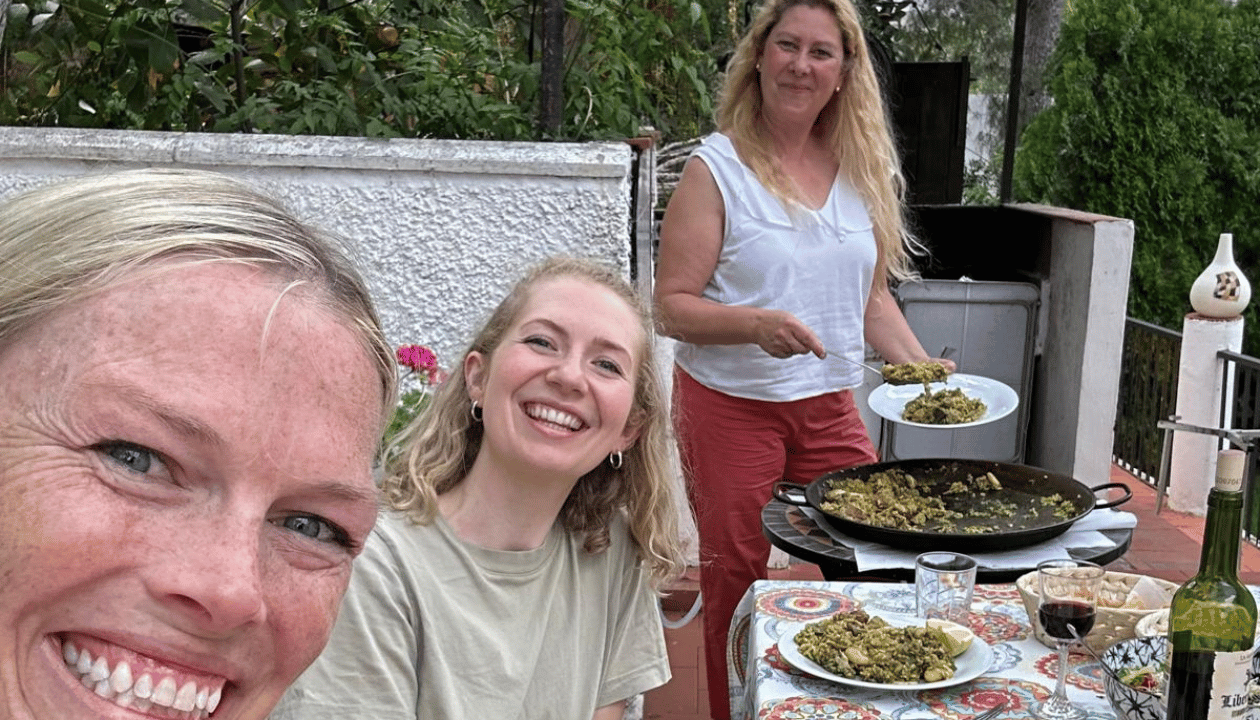
Sharing a paella meal offered a different but equally important layer of immersion. Around the table, Spanish shifted from technical language to relational communication. Karen practiced the kind of conversation that builds trust—expressing opinions, reacting naturally, and maintaining a professional yet warm tone. These moments mirror real-life interactions in healthcare, where connection often happens outside formal treatment. The relaxed environment allowed Karen to speak freely while still receiving gentle correction, helping her grow more confident in social and professional settings alike.
Port Saplaya – Horchata by the Sea
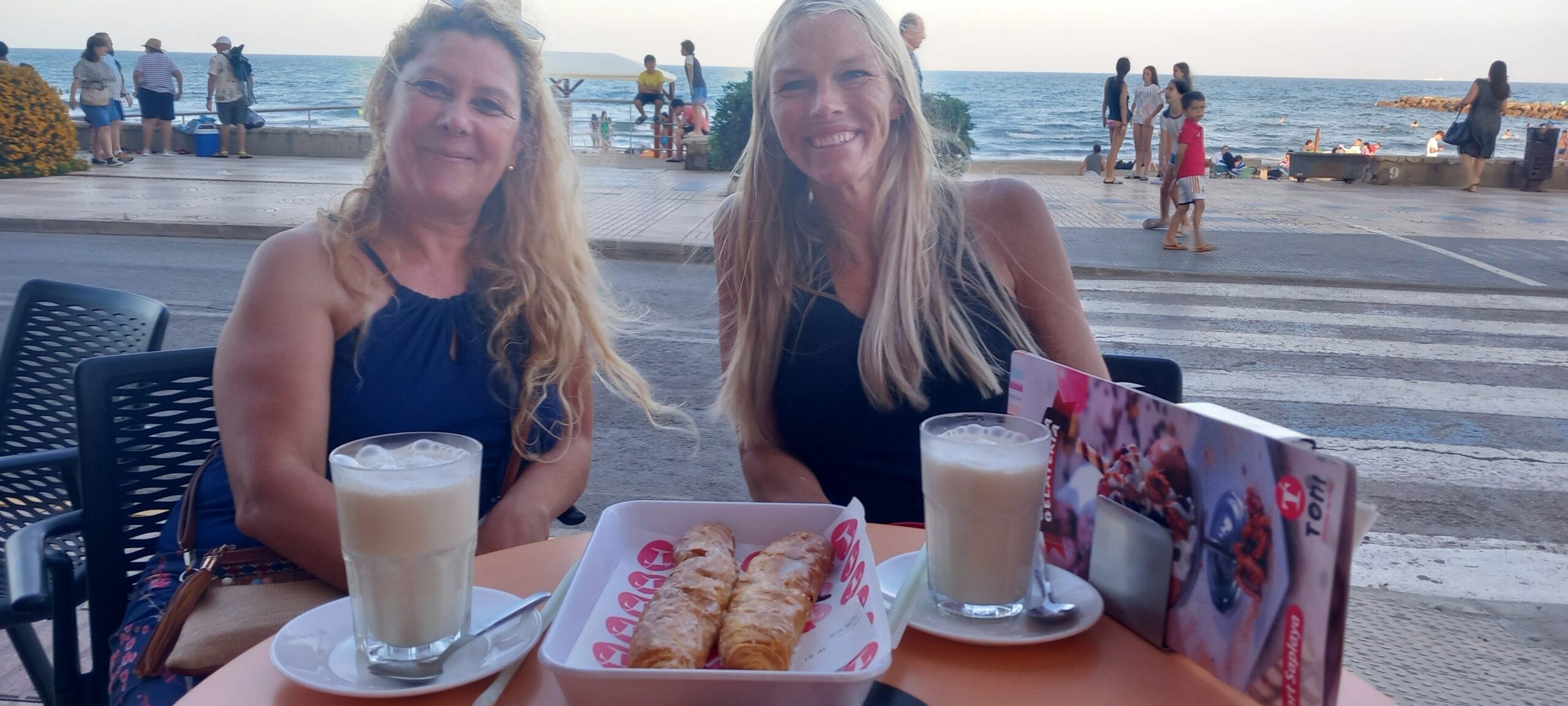
The visit to Port Saplaya introduced spontaneous, unscripted Spanish. Ordering horchata and interacting with locals required Karen to respond in real time, without preparation. Pilar encouraged her to trust what she already knew, helping her move past hesitation. These moments strengthened Karen’s ability to understand natural speech and respond calmly, a crucial skill when patients speak informally or emotionally. The coastal setting made the experience enjoyable while reinforcing the importance of listening closely and responding with clarity.
San José Caves (Vall d’Uixó)
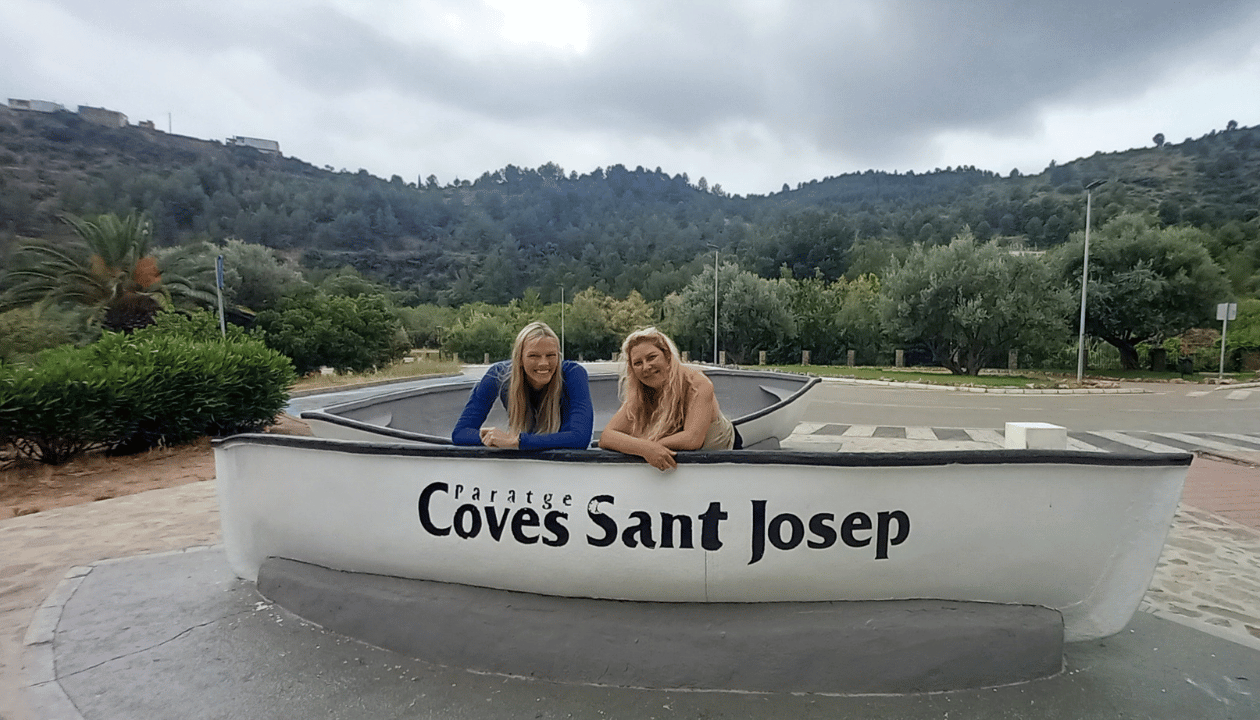
The excursion to the San José Caves was a full-day immersion that demanded sustained use of Spanish over several hours. As Karen moved through the caves, she described sensations such as temperature changes, physical movement, and emotional reactions. Pilar guided her in organizing her thoughts clearly, helping her explain experiences step by step. This practice closely reflected clinical communication, where physiotherapists must describe processes, sensations, and progress in a calm, logical way. By the end of the day, Karen felt more confident maintaining professional Spanish for extended periods without mental fatigue.
Immersion in Daily Life: Karen’s Experience in Barcelona with Monica
Karen’s immersion in the Barcelona area focused on natural fluency, adaptability, and confidence in real-life communication. Working with Monica, Spanish was no longer something to prepare for—it was something that happened continuously throughout the day. The Maresme region and the city of Barcelona provided varied contexts, from quiet village life to fast-paced urban environments, allowing Karen to experience Spanish as it is truly used by patients, colleagues, and communities.
Dosrius – Learning Where Life Happens
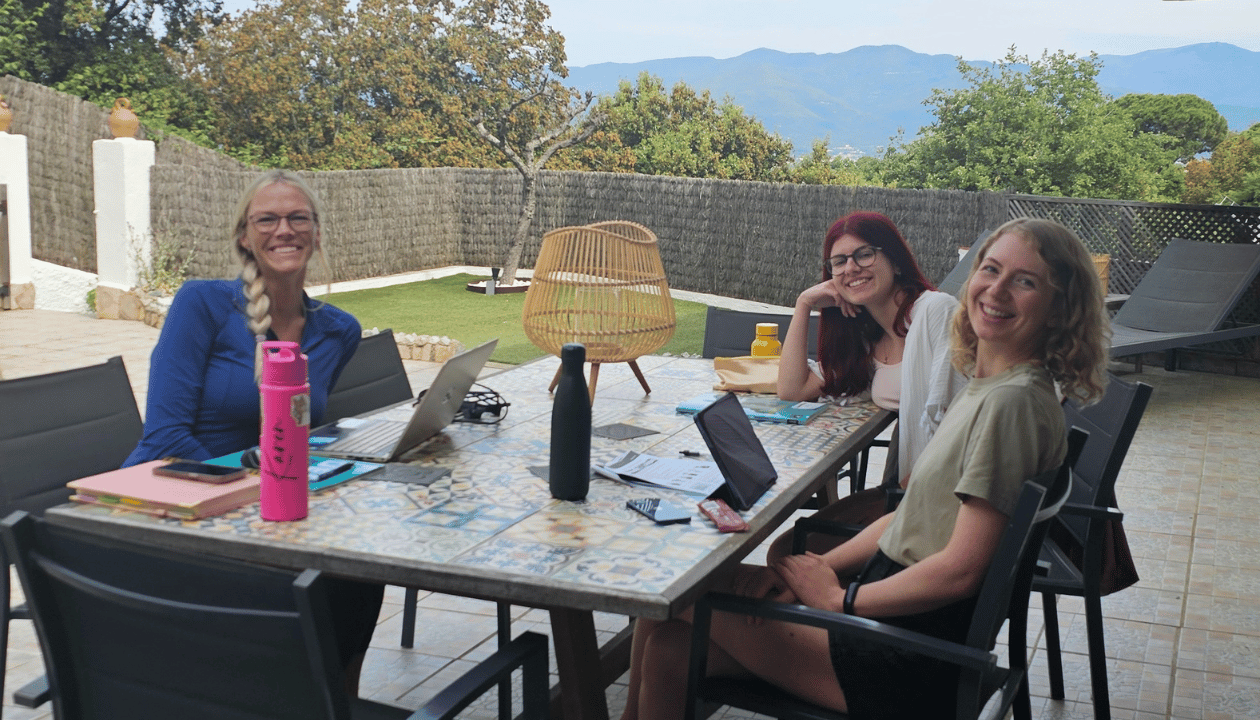
In Dosrius, Spanish became part of Karen’s daily routine from morning to night. Conversations unfolded naturally during breakfast, walks, and shared household moments. Monica used these everyday situations to refine Karen’s ability to explain plans, ask questions clearly, and respond thoughtfully. This environment helped Karen internalize Spanish rather than translate it mentally, a key step toward professional fluency. The calm rhythm of village life allowed her to focus on precision, pronunciation, and tone without pressure.
Argentona – Spanish in the Market and the Streets
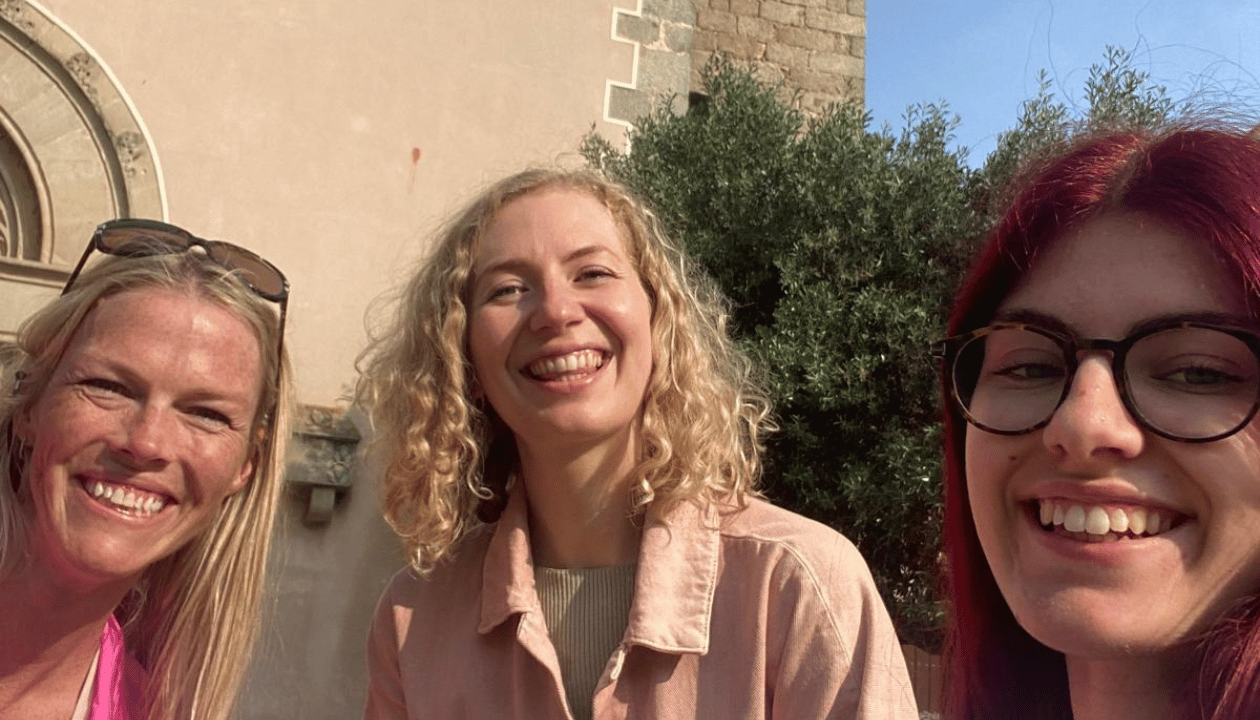
Visits to Argentona introduced Karen to practical, unscripted communication. Interacting with shopkeepers and locals required her to listen closely, adapt her questions, and clarify information when needed. Monica guided her through these exchanges, helping her remain confident even when conversations moved quickly or took unexpected turns. This kind of practice closely mirrors clinical situations, where patients explain symptoms in their own words and professionals must respond with clarity and empathy.
Mataró – Managing Spanish in Busier Settings
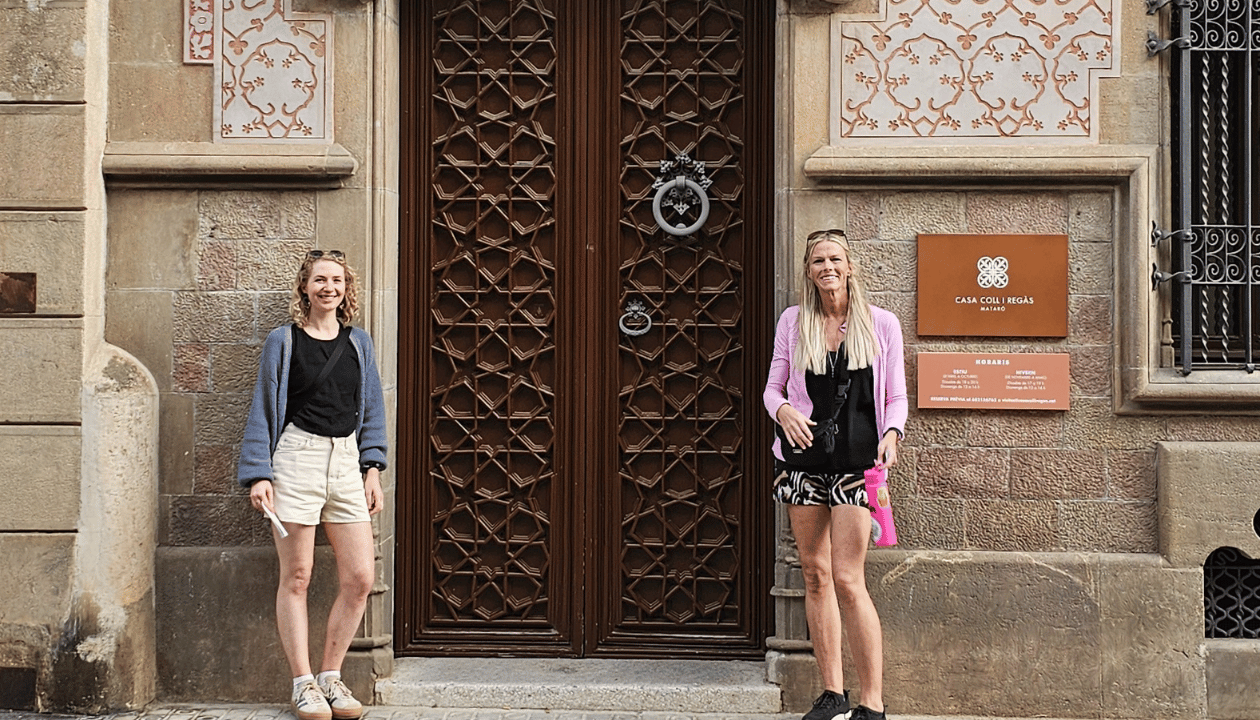
Mataró added a faster pace to Karen’s immersion. Conversations happened amid background noise, movement, and multiple speakers, requiring her to process information efficiently while maintaining accuracy. Monica encouraged her to stay calm and focused, reinforcing the importance of clear structure when speaking. This experience closely resembled real healthcare environments, where distractions are common and professionals must still communicate effectively and respectfully.
Premià de Mar and the Roman Museum
The visit to Premià de Mar and its Roman museum shifted the focus toward explanation and storytelling. Karen practiced describing historical processes, timelines, and cause-and-effect relationships in Spanish. These narrative skills are directly transferable to her profession, where explaining treatment plans, recovery stages, and progress over time requires clear and logical language. The museum setting allowed Karen to slow down her speech while improving structure and coherence.
Parc del Montnegre i el Corredor – Reflection and Precision
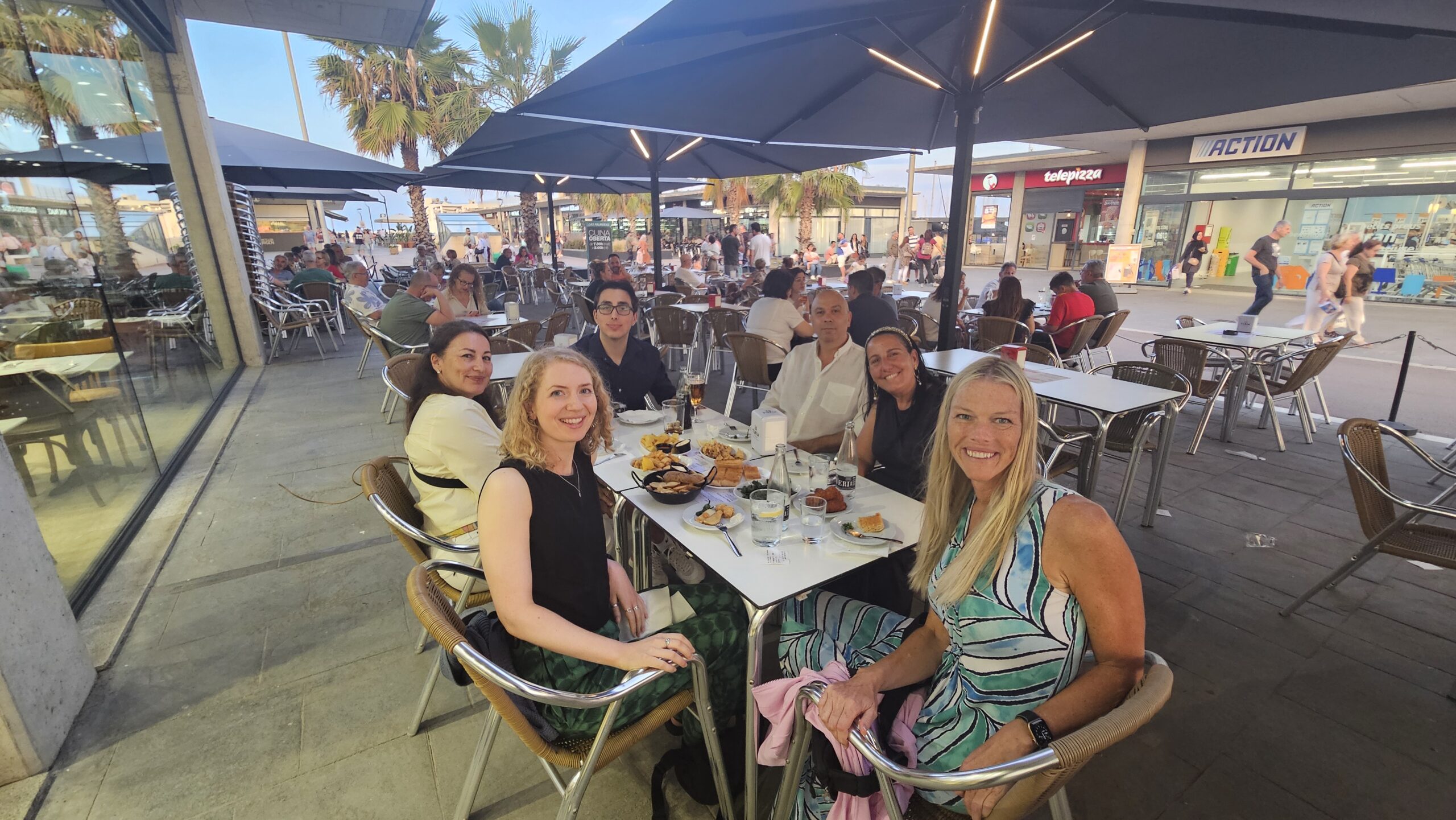
Nature walks in the Montnegre i el Corredor Natural Park created space for deeper, more reflective conversation. Without the pressure of crowds or noise, Karen focused on accuracy, nuance, and intentional expression. Monica used this setting to help her refine grammar and pronunciation while maintaining a natural flow. These moments reinforced that professional Spanish is not about speaking faster, but about speaking clearly and with purpose.
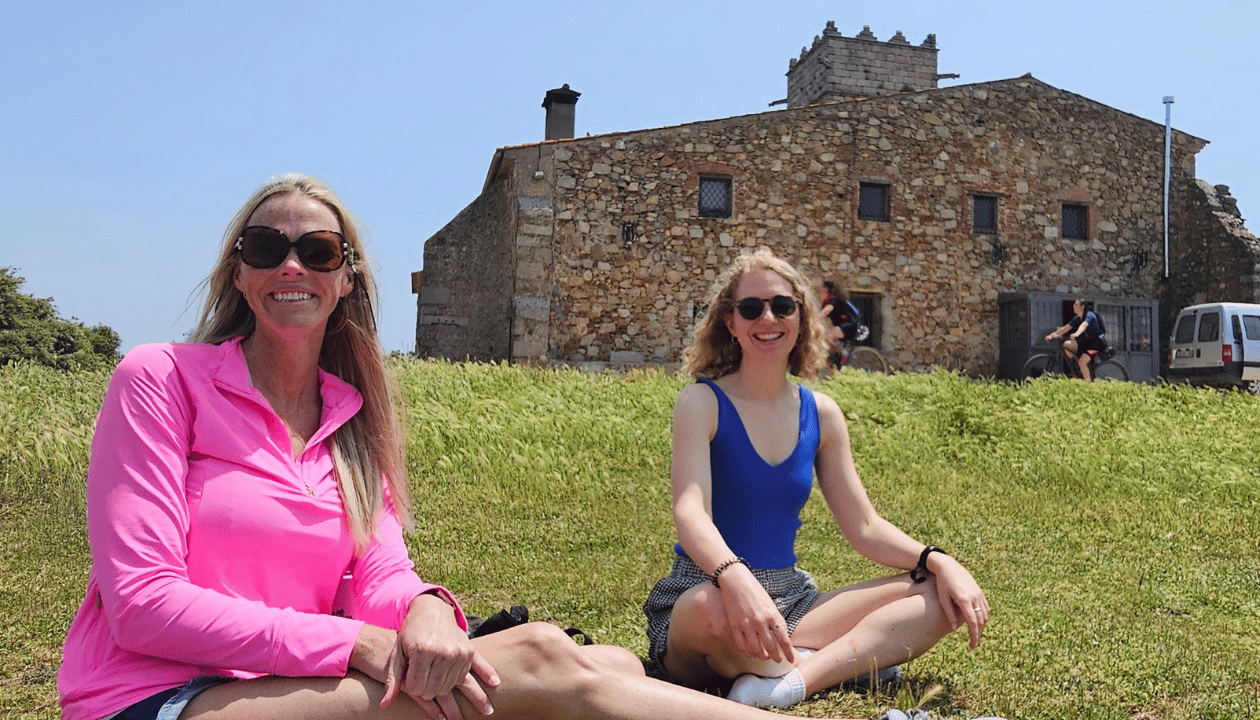
Group Route in Barcelona – Real Urban Communication
Group outings in Barcelona brought all elements of the immersion together. Karen navigated fast conversations, multiple accents, and spontaneous interactions in a dynamic urban setting. Monica supported her in staying engaged and confident, even when conversations overlapped or changed direction quickly. This experience prepared Karen for real professional scenarios involving colleagues, families, and patients, where communication rarely happens one-on-one, and adaptability is essential.
How Barcelona Completed the Immersion
While Valencia helped Karen build structure and precision, Barcelona strengthened her fluency, listening endurance, and confidence in unpredictable situations. Together, both destinations formed a complete Business & Medical Spanish immersion, allowing Karen to move comfortably between careful explanation and natural conversation—exactly what her profession requires.
Ready to Experience Spanish in Real Life?
Karen’s journey shows what’s possible when Spanish is learned where it truly lives—in homes, on the streets, during shared meals, and in meaningful professional conversations. That is the heart of the Spanish Homestay Immersion Program (SHIP): personalized learning guided by experienced host teachers, across inspiring destinations, with language that stays with you long after the program ends.
Whether you are a healthcare professional, a working specialist, or simply someone who wants to communicate with confidence and cultural understanding, SHIP offers an immersion experience designed around real needs, real people, and real life.
If you’d like to explore available weeks, destinations, or find out whether this immersion approach is the right fit for you, you’re warmly invited to get in touch directly with our Founder and Director:
Mónica Romero
📞 Phone / WhatsApp: +44 7903 867894
📧 Email: monicaromero@spanishexpress.co.uk