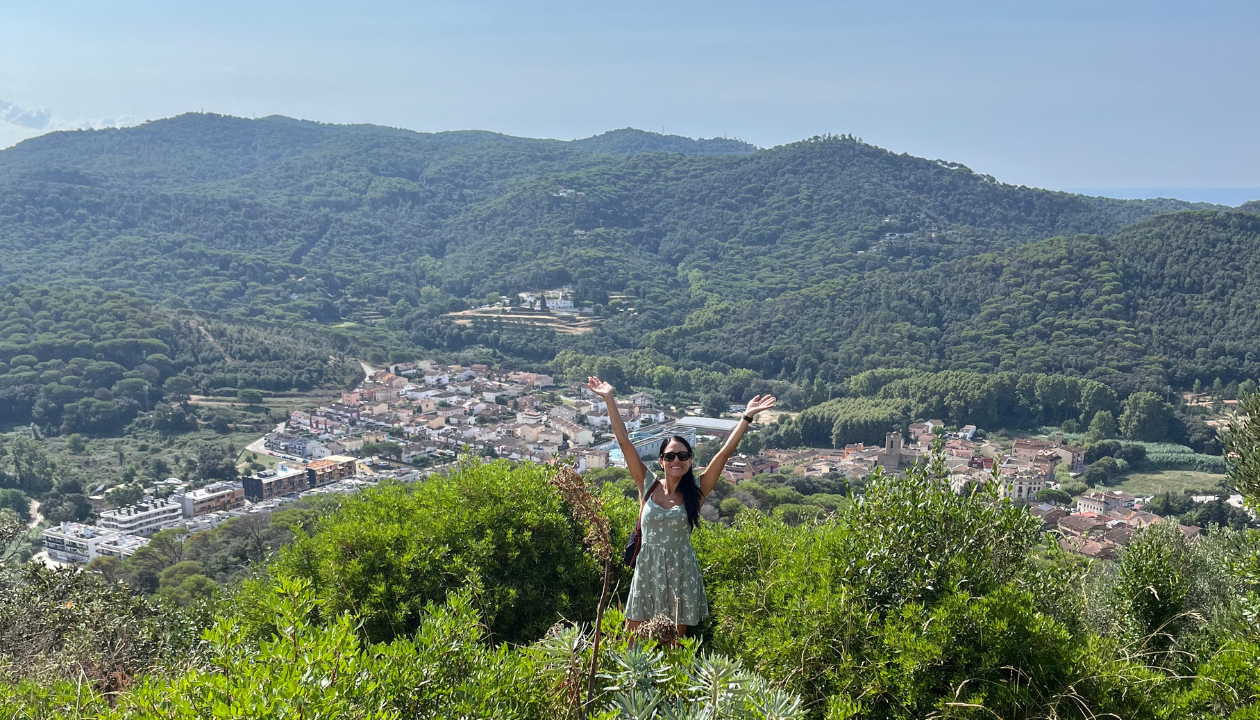
Hosting Janine for two weeks as part of my Spanish Homestay Immersion Programme (SHIP) was a very special experience, both professionally and personally. Janine lived and studied Spanish with me in Barcelona (Dosrius), a small and peaceful town on the El Maresme Coast, close to Barcelona.
With so many options for studying Spanish in Barcelona, it’s important to look beyond just the course schedule and consider the overall experience. There are many language schools in Barcelona, each offering unique opportunities for language immersion. The best language schools are accredited by reputable organizations like the Instituto Cervantes and are members of associations such as FEDELE, ensuring high standards for linguistic quality and cultural immersion. These schools attract a diverse student body, with the average age ranging from recent graduates in their early 20s to seasoned professionals in their 40s and 50s.
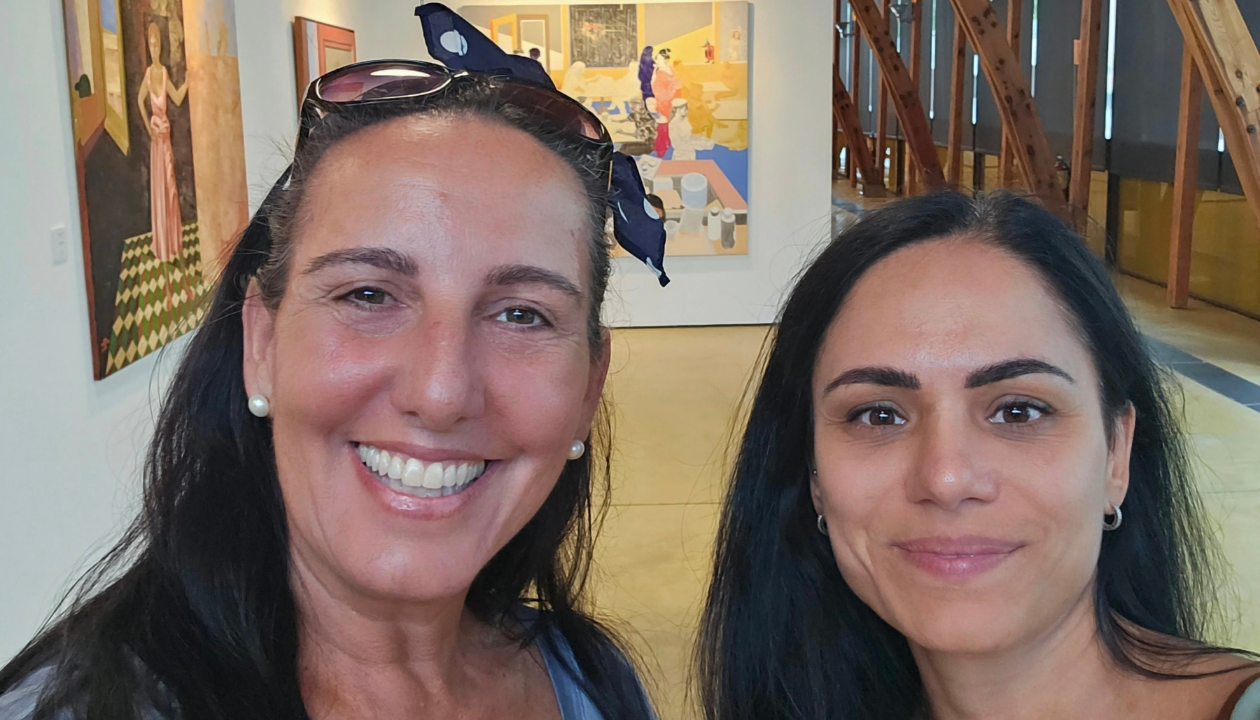
Janine arrived with an A2 level of Spanish from the Common European Framework of Reference for Languages (CEFR). Like many students at this level, she could already communicate in simple situations but wanted to feel more confident, speak more naturally, and better understand Spanish culture. Her main goal was not only to improve her grammar, but also to use Spanish in real life and feel comfortable doing so.
Barcelona is a bilingual city with two official languages, Catalan and Spanish, and both are used in daily life, government, and education. While both languages are official, the majority of residents use Spanish as their main language, but students will also hear and have the opportunity to speak Catalan. Students will have the chance to speak Spanish in real-life situations throughout the city.
This article shares Janine’s learning journey during her two-week stay with me, focusing on her language development, cultural immersion, and the strong personal connection that made this experience so successful.
Choosing the Right Program: Finding the Perfect Fit for Janine
When embarking on a journey to learn Spanish in Barcelona, finding the right Spanish language school is a crucial first step. For Janine, selecting a program that matched her learning style, goals, and interests made all the difference. With so many options for studying Spanish in Barcelona, it’s important to look beyond just the course schedule and consider the overall experience.
A high-quality language school will offer more than just Spanish lessons—it will provide a supportive environment where students can interact with native Spanish speakers, participate in engaging cultural activities, and immerse themselves in the Spanish language every day. Schools like Expanish Barcelona and Speakeasy BCN are known for their dynamic teaching methods, experienced teachers, and a strong focus on real-life communication. These programs often include a mix of classroom learning, cultural immersion, and opportunities to practice Spanish in authentic settings around Barcelona. Schools such as Speakeasy BCN are committed to supporting all our students throughout their learning journey, offering a wide range of course schedules and flexible durations designed to suit adult lifestyles.
By researching different language schools, comparing course structures, and reading about the experiences of other students, Janine was able to find a program that truly fit her needs, our Spanish Homestay Immersion Programme (SHIP). This careful selection process ensured that her language learning journey in Barcelona was not only effective, but also enjoyable and deeply connected to the local culture.
Language Learning Methodology: Setting the Standard
Our Spanish school in Barcelona (Dosrius) happens in my own home and offers a diverse range of Spanish courses to suit every learner. Whether you are just starting your journey with the Spanish language or looking to refine your skills as an advanced learner, as an experienced teacher, I can tailor each lesson to your needs, ensuring a dynamic and interactive learning process.
Cultural immersion is at the heart of our teaching method. Beyond the classroom, which could be indoors or outdoors, formal or on the go, students can participate in a variety of cultural activities, such as cooking classes, flamenco workshops, and guided tours of Barcelona’s rich history and vibrant neighborhoods. These experiences not only deepen your understanding of Spanish culture but also provide authentic contexts to use and develop your language skills.
Our language school makes it easy for students to explore Barcelona, discover its unique blend of Spanish and Catalan influences, and connect with both local and international students. Regular feedback and assessment help track your progress, and I am always available to guide you through your language learning journey.
Choosing our Spanish language school located in Barcelona ensures you receive top-quality instruction, a proven teaching method, and an unforgettable experience. Whether you want to study Spanish for travel, work, or personal enrichment, our school offers the perfect environment to learn Spanish, make new friends, and immerse yourself in the best of Spanish culture.
Living and Learning Together: The Heart of the Homestay Experience
One of the key strengths of a Spanish homestay programme is living in the teacher’s home. From the first day, Janine became part of daily life, not just a student attending lessons. Living with a local host, such as a Spanish or Catalan family, offers constant opportunities for language practice and the chance to enjoy traditional meals. Many students choose to stay with a host family for a more personal and immersive experience, but accommodation options in Barcelona also include student residences and shared apartments.
At home, Spanish was present all the time. We spoke Spanish during meals, while planning the day, on walks, and during relaxed conversations in the evening. This constant exposure helped Janine hear natural Spanish and use the language without pressure.
Because we lived together, Janine could ask questions at any moment. She often asked about expressions, pronunciation, or cultural habits. These spontaneous moments are extremely valuable for A2 learners, as they help turn passive knowledge into active language use.
Just as importantly, we got along very well from the beginning. Janine was open, curious, and respectful, and we quickly built a comfortable and friendly relationship. This positive atmosphere helped her feel relaxed, which is essential for language learning.
Spanish Classes Designed for an A2 Learner
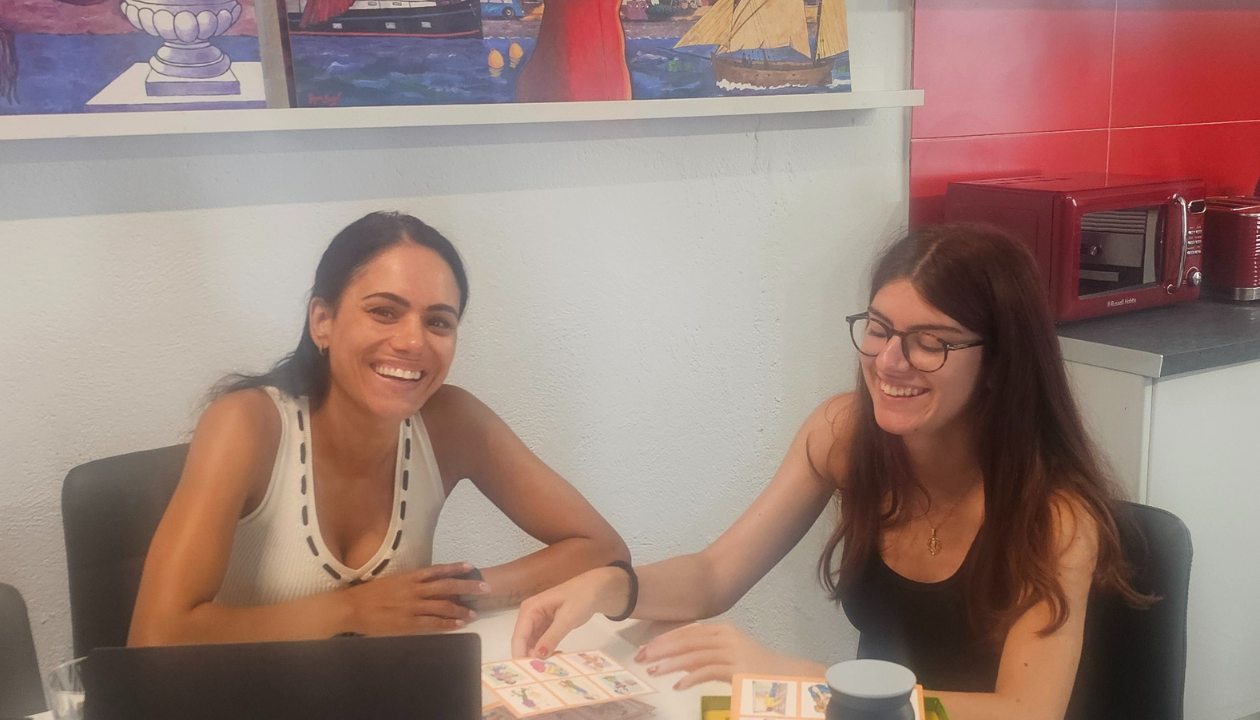
Janine also had some Spanish classes with Lydia, my teacher assistant, all carefully adapted to her A2 level. The classes were structured but flexible, allowing us to respond to her needs and interests. Our teaching method follows a structured approach to teaching Spanish, using a coherent curriculum that can be tailored for all proficiency levels, including advanced learners who want to refine their skills within a progressive program. At leading schools like Speakeasy BCN, all the teachers are native Spanish speakers with higher education studies in Spanish language or translation, ensuring expert and dedicated instruction.
The main focus of the lessons was:
- Speaking with confidence
- Improving listening skills
- Consolidating basic grammar
- Expanding practical vocabulary
Rather than studying isolated grammar points, we always connected the language to real situations Janine would experience during the day.
Building Confidence Through Grammar and Vocabulary
At A2 level, students often understand more than they can say. Janine was no exception. For this reason, a lot of our work focused on helping her use what she already knew.
She worked with:
- A cognates notebook, which helped her quickly recognise familiar words
- A verb notebook, focusing on the present tense and reflexive verbs
- Practice with first and third person verb forms
Little by little, Janine began to use verbs more confidently in conversation. She also became more aware of common patterns in Spanish, which helped her understand spoken language more easily.
Learning Through Games and Structured Materials
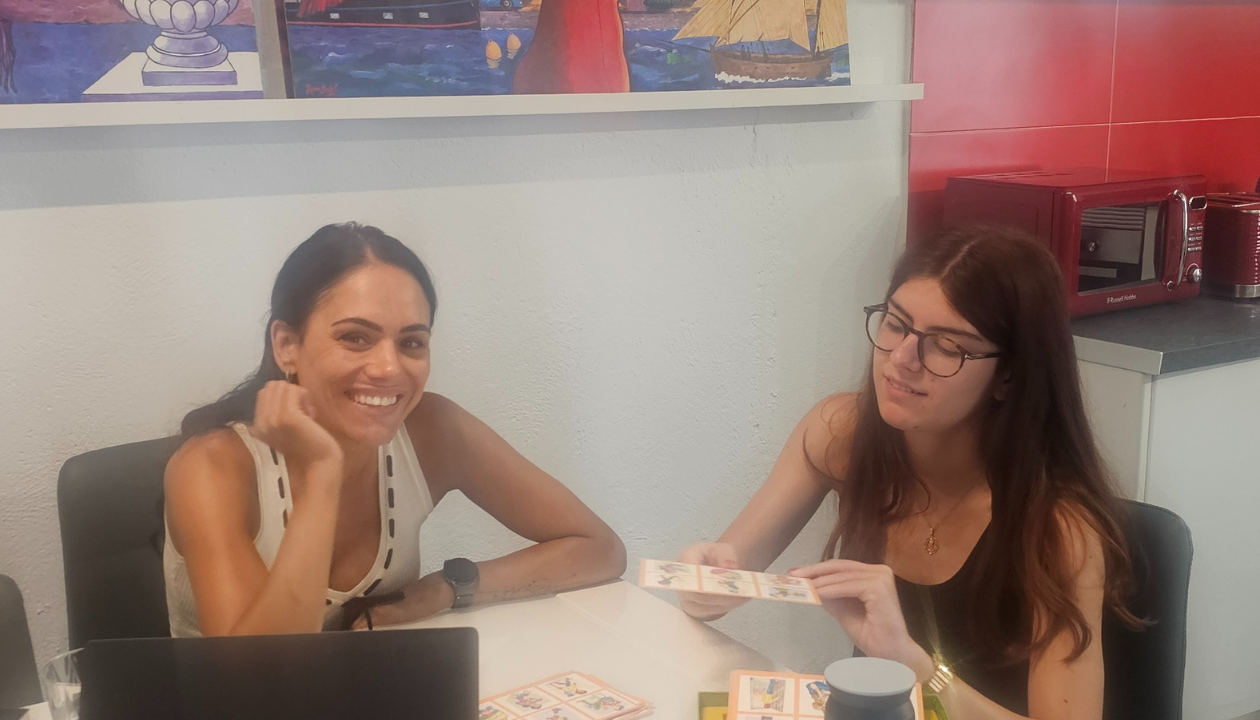
In addition to notebooks and conversation practice, Janine used structured materials such as Spanish for Holidays I and Spanish for Holidays II. These books provided a clear progression and helped reinforce everyday language.
We also used games as an important learning tool. Activities such as verb bingo and the Brain Box vocabulary game helped Janine learn new words in a relaxed way. These games focused on vocabulary related to time, family, shopping, and food — all essential topics for daily communication.
By the end of the programme, Janine recognised and understood many more verbs than at the beginning, and she was much quicker to use them when speaking.
Learning Spanish Through Daily Life and Activities
One of the most effective aspects of Janine’s experience was learning Spanish outside the classroom. Every excursion and activity was an opportunity to practice language and learn about culture at the same time. In addition to classroom lessons, students can enjoy a variety of fun activities such as excursions and social events, making learning Spanish enjoyable and memorable.
Janine practiced Spanish by:
- Listening to explanations
- Asking simple questions
- Describing places
- Ordering food
- Talking about what she saw and felt
Students can also participate in local weekly activities such as cooking classes, dance lessons, and city tours, providing real-life contexts to practice Spanish and deepen their cultural understanding.
This immersive learning process not only supports language mastery but also helps students pick up natural accents, colloquial expressions, idioms, and slang that are rarely taught in textbooks.
These real-life situations helped her connect Spanish with meaning, not just rules.
Discovering Dosrius: Language in a Calm Environment
Janine stayed with me in Barcelona (Dosrius) for the entire programme. This small village offered a calm and supportive environment, perfect for an A2 learner.
We explored the town together and visited important local places, including the Town Hall, the church of Sant Iscle and Santa Victòria, the public washhouse “El Comú,” and the artistic forest of Ernest Borràs. These walks allowed Janine to learn vocabulary related to villages, buildings, and nature.
Because Dosrius is not a tourist town, Janine experienced real local life. This helped her understand how Spanish is used naturally and gave her confidence to listen and speak without feeling overwhelmed.
Castillo de Dosrius: History, Nature, and Conversation
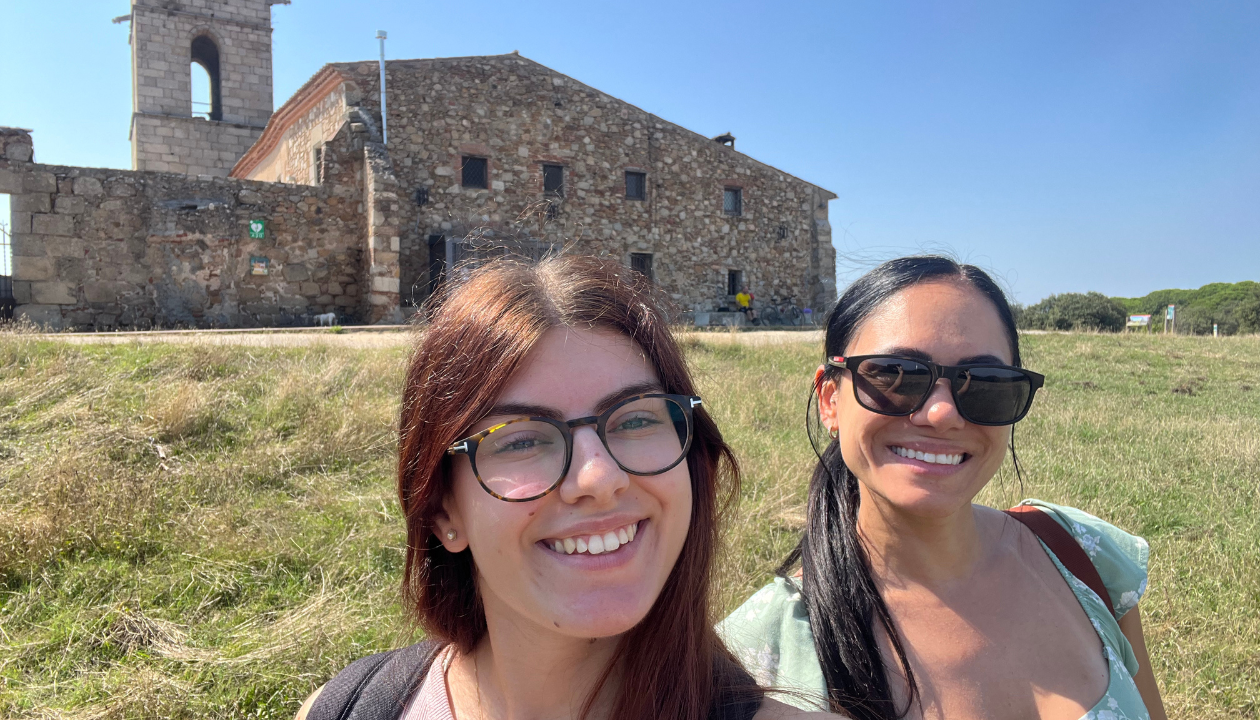
We also visited the Castillo de Dosrius with Lydia. This excursion combined local history with nature and conversation practice.
Janine learned to describe places using simple adjectives and practiced talking about what she could see around her. The relaxed environment helped her speak more freely, without worrying too much about mistakes.
Santuario del Corredor: Learning Language Through Nature
A highlight of the programme was our visit to the Santuario del Corredor. This natural park offered the perfect setting to learn vocabulary related to nature, landscapes, and weather.
Janine also worked with a simple workbook about the park, underlining basic words and writing their meanings. This activity helped reinforce vocabulary in context, which is especially effective for A2 learners.
Argentona: Culture, History, and Listening Practice
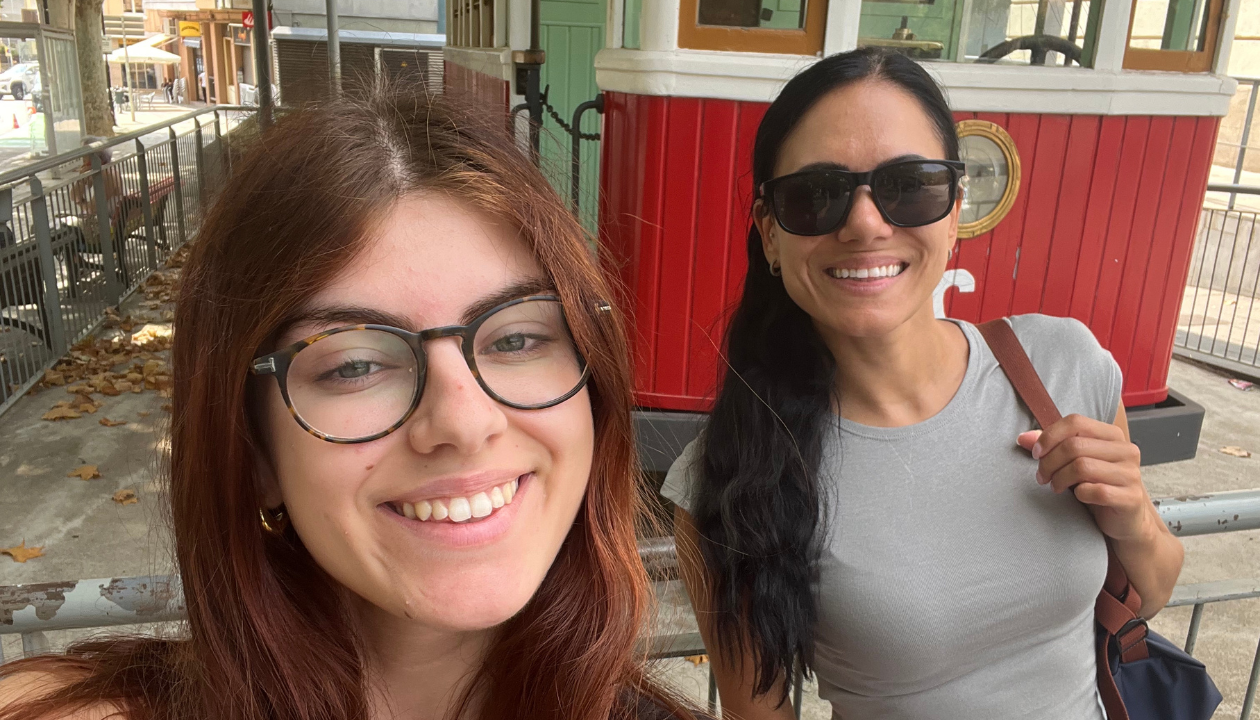
Together with my teacher assistant Lydia, we visited Argentona. We explored the town centre and visited several cultural sites, including the Museu del Càntirand one of the first trams in Spain.
This visit required a lot of listening, which helped Janine improve her comprehension skills. She also practiced asking questions and responding to explanations, an important step towards more confident communication.
Premià de Mar: Social Spanish by the Sea
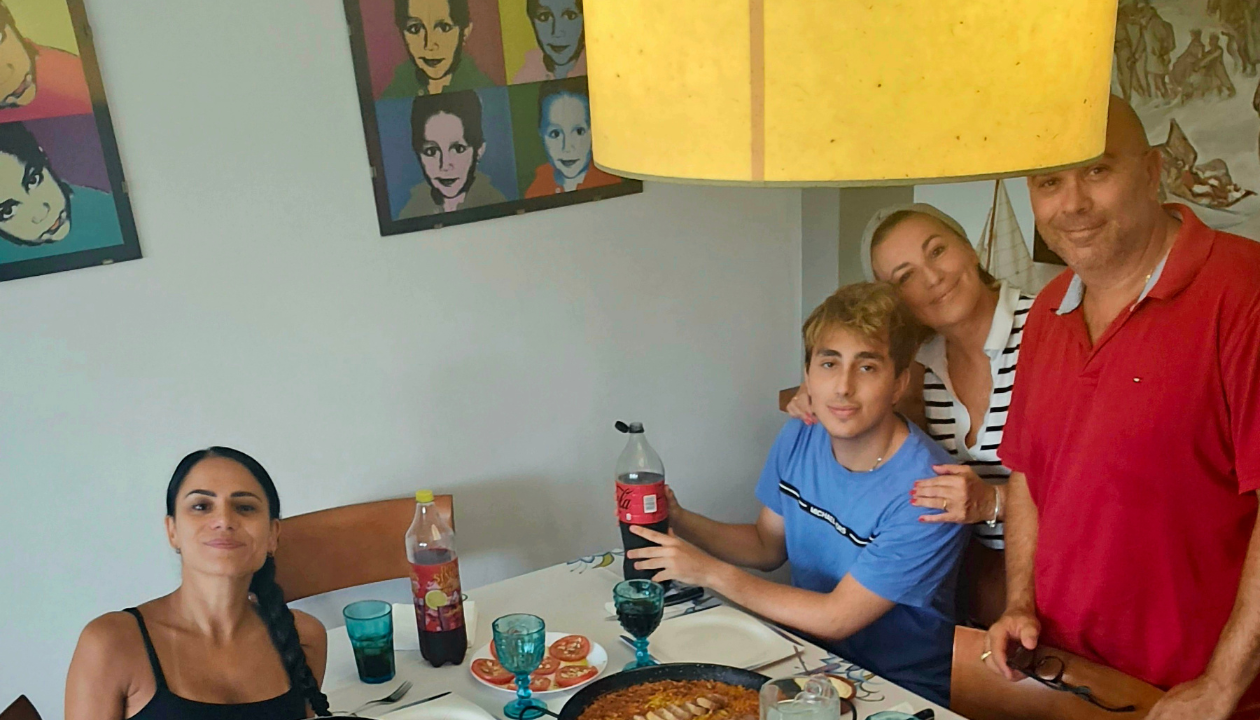
We spent a relaxed day in Premià de Mar with my friend and Spanish teacher Natalia. Spending time at the beach and sharing a paella created a social and friendly atmosphere.
This setting was ideal for natural conversation. Janine practiced Spanish without feeling like she was in a lesson, which helped her speak more freely and naturally.
Mataró: Urban Spanish and Everyday Vocabulary
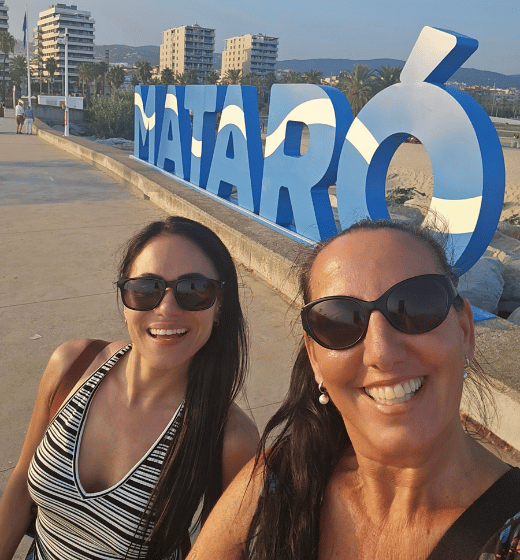
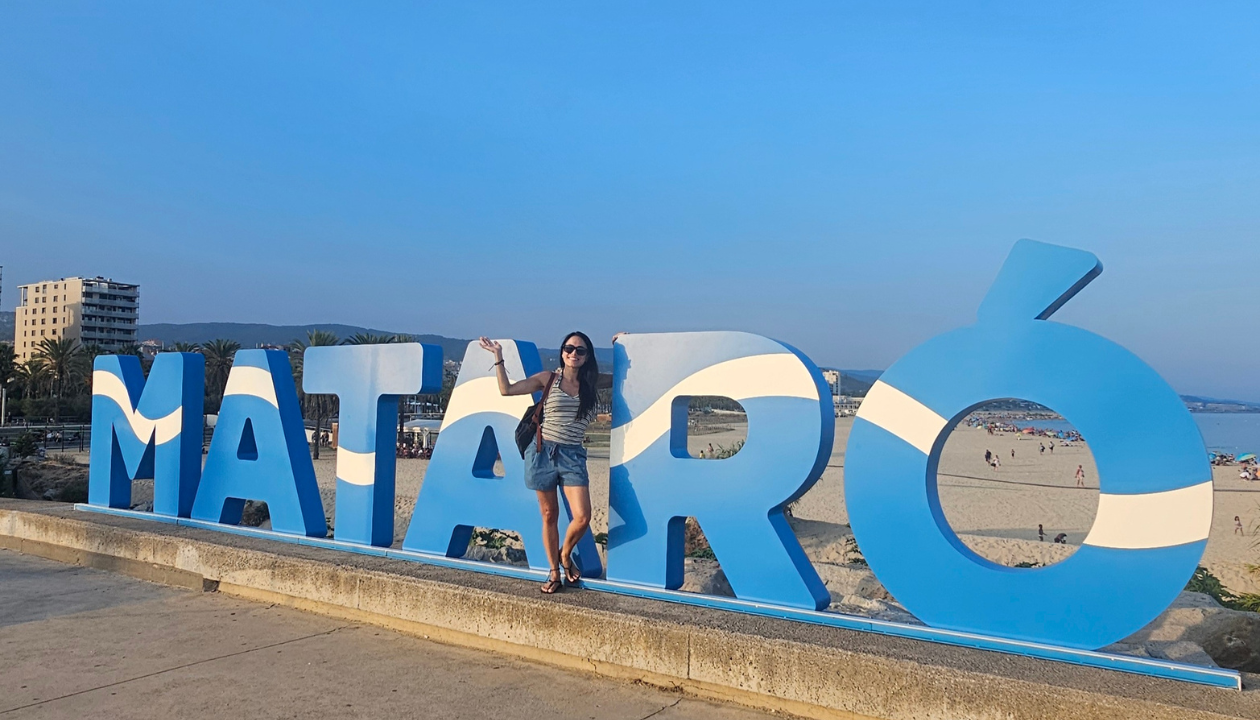
We also visited Mataró, the capital of the El Maresme Coast. Walking around the city centre and the port area helped Janine learn useful vocabulary related to cities, travel, and daily activities.
Simple moments, such as ordering ice cream or talking about what we saw, became valuable language-learning opportunities.
Cabrils and the Festa Major Santa Helena
With Natalia and Jose, we visited Cabrils during the Festa Major Santa Helena. This local festival allowed Janine to experience Spanish culture in a very authentic way.
She observed how local people celebrate, interact, and enjoy community life. Cultural experiences like this help students understand not only the language, but also the people who speak it. Cultural events like the Festa Major Santa Helena are common in Barcelona, which hosts numerous cultural festivals throughout the year, providing students with many opportunities to engage with the local community.
Barcelona and the Festa de Gràcia: Language in a Big City
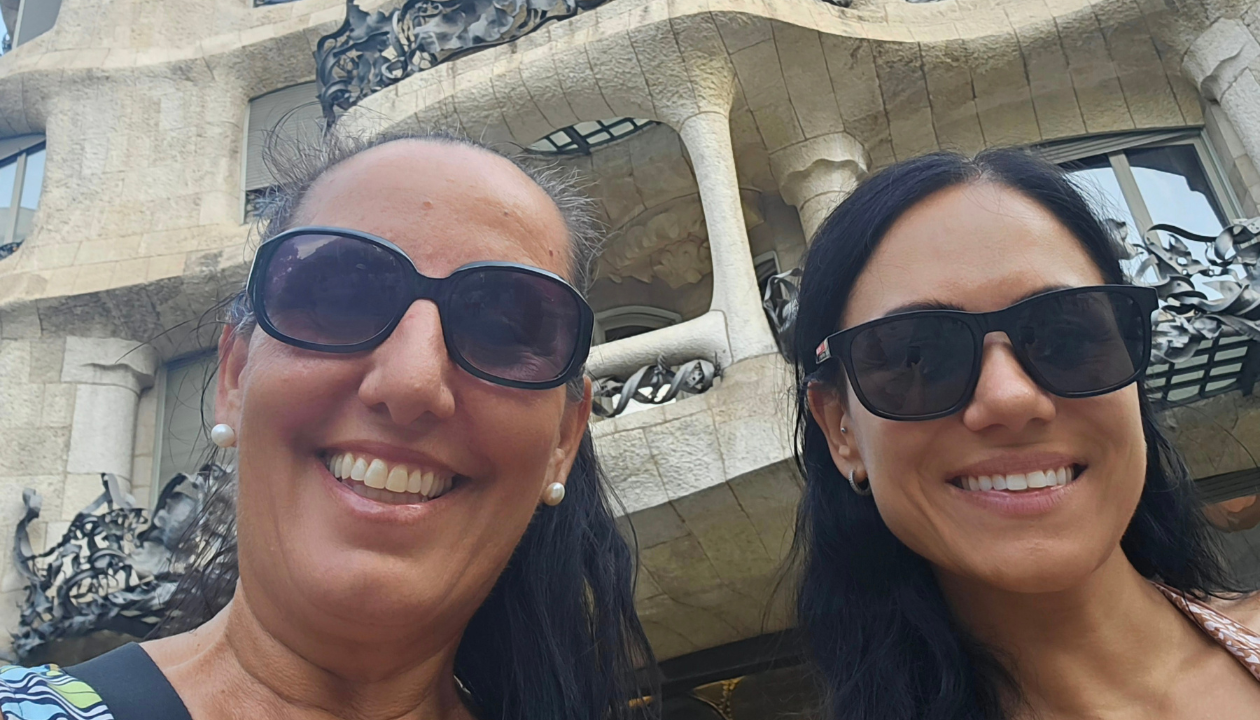
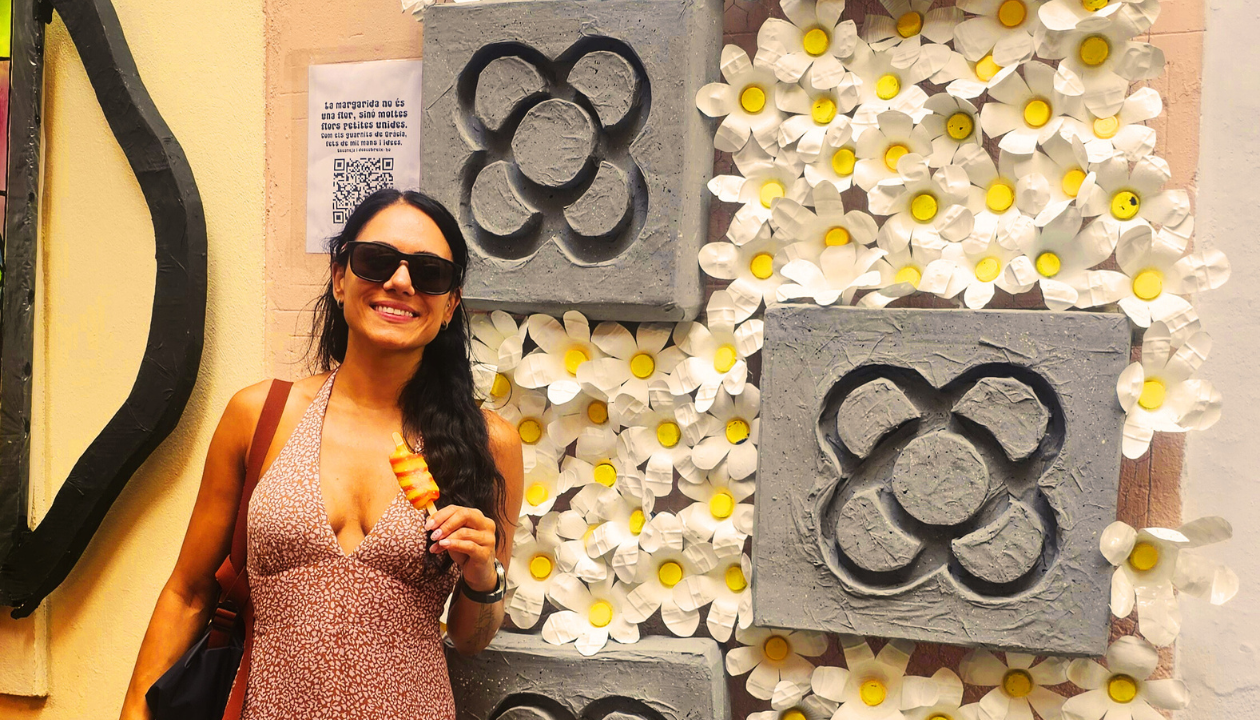
We also spent time in central Barcelona, exploring the city centre and visiting the Festes de Gràcia on another day. Many Spanish-language schools are located in central Barcelona, making it convenient for students to access the city’s main attractions. Exploring Barcelona and discovering its unique neighborhoods is an integral part of the Spanish immersion in Barcelona experience, allowing students to combine language learning with cultural activities and guided excursions.
The Gothic Quarter, with its historic significance and charming medieval streets, stands out as a cultural and architectural highlight of the city. Through these programs, students can participate in local festivals, explore Gaudi architecture, and gain insight into customs and traditions that tourists might miss. The vibrant culture and lifestyle of Barcelona make studying Spanish feel like a holiday, with beautiful beaches and rich architecture. The city’s vibrant cultural scene greatly enhances the Spanish learning experience.
Barcelona offered a very different environment from Dosrius. The busy streets, different accents, and fast-paced conversations challenged Janine, but also helped her develop stronger listening skills and confidence.
Llinars: A Family and Cultural Experience
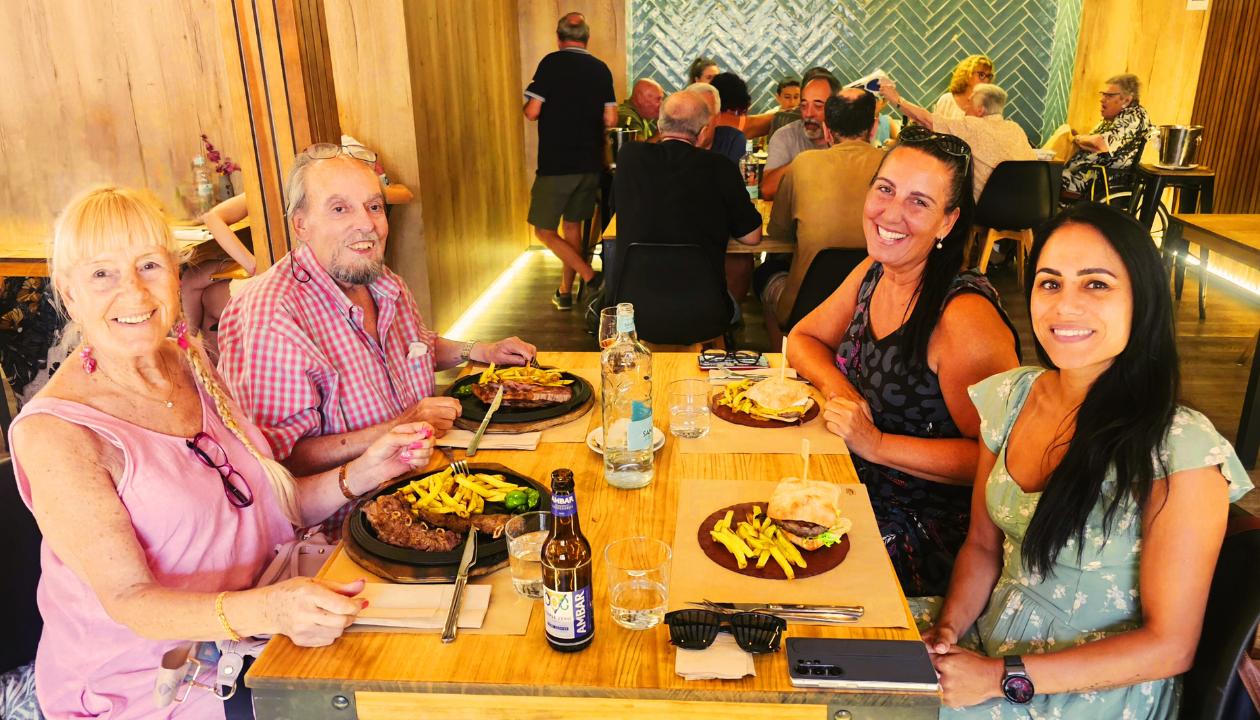
We also visited Llinars del Vallès, where Janine shared a lovely meal with my parents. This was a particularly meaningful experience, as she was able to see Spanish family life from the inside.
Sharing a meal and conversation helped Janine understand cultural habits, table conversations, and family dynamics in Spain.
A Typical Day During Janine’s Stay
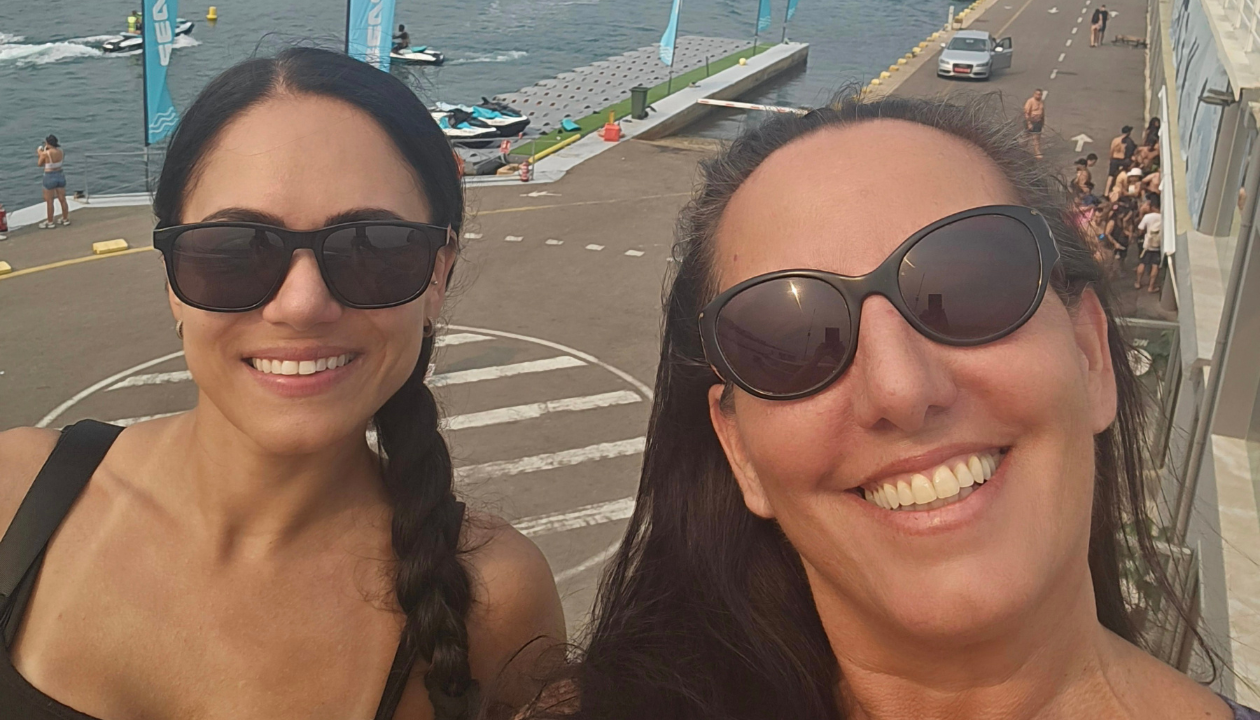
A typical day during Janine’s stay followed a simple but effective Spanish immersion structure:
- Morning Spanish class
- Afternoon activity or excursion
- Evening conversation at home or out and about
Students can choose from various accommodation options in Barcelona, including student residences, shared apartments with other students or professionals, and homestays. These options offer different social and practical experiences, such as shared kitchens and living spaces in shared apartments.
For those enrolling in long-term Spanish courses, it may be necessary to apply for a student visa. Many language schools in Barcelona provide support and guidance throughout the student visa application process.
This routine gave her many hours of Spanish exposure every day, totaling approximately 20 hours per week, and allowed her to practice the language in different contexts.
Progress After Two Weeks of Immersion
After two weeks, Janine made clear progress. She used verbs with more confidence, understood spoken Spanish more easily, and felt more relaxed when speaking. Most importantly, she developed trust in her ability to communicate, even when her Spanish was not perfect.
A Strong Personal Connection
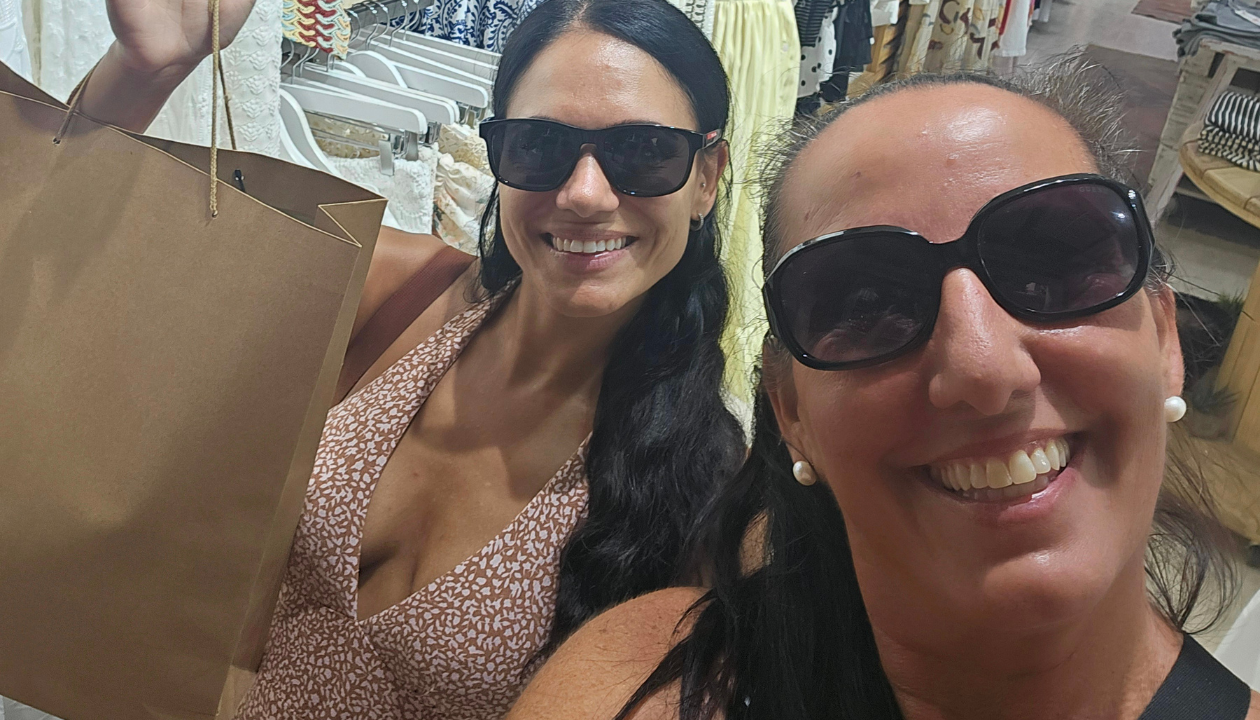
One of the most rewarding aspects of this experience was the personal connection we built. We got along very well, shared many conversations, and enjoyed learning from each other. This positive relationship created a safe and supportive environment, which is essential for successful language learning.
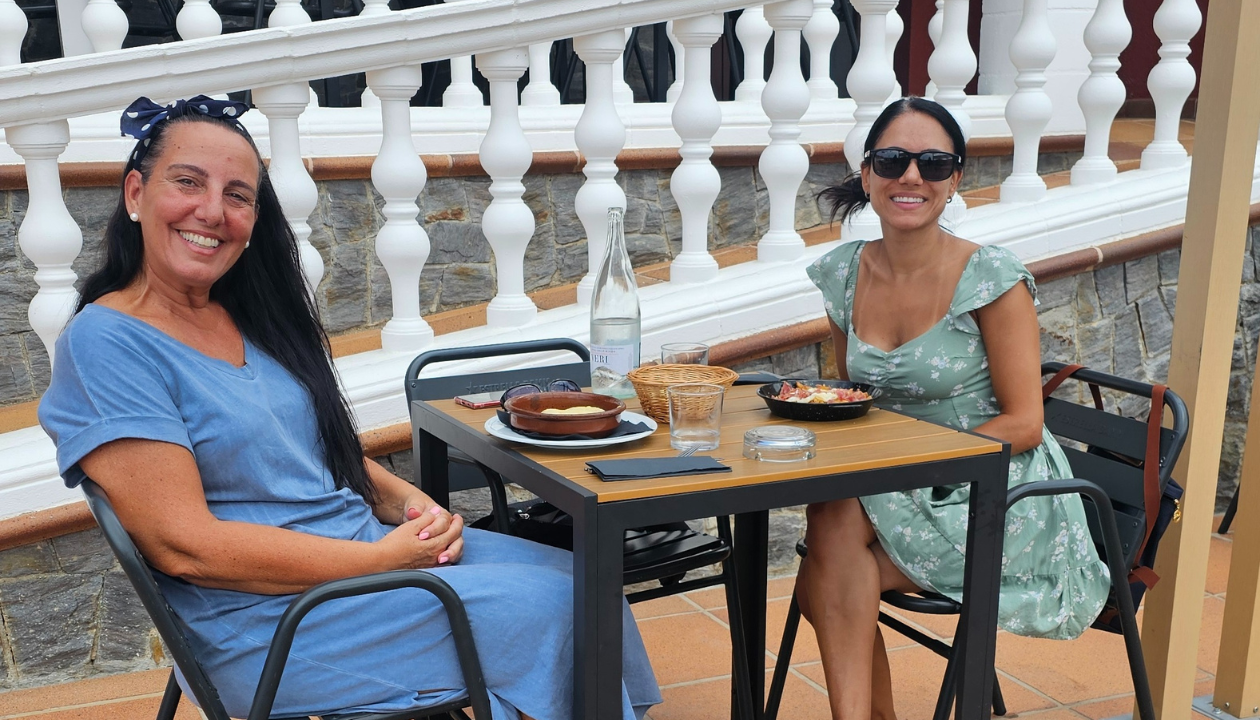
Learn Spanish Through Real Life in Barcelona, Not Just Lessons
Janine’s experience shows that real progress comes from living the language every day, sharing meals, walking through towns, joining local activities, and speaking Spanish in natural situations, not only inside a classroom.
👉 Explore our Spanish Homestay Immersion Program (SHIP) and experience Spanish through daily life with a native host teacher.

SHIP is ideal for A2 level and above, for those who want to improve speaking, listening, and confidence while connecting with real Spanish life. This full immersion approach helps students progress faster and feel comfortable using Spanish in daily conversations.
Get in Touch With Our Founder
If you have questions about learning Spanish, choosing the right immersion experience, or exploring our SHIP, our founder is happy to help.
Mónica Romero
Founder and Director, Spanish Express
📞 Phone / WhatsApp: +44 7903 867894
📧 Email: monicaromero@spanishexpress.co.uk