

A Day That Blends Patriotism, Culture, and Celebration
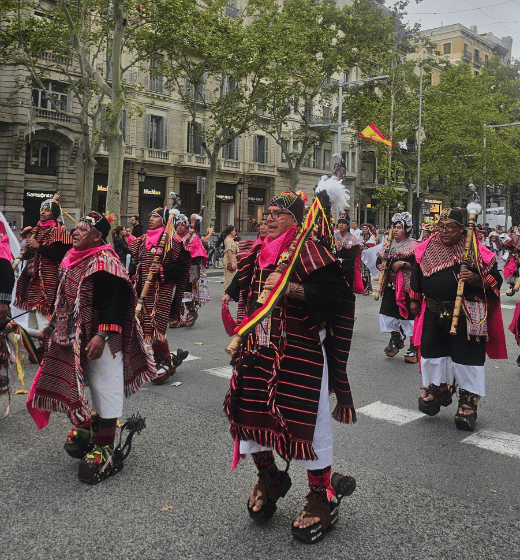
Barcelona, October 12, 2025, Barcelona’s streets pulsed with color, rhythm, and pride on Spain’s National Day (Día de la Hispanidad). Thousands of people gathered to celebrate a dual occasion: Spain’s shared cultural identity and its unity as a nation. The event was marked by a mass rally on Barcelona’s streets, drawing crowds in a significant demonstration of support for national unity.
This year’s commemoration stood out for merging two powerful events, the constitutional march for national unity and the Rúa de la Hispanidad, a Latin American folk parade. Together, they turned Barcelona’s city center into a stage where politics, heritage, and joy intertwined.
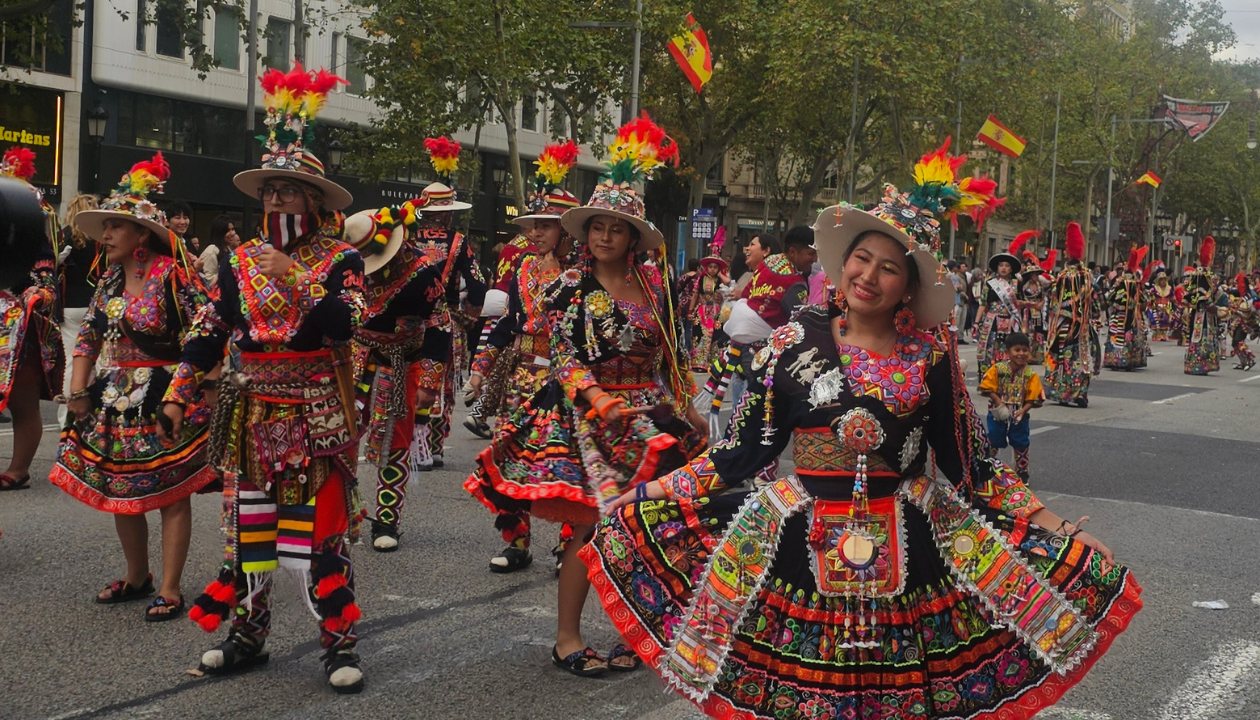
Flags waved from balconies, including catalan flags alongside Spanish and Latin American flags, traditional drums echoed along Passeig de Gràcia, and groups dressed in vibrant folkloric costumes performed dances that symbolized centuries of shared history between Spain and Latin America.
For a city known for its diversity, this October 12 was not just a celebration — it was a declaration: unity can coexist with difference.
The Meaning of October 12: A Shared History Across Continents
To understand the power of this day, one must look back more than five centuries. October 12 marks the date Christopher Columbus first arrived in the Americas in 1492, beginning centuries of cultural, linguistic, and religious exchange between Spain and the New World.
October 12 is also recognized as the country’s national day, serving as a unifying occasion that brings citizens together across Spain to celebrate national unity and shared identity.
In Spain, it’s known as Día de la Hispanidad, and is also celebrated as Spain’s National Day, a significant national celebration marked by large public demonstrations, political rallies, and military parades that emphasize Spanish unity and patriotism. The day is meant to celebrate the global Hispanic community, which now includes more than 500 million Spanish speakers across Europe, the Americas, and beyond.
In Latin America, the day takes on many names:
- Día de la Raza (Day of the Race) in Mexico,
- Día del Encuentro de Dos Mundos (Day of the Encounter of Two Worlds) in Chile,
- and Día de la Diversidad Cultural (Cultural Diversity Day) in Argentina.
Despite political debates surrounding its meaning, October 12 continues to symbolize connection through language, faith, and shared traditions, elements that were vividly alive in Barcelona’s 2025 celebration.
In recent years, debates and celebrations around October 12 have reflected changing attitudes toward national identity and unity.
A Peaceful March for Spain’s Unity
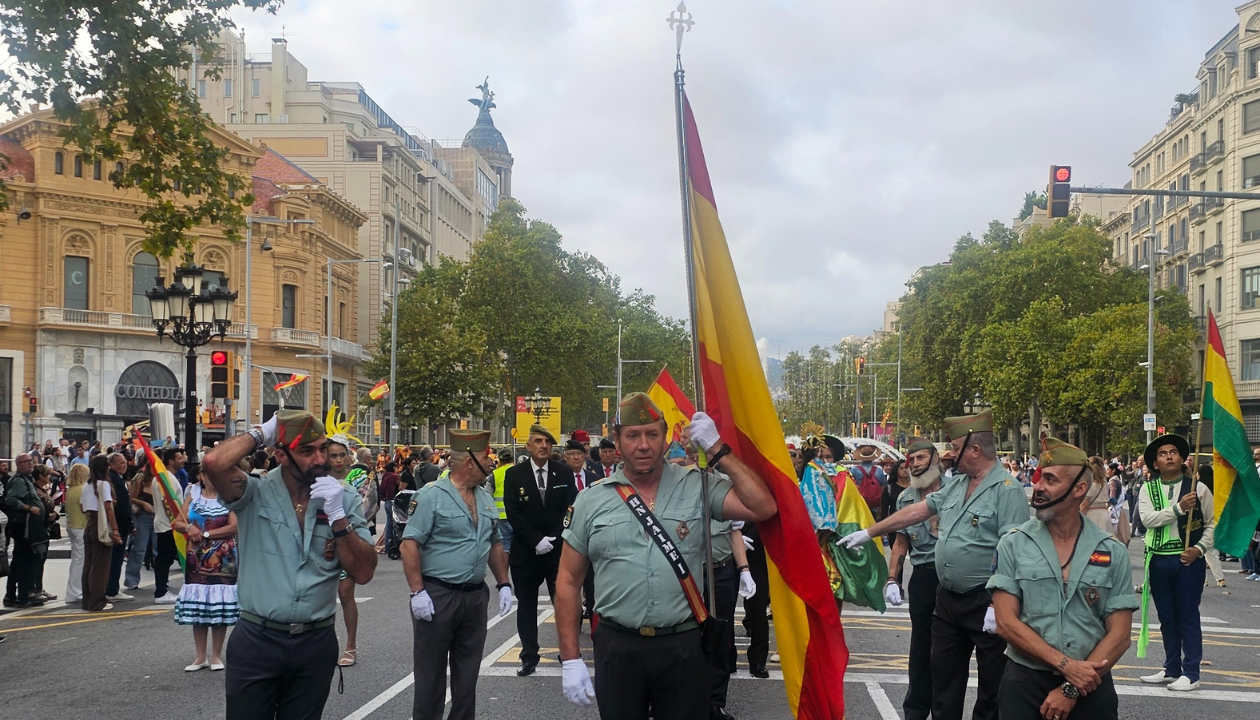
Barcelona’s March for Spanish Unity began early in the morning, bringing together thousands of participants representing civic, political, and cultural groups, including several pro-union parties.
According to the Barcelona Urban Guard (the local police), the demonstration drew around 3,700 people, including 1,200 constitutionalist activists and nearly 2,500 participants from Latin American organizations. In previous years, similar rallies have brought out hundreds of thousands of participants.
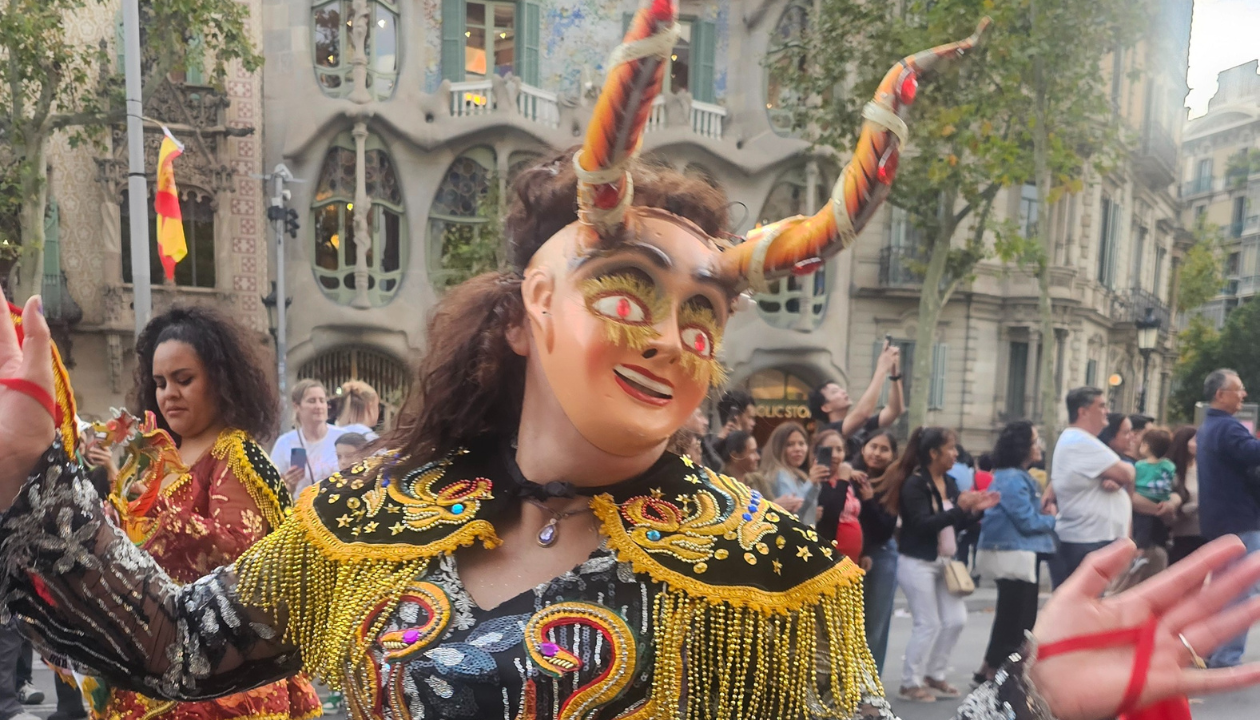
The march began at La Pedrera, one of Antoni Gaudí’s architectural icons, and proceeded down Passeig de Gràcia toward Plaça Catalunya, the symbolic heart of Barcelona. The demonstration was expected to draw significant crowds on Sunday afternoon, highlighting the importance of Spain’s National Day for many participants.
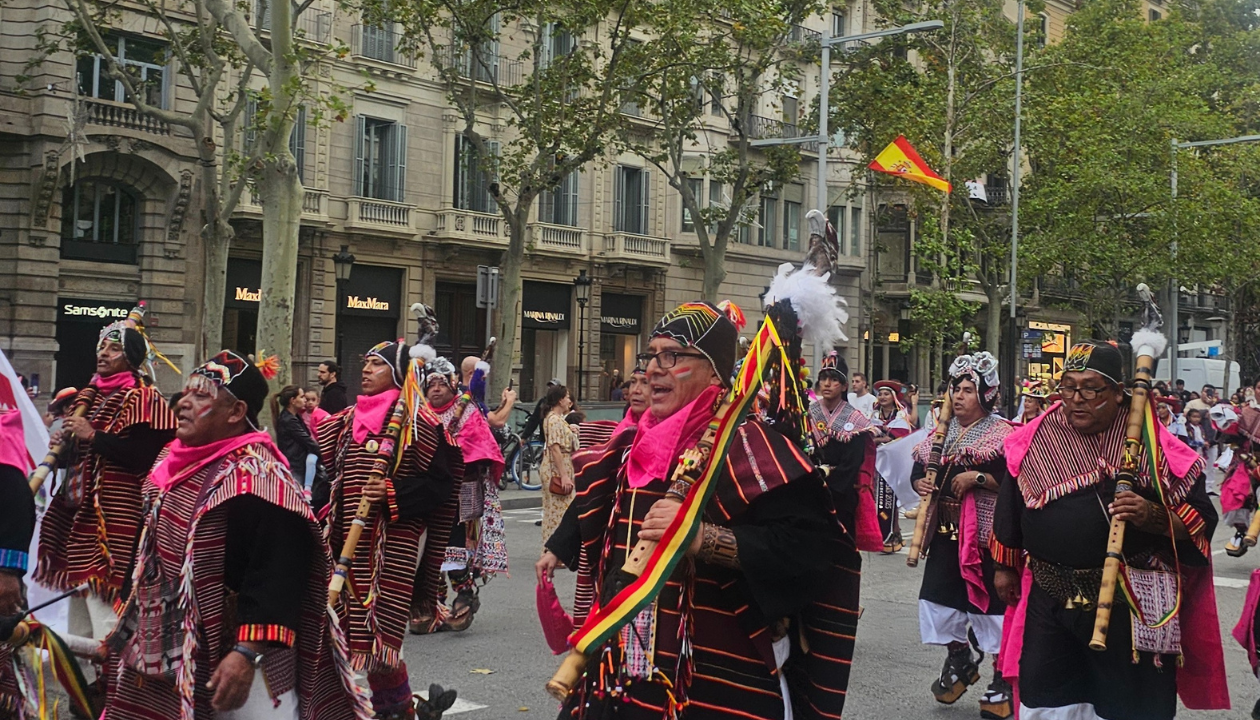
Participants carried Spanish flags, Catalan senyeres, and banners from countries like Bolivia, Peru, Colombia, and Ecuador. The event’s slogan captured the spirit of the day:
“Día de la Fiesta Nacional de España y de la Hispanidad.”
Many participants joined the march to defend Spain’s unity, expressing their opposition to Catalan independence and supporting the territorial integrity of the country.
For many, this was not a protest but a celebration of constitutional coexistence. The marchers called for respect between Spain’s autonomous regions and for unity that does not suppress diversity. The importance of ballot boxes and the upcoming regional election were frequently mentioned as key elements in the ongoing debate over Catalonia’s future and the legitimacy of democratic processes.
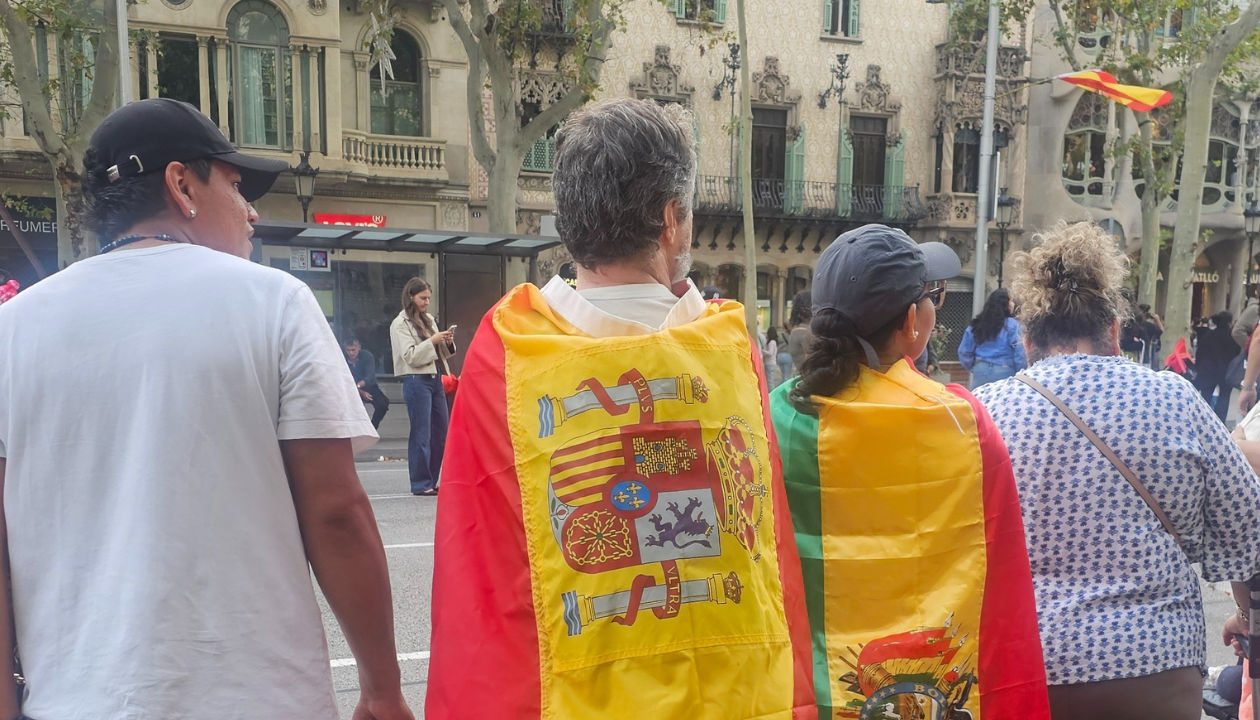
Families attended with children, some wrapped in both Spanish and Latin American flags, creating an image of generational continuity, one nation, many roots.
While Barcelona hosted this civic demonstration, Madrid marked Spain’s National Day with its traditional military parade, showcasing the Spanish Legion and symbolizing national unity and military history.
Political and Civic Voices Call for Coexistence
Among those present were several political and civic leaders. The event gathered figures such as:
- Alejandro Fernández, President of the People’s Party (PP) in Catalonia
- Daniel Sirera, PP leader in Barcelona City Council
- Ignacio Garriga, Secretary General of Vox in Catalonia
- Kevin Romero, Communications Secretary of Ciudadanos
- Héctor Amelló, Regional Coordinator of Ciudadanos
Notably, representatives from the Catalan government and the regional government were not present at the event, reflecting ongoing tensions between these institutions and other political actors.
The Spanish prime minister has also recently emphasized the importance of national unity and the government’s firm response to the Catalonia independence movement. This response was prompted by the actions of Catalonia’s rebellious government, which declared independence and openly defied Madrid’s authority.
Spain’s central government played a key role in responding to the actions of the Catalan government during the political crisis.
These politicians, along with civil Catalan groups like Societat Civil Catalana, S’ha Acabat, Aixeca’t Levántate, Comando Libertad, and Impulso Ciudadano, represented a broad movement to defend Spain’s unity and constitutional values.
Despite their political differences, they shared a message: unity, respect for the Spanish Constitution, and equal linguistic rights for all citizens.
The Manifesto: A Call to Strengthen Shared Values
At Plaça Catalunya, the demonstration culminated with the reading of a manifesto. Spokesperson Javier Megino emphasized the importance of “celebrating the transcendent values of Spain” freedom, equality, and coexistence- and made clear that the speakers reject the actions of separatists.
He accused separatist movements of promoting division and criticized the central government for what he described as “political concessions” that threaten Spain’s integrity.
After the manifesto, it was noted that some opposition leaders have issued an open letter calling for dialogue and urging participation in democratic processes.
The political crisis in Catalonia has been marked by what many describe as an unprecedented attack on democracy, with Spain’s central government invoking unprecedented constitutional powers to take control of the region. In response to the secession attempt by Catalonia’s rebellious government and its push for the region’s independence, Madrid dissolved Catalonia’s parliament and dismissed key figures, including the ousted vice president Oriol Junqueras. The regional parliament, central to the independence declaration, was at the heart of these events, and new elections are scheduled for December. These actions have led to diplomatic difficulties and even serious diplomatic difficulties, especially as some Catalan leaders, as EU subjects, considered seeking asylum in Belgium. The involvement of a Belgian government official in such a scenario could further complicate relations between Spain, Belgium, and the EU.
Also addressing the crowd, Amalio de Marichalar, from De español a español por la Constitución, described the government’s approach as “anti-democratic,” while Iñaki Ezquerra, co-founder of Foro de Ermua, took a more inclusive stance, calling on citizens to embrace both their Catalan and Spanish identities and urging all sides to act with common sense in resolving differences.
Their words struck a chord with the public, resonating across flags and chants. In that moment, unity became not just a political goal, but an emotional one.
The Rúa de la Hispanidad: A Cultural Symphony of Latin America
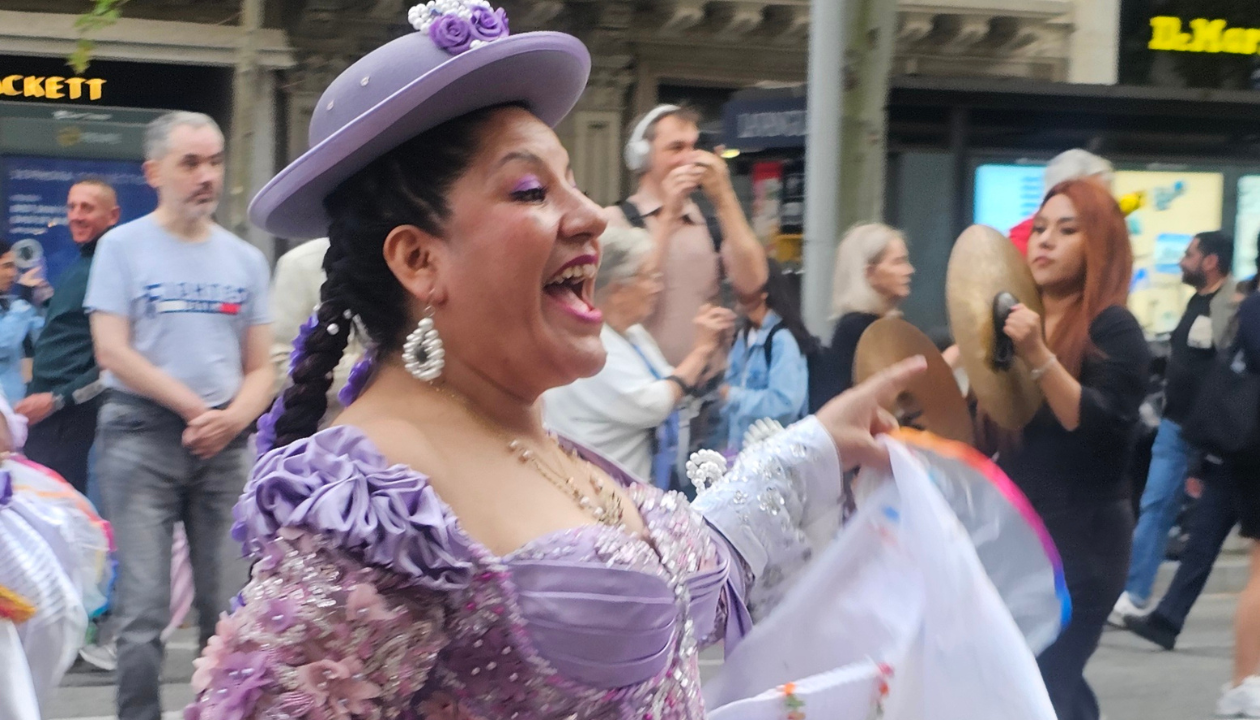
While speeches echoed in Plaça Catalunya, another spectacle was unfolding on the same streets, the Rúa de la Hispanidad, a cultural parade that turned Barcelona into a celebration of Latin American folklore.
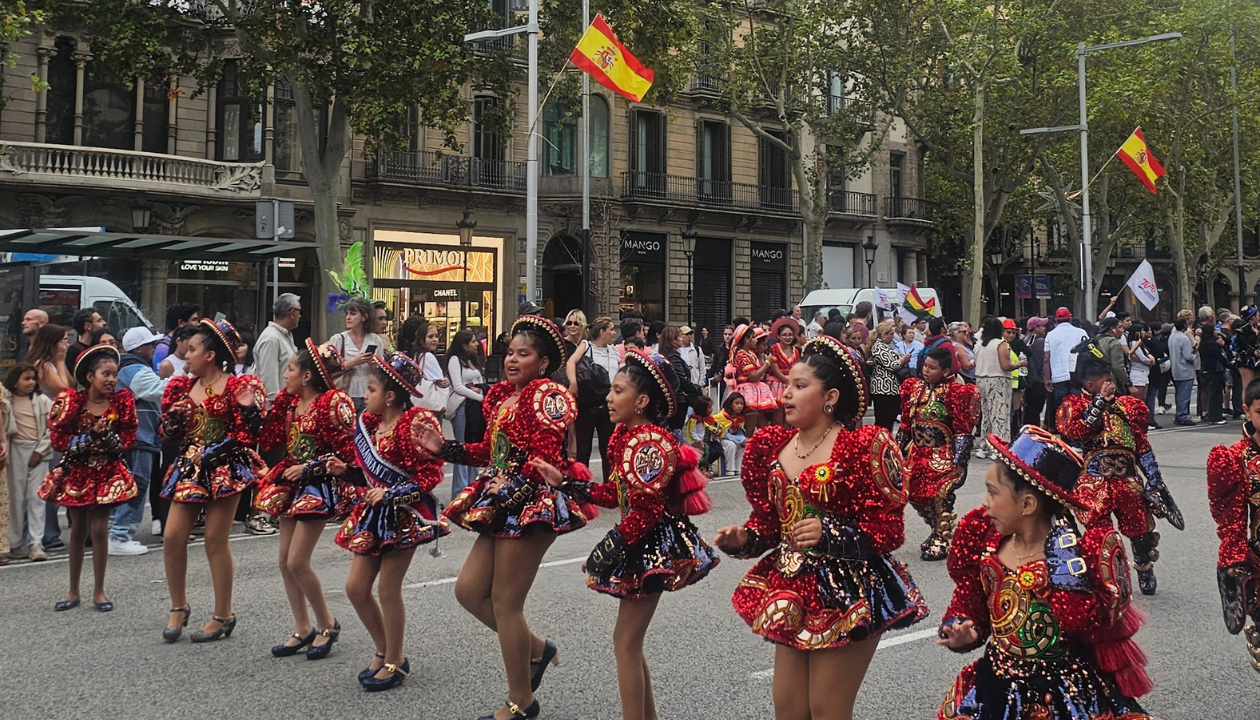
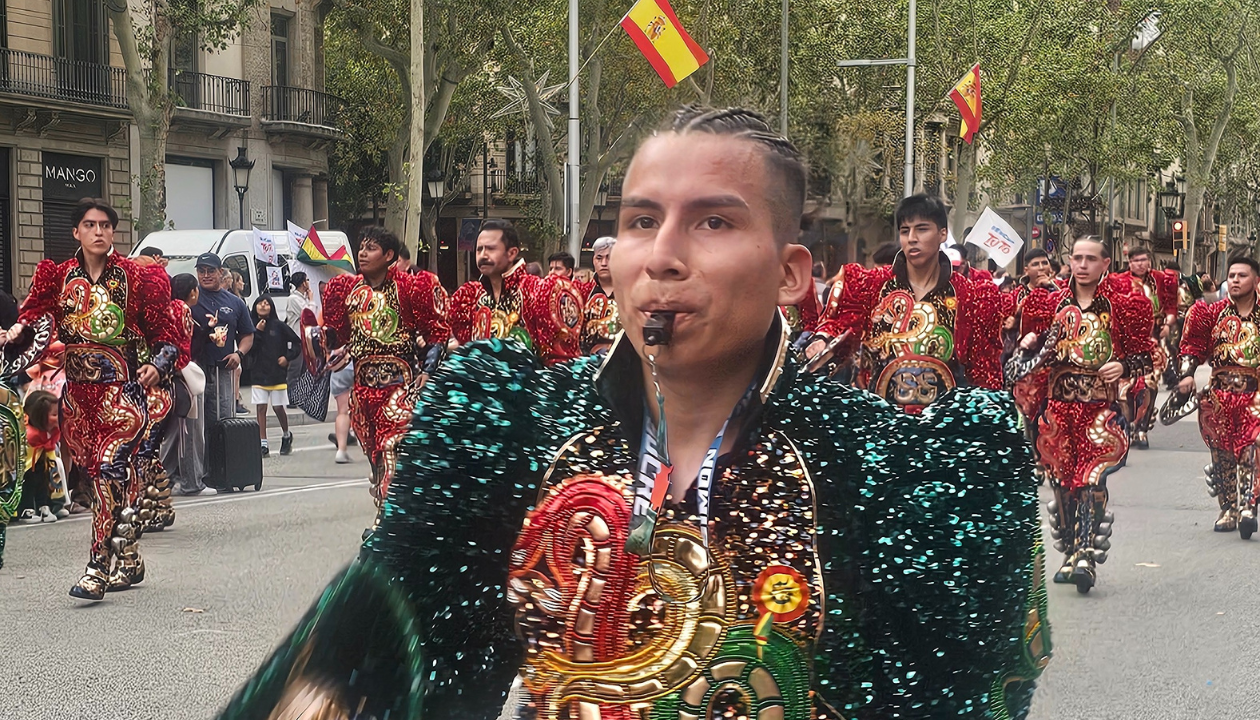
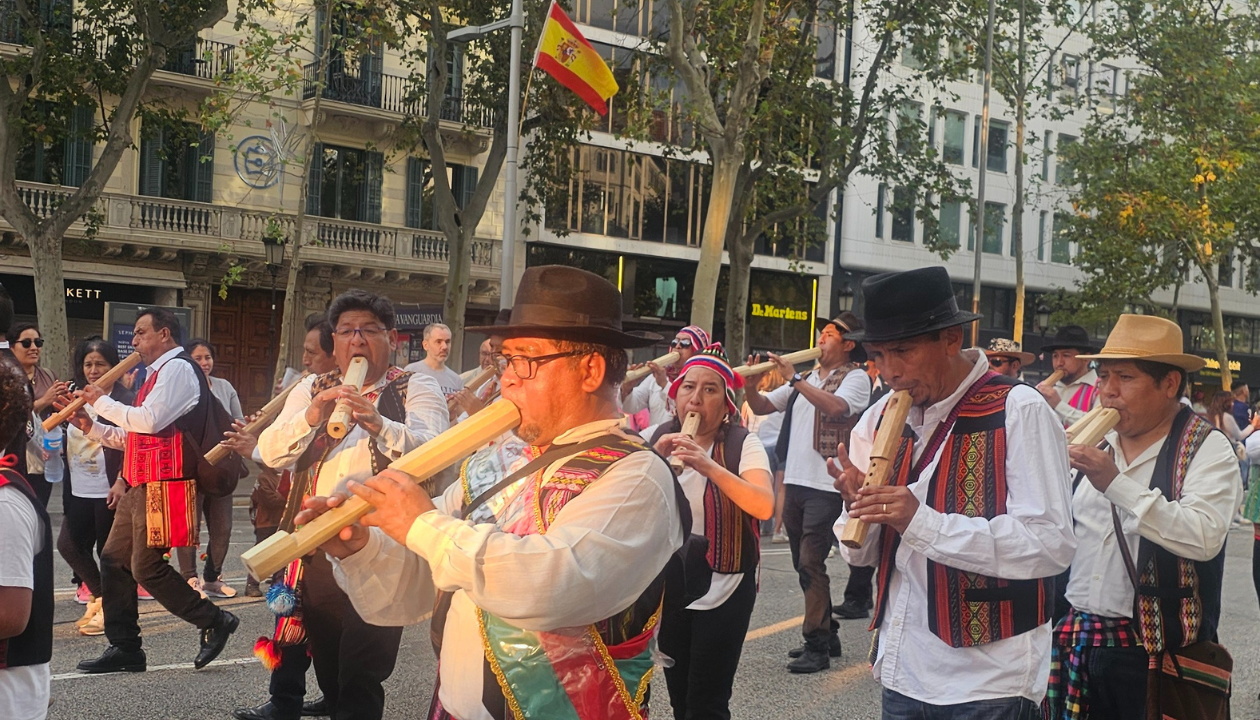
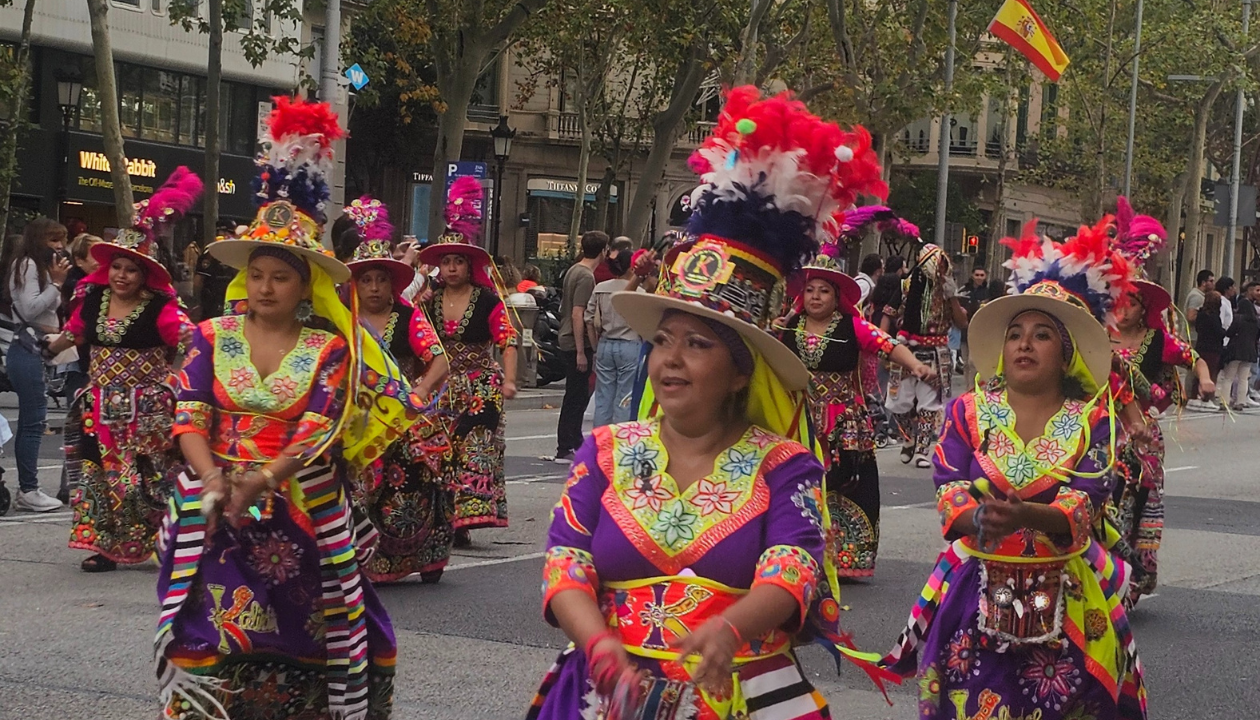
From 11:30 AM to 7:00 PM, more than 2,000 dancers and musicians paraded from Carrer de Provença to Plaça Catalunya, showcasing traditional dances, colorful costumes, and musical performances.
According to Salir al Aire, around 46 folk groups participated, divided into themed “blocks” representing different regions and traditions. The parade featured groups from every region of Latin America, highlighting the diversity present. Such cultural representation is essential for fostering understanding and unity among communities.
While these celebrations filled the streets, important political debates continued in the parliament, showing how cultural events and parliamentary decisions often intersect in Catalonia.
Highlights of the Parade:
- Block 1 – Tinkus: Featuring Tinkus Kenchas, Tinkus Puros, Tinkus Kay’sur, and others performing energetic Andean dances.
- Block 2 – Caporales: Iconic Bolivian troupes like San Simón and Caporales USA showcased the rhythm and pride of La Paz.
- Block 3 – Oriente Boliviano: Groups such as Ballet Alma Oriental and Brisas del Oriente brought tropical flair to the streets.
- Block 4 – Diversity: Mixed troupes from across Catalonia and South America, celebrating unity through variety.
- Block 5 – Perú: With Pasión Tunantada and Sumaq Sumqu, Peruvian dancers honored the traditions of the Andes.
- Paraguay: Represented by Elenco Folclórico Reseda Poly.
- Block 6 – Salay: Lively Bolivian “salay” groups like Salay Pasión Bolivia and Salay Barcelona Central lit up the route.
- Block 7 – Morenadas: The parade’s finale, led by Morenada Central Oruro and Morenada Cocani, delivered a thunderous rhythm of drums and brass.
The parade was not only about spectacle — it was an emotional tribute to shared heritage. Many participants described it as a bridge between their Latin American roots and their life in Spain.
Cultural Unity Beyond Borders
What made this October 12 truly special was the connection between the civic and the cultural. While one march defended Spain’s unity, the other celebrated the Hispanic world’s cultural unity, a unity that transcends geography and politics.
Citizens were encouraged to engage in both civic and cultural activities, actively participating in demonstrations, celebrations, and democratic processes to strengthen unity and foster a sense of shared purpose.
The two events, though organized separately, complemented one another perfectly. The march reminded citizens of their shared constitutional values; the parade reminded them of the joy of belonging to a greater cultural family.
Together, they expressed a profound truth:
To be Spanish is also to be connected to Latin America — to centuries of language, art, and friendship that continue to shape our world today.
On this day, the city extended a welcome mat to all participants, inviting everyone to join in a spirit of inclusion and peaceful coexistence.
The Role of Latin American Communities in Catalonia
Barcelona’s Latin American population has grown steadily over the past two decades, with large communities from Bolivia, Peru, Colombia, Ecuador, and Paraguay. For many of them, the Rúa de la Hispanidad is the most important cultural event of the year, a chance to share their traditions with the city that is now their home. Both Latin American immigrants and native Catalans participate in the event, reflecting the diversity of the community.
Community leaders have often emphasized how these events promote integration through culture. Rather than focusing on differences, they showcase how migration enriches Catalonia’s identity, even as debates about the region’s independence continue to shape public discourse and influence community dynamics.
During this year’s parade, numerous participants carried banners reading “Unidos por la Cultura” (“United by Culture”) — a message that resonated as much as any political slogan that day.
A Peaceful and Inclusive Celebration
Despite the large crowds, the day unfolded peacefully. The event stood as a clear example of peaceful opposition to political division, with participants demonstrating non-violent resistance and civil dissent.
The Guardia Urbana reported no major incidents and praised both organizers and participants for their respectful behavior.
By evening, as the last dancers reached Plaça Catalunya, the avenue sparkled with confetti and flags from across the Hispanic world. The sound of drums faded into the sunset, but the day’s spirit of pride, friendship, and unity lingered, as groups that had been longer silent were now making their voices heard.
The Broader Meaning of the Rúa de la Hispanidad
The Rúa de la Hispanidad in Barcelona goes beyond entertainment. It’s a reminder that identity is not static — it evolves, and this event is also a celebration of democracy, highlighting the shared values that unite people. Events like the parade and march take place alongside important democratic processes, such as regional and national elections, which play a key role in shaping the future of Catalonia and Spain.
For Spain as a country, October 12 has become a day to reflect on its past while embracing a more inclusive future, one that acknowledges the pain of history but celebrates the beauty of connection. For Latin Americans in Spain, it’s a day to affirm that their culture and traditions are valued and visible.
Dancing Between Past and Future
This year’s October 12 celebration in Barcelona was more than a public holiday — it was a dialogue between history and hope. It brought together people who may differ in politics or origins but who, as part of the same group, share the same streets, songs, and stories.
From the solemn speeches of the unity march to the vibrant steps of the Rúa de la Hispanidad, the message was clear: The event brought hundreds of people together in celebration.
Unity does not mean uniformity — it means celebrating what we share while respecting what makes us unique.
In that sense, Barcelona once again reflected the spirit of the Hispanic world itself — diverse, passionate, and proudly interconnected.
A Personal Reflection: Unity Is Part of Who I Am
As someone who comes from a mixed cultural background, Spanish and Argentinian, this day holds special meaning for me.
I’ve always believed that our greatest strength lies in unity, in understanding that culture is not about separation, but about connection.
In my daily life, I’m surrounded by people from all corners of the world, family, friends, and students who remind me how beautifully diverse our world can be.
One example is Funda, a repeat student from Turkey, who travels every year to take part in our ship program.

She adores our Spanish culture and gastronomy, and this year, she was astonished to witness the Rúa de la Hispanidad in Barcelona. Seeing her amazement at such a powerful cultural celebration reminded me that our traditions are not just ours — they belong to everyone who embraces them with love and curiosity.
That moment made me proud of my roots and even prouder of the open, welcoming spirit that defines the Hispanic world.
Experience Spanish Culture as a Living Classroom with SHIP
Events like the March for Unity and the Rúa de la Hispanidad show that Spanish culture is not something you only observe it is something you feel, live, and share. History, language, identity, and everyday life come together in real moments, in real streets, with real people. This is exactly how we design learning in our Spanish Homestay Immersion Program (SHIP).
With SHIP, you don’t just visit Spain. You live in your teacher’s home, practise Spanish in daily conversations, and connect language to culture, traditions, and real human experience.
SHIP is ideal for:
- Cultural travellers who want to understand Spain beyond tourism
- Adults of all ages seeking calm, deep, real immersion
- Professionals and retirees who want confident, practical Spanish
- Solo learners, couples, and families who value personal guidance
- Students preparing for Spanish exams (DELE, SIELE, GCSE, A-Levels, YLE, IB, and others)
- Learners who want to experience history, society, and identity through the language itself
You can explore more immersive learning experiences here:
👉 Spanish Culture & Language Immersion Stories
For personalised guidance and programme details, you can contact our founder directly:
Mónica Romero
Founder and Director, Spanish Express
📞 Phone / WhatsApp: +44 7903 867 894
📧 Email: monicaromero@spanishexpress.co.uk
