

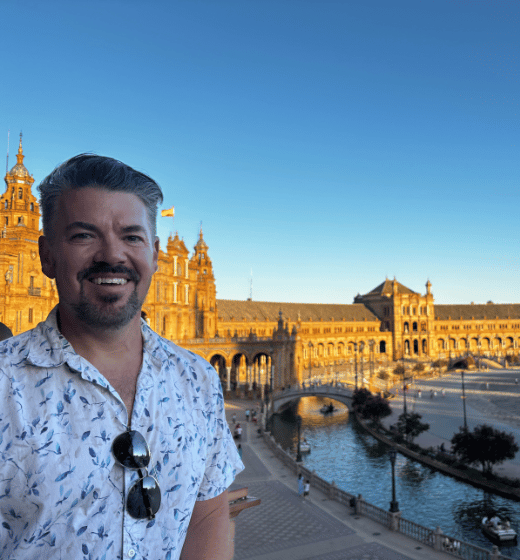
When Aaron arrived in Seville on a sunny July afternoon, I knew this week would be special. At 50, he had taken a break from work in the United States to focus on one dream, to improve his Spanish in Spain.
From the first day, Aaron showed great enthusiasm. He joined every conversation at home, practiced new words at breakfast, and enjoyed walking through the city centre with curiosity. Living with his teacher helped him learn Spanish in a real way through daily life, laughter, and local culture.
Together, we explored the best of Sevilla: peaceful walks along the Guadalquivir River, the beauty of the Plaza de España, and the charm of the Barrio Santa Cruz. Each place gave him new words, new expressions, and new confidence.
By the end of his stay, Aaron was not just a guest; he felt part of my family and part of the spirit of Seville.
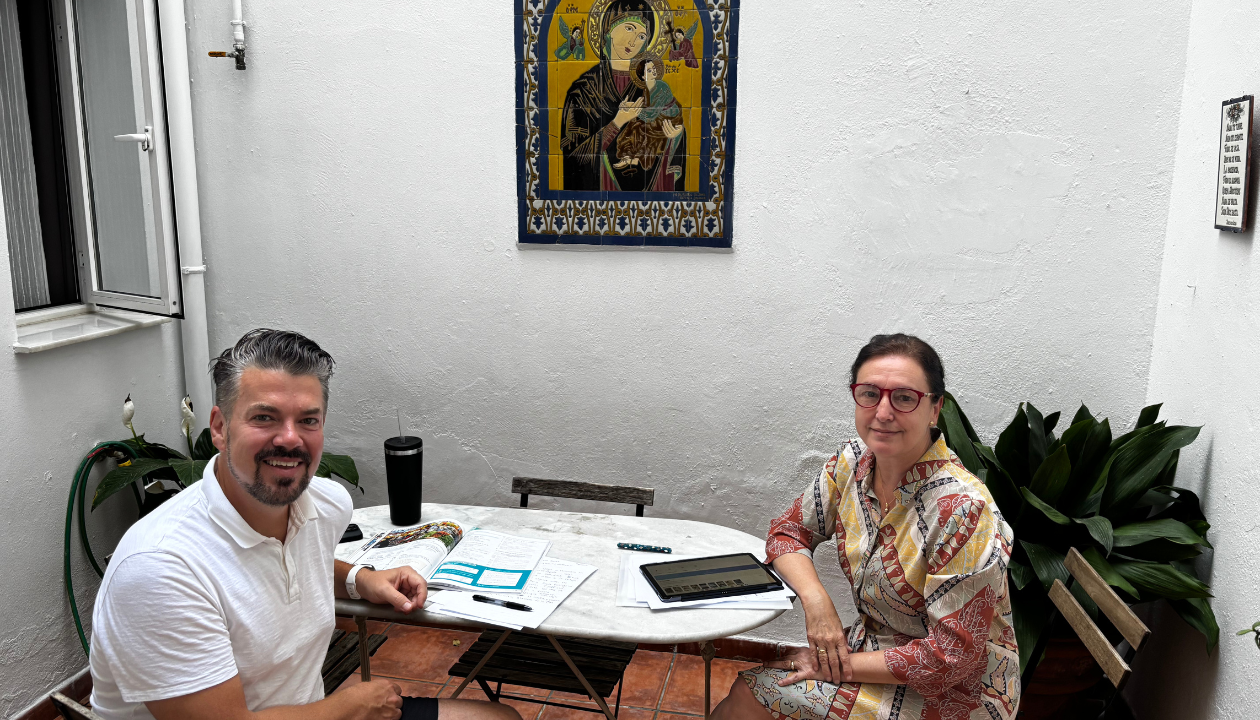
Meet Aaron – A Passionate Learner from the United States
Aaron came to Seville with a clear purpose: to live the Spanish language. In his 50s, he decided to take a short sabbatical and spend time doing something he had always wanted, learning Spanish in Spain.
He saw this trip as a mix of learning and enjoyment, a way to slow down and reconnect with himself while improving his communication skills. Staying in his teacher’s home gave him a full immersion experience not just in grammar and vocabulary, but also in Spanish life and traditions.
Outside of class, Aaron loves architecture and wine, two passions that found a perfect home in Sevilla. He admired the city’s buildings, from Moorish arches to Renaissance façades, and loved discovering local wines during relaxed evening tastings. Every activity became part of his language journey, where each new word had a memory behind it.
Aaron’s Academic Background and Progress
Aaron started his SHIP journey with an advanced A1 level. He already knew the basics of Spanish and could use some past tenses, but his vocabulary was still limited. His goal was simple: to speak with more confidence and to understand native speakers better.
After two weeks in Spain, one in Castelldefels and one here in Seville, his progress was remarkable. We worked on A2-level grammar and conversation, focusing on useful topics such as describing experiences, comparing places, and telling short stories from daily life.
By the end of the program, Aaron was speaking more naturally and with greater fluency. He had learned to express opinions, ask follow-up questions, and describe what he saw around him from the colours of Plaza de España to the lively energy along the Guadalquivir River.
His vocabulary grew quickly, helped by daily lessons, evening reviews, and casual talks during meals. He also learned practical study tools using short recordings, flashcards, and repetition, which made his Spanish stick.
It was clear that Aaron had moved beyond A1 and was confidently stepping into A2.
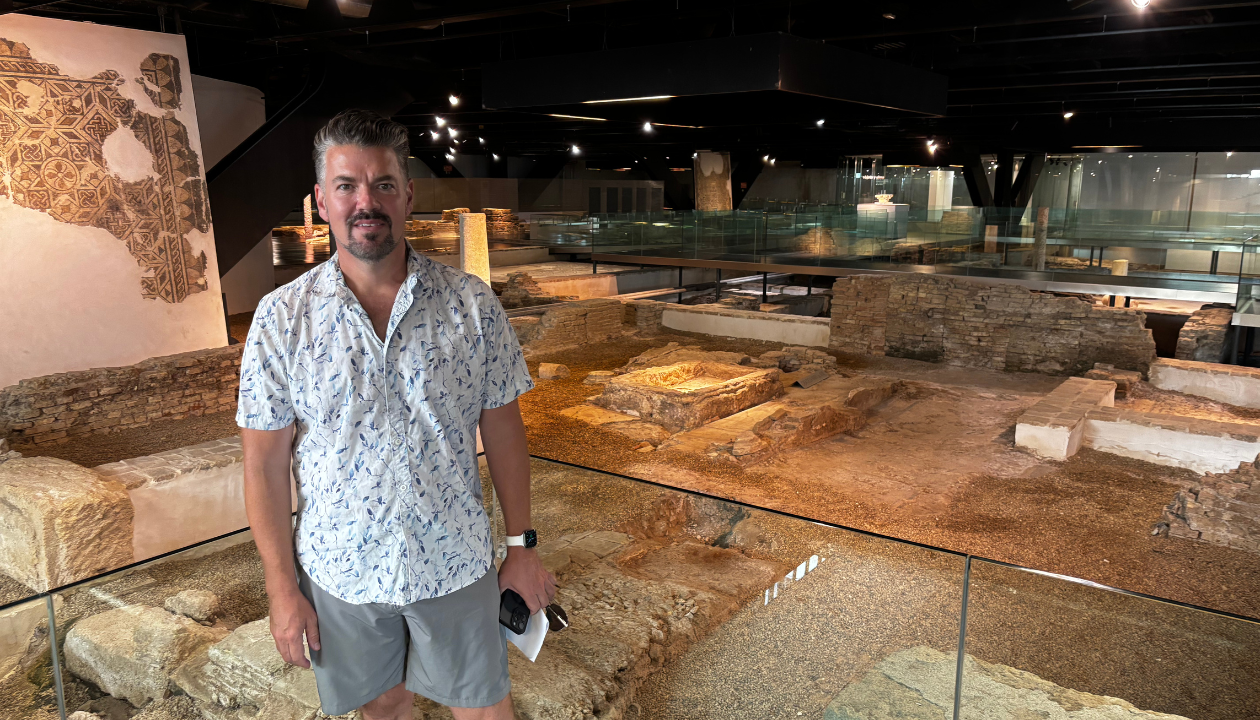
Discovering the Past at the Antiquarium de Sevilla
Our next stop was the Antiquarium de Sevilla, a hidden gem right in the city centre, beneath the modern Metropol Parasol. I wanted Aaron to see how Seville’s history stretches far beyond its monuments and palaces, all the way back to the Roman and Moorish periods.
Inside the museum, the glass walkways reveal mosaic floors and ancient remains from the 1st to 11th centuries. We talked about how each layer of stone tells a story about life in southern Spain through the Middle Ages. Aaron listened carefully and repeated new words aloud columna, muralla, and anfiteatro, practising pronunciation and learning how to describe places in the past tense.
He was fascinated by how the old town of Sevilla had been built on top of centuries of civilization. “It’s like walking through time,” he said, and I smiled. That’s exactly what I hoped he would feel.
After our visit, we sat at a café nearby, reviewing vocabulary while enjoying a cold drink under the shade of the orange trees. That afternoon, he began forming longer sentences with more confidence, mixing grammar with curiosity.
This experience was a turning point in history, and language finally connected for him in a way that made sense.
Architecture and Beauty at Plaza de España and María Luisa Park
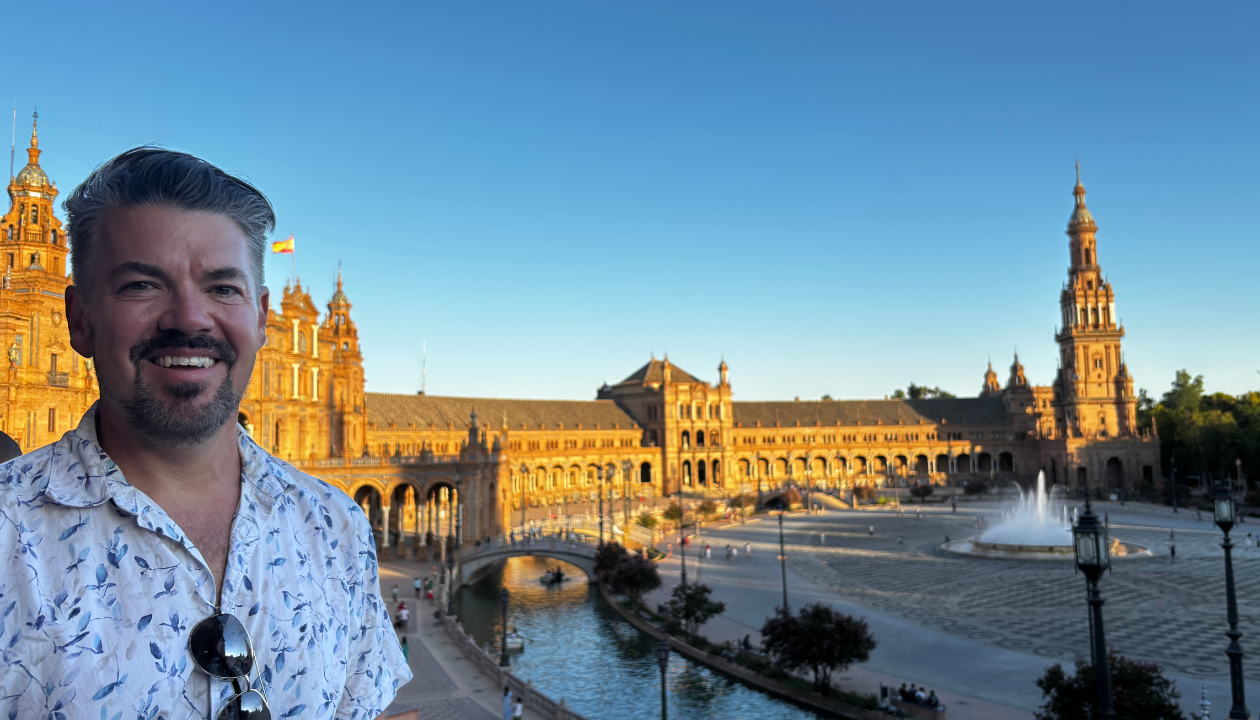
No visit to Seville is complete without seeing the Plaza de España, one of the city’s most important sights. When Aaron and I arrived, the morning sun reflected beautifully off the ceramic tiles and the calm water that circles the plaza. It was his favourite place in the whole city.
I explained that the Plaza de España was built for the Ibero-American Exhibition of 1929 and that it combines Renaissance and Moorish influences, a perfect example of Renaissance style blended with local tradition. For Aaron, who loves architecture, this visit was like stepping into a dream. He immediately began describing what he saw in Spanish: the colourful bridges, the mosaic floors, and the elegant towers that rise over María Luisa Park.
We also walked through the beautiful park itself, one of the green treasures of Seville. Under the shade of the orange trees, he practiced adjectives and prepositions while describing the fountains, benches, and statues around us. Every sentence became more fluid and confident.
As we sat by the pond watching families enjoy the day, Aaron said in Spanish, “Now I understand why everyone loves Sevilla, it’s full of life.” I couldn’t agree more. The Plaza de España and María Luisa Park truly capture the heart of this lively city.
Speaking Spanish Through History at the Real Alcázar
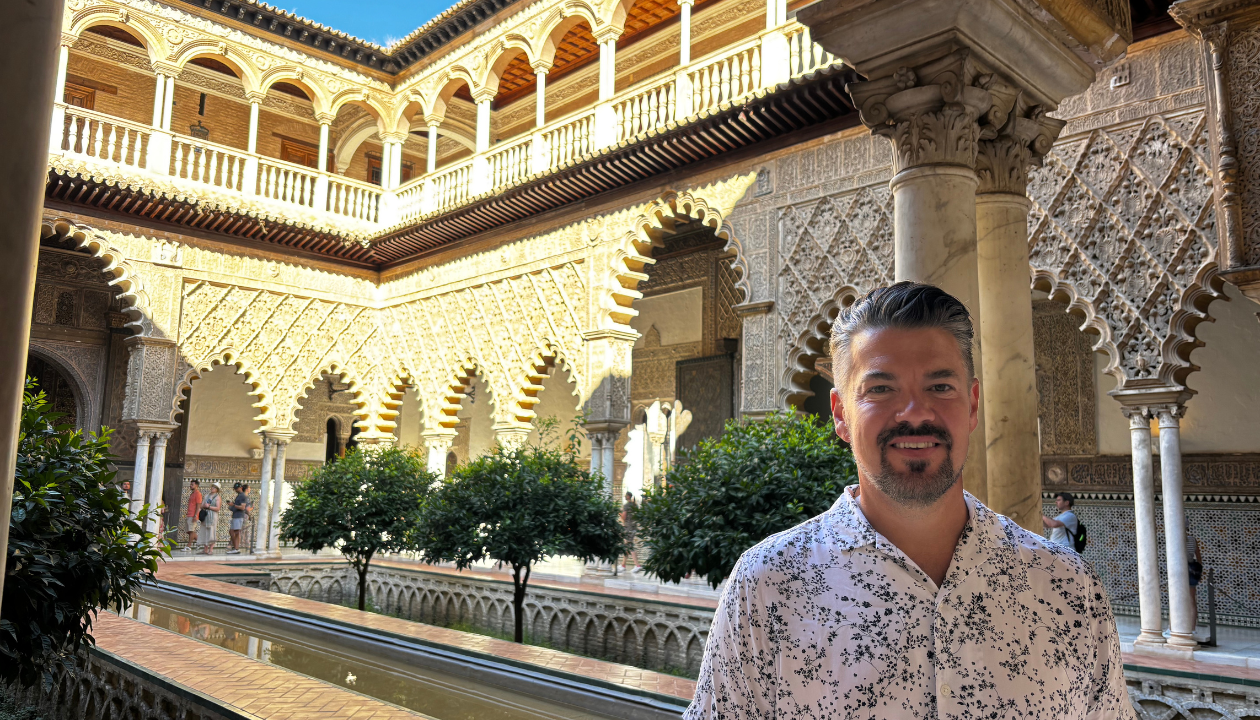
Our visit to the Real Alcázar was one of Aaron’s favourite moments in Seville. This alcázar palace, located in the old town, is a masterpiece that shows the city’s long and fascinating history from the Moorish period to the time of the Spanish Empire.
I wanted Aaron not just to see the beauty of this place but to use his Spanish to describe it. As we walked through the courtyards and gardens, he practiced sentences in the past tense: “Este palacio fue construido…”, “Los reyes vivieron aquí…”. His pronunciation and confidence were growing quickly.
Inside the Real Alcázar, the mix of arches, tiles, and Arabic inscriptions impressed him deeply. He was especially fascinated by how the architecture blended cultures Islamic, Gothic, and Renaissance styles all together. Standing in the Patio de las Doncellas, he said, “This is not just a building. It’s art.” And indeed, it was an art form that tells the story of Seville’s soul.
We ended our visit in the gardens, where the sound of fountains and birds made it easy to relax and talk naturally in Spanish. Every conversation felt smoother, and Aaron’s sentences flowed with less hesitation. It was wonderful to watch him learning without even realizing it.
Art and Expression at the Museo de Bellas Artes de Sevilla
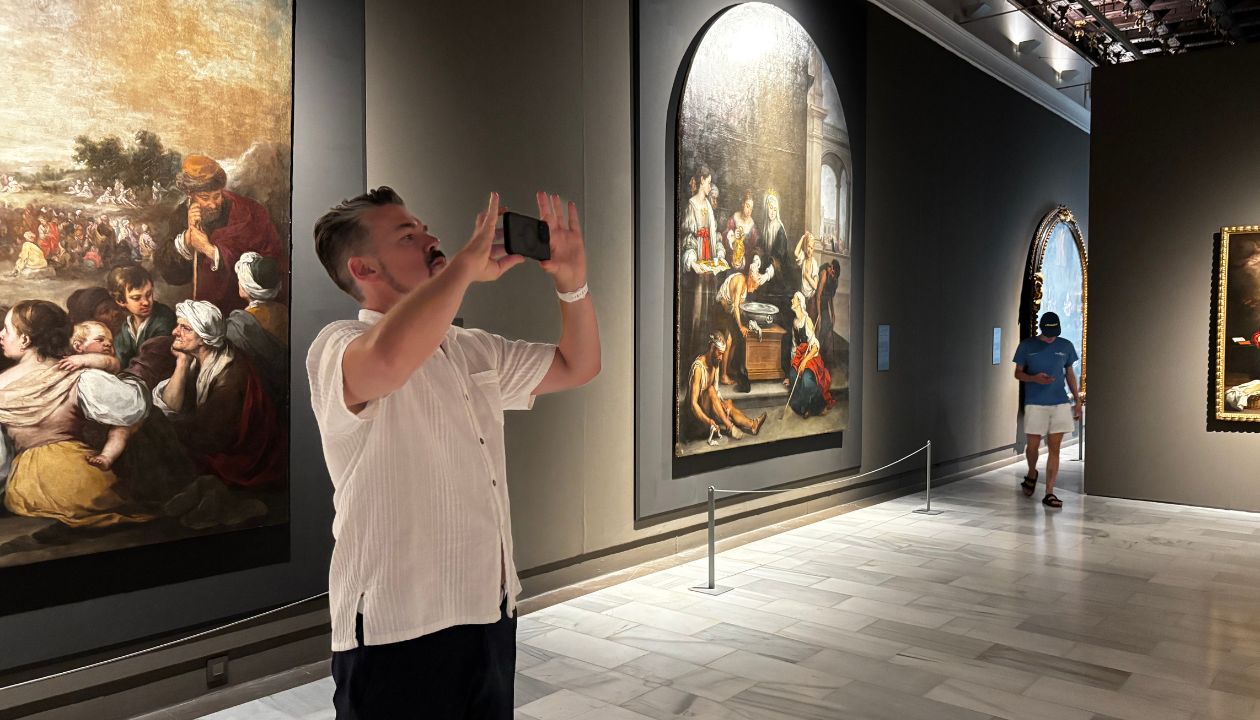
A few days later, we spent the morning at the Museo de Bellas Artes de Sevilla, one of the most beautiful museums in southern Spain and second in importance only to Madrid’s Prado. It’s a quiet space where time seems to slow down, the perfect place to learn new vocabulary and connect language with emotion.
Aaron has always loved art and architecture, so this visit was ideal for him. Together, we explored galleries filled with works from Murillo, Zurbarán, and other masters of fine arts from the Spanish Empire. I encouraged him to describe the paintings in Spanish: “El cuadro muestra…”, “Los colores representan…”. He learned how to express feelings and opinions using simple, clear sentences.
The museum, located in a former convent, gave us a chance to discuss how art reflects Seville’s history, its religious festivals, daily life, and spiritual traditions. Aaron especially enjoyed Murillo’s soft colours and gentle light. “It feels alive,” he said, and I smiled. “That’s what makes Seville an artist’s city,” I replied.
By the time we left, he had picked up a handful of new words related to painting and emotion, and he was using them naturally in conversation. Learning Spanish through art turned out to be one of his favourite experiences of the week.
A Day at Seville Cathedral and the Giralda Tower
Visiting the Seville Cathedral was a highlight of Aaron’s week. This impressive building, once a great mosque during the Moorish period, later became one of the largest cathedrals in the world and one of Seville’s most important sights. It stands proudly in the city centre, surrounded by cafés, narrow streets, and the sound of bells that seem to sing the city’s history.
Inside the cathedral, Aaron was amazed by its size and light. We explored the Tomb of Christopher Columbus, admired the stained glass windows, and talked about the role of Seville during the Spanish Empire. He practiced using descriptive language to talk about the architecture, “La catedral es enorme, luminosa y llena de detalles,” and did so with increasing confidence.
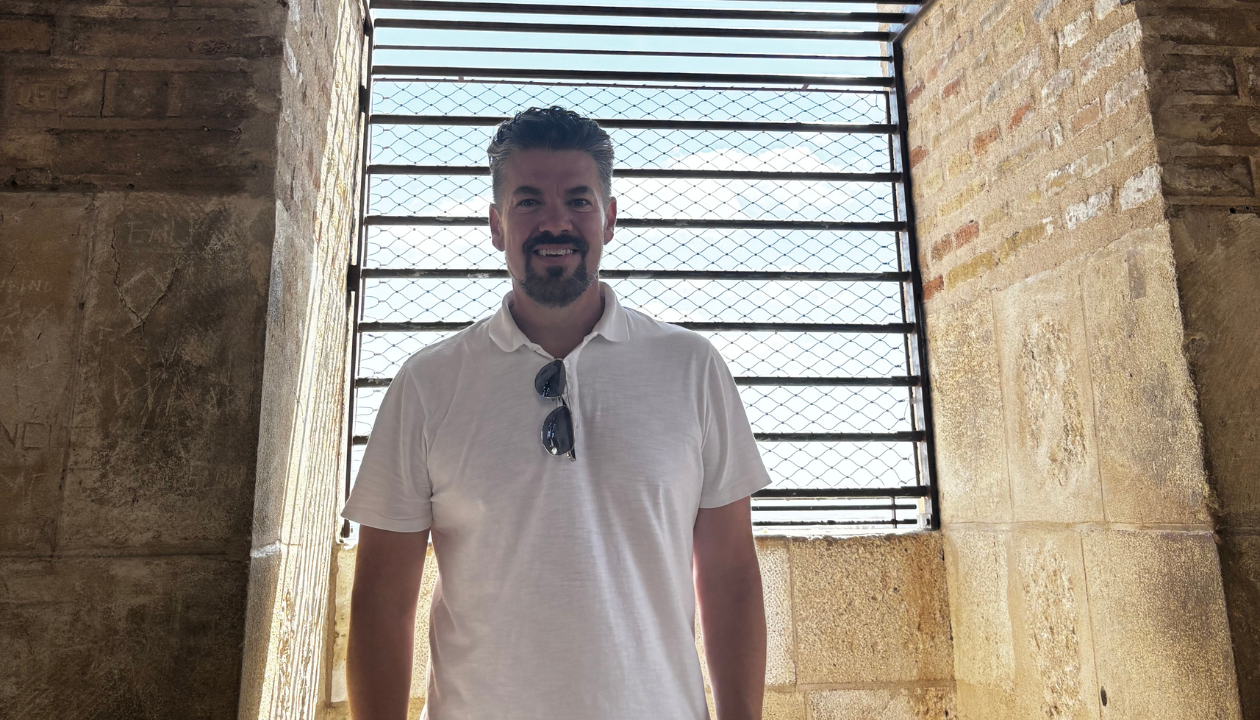
Then we climbed the Giralda Tower, once the minaret of the mosque, now the cathedral’s bell tower. From the top, the view was breathtaking: the old town, the Guadalquivir River, and the Barrio Santa Cruz spread out below us. Aaron managed to describe the view entirely in Spanish, using the new vocabulary we had reviewed earlier that morning.
As we rested in the shade after the climb, he said, “Now I understand why people fall in love with Seville.” I told him that the cathedral, the Real Alcázar, and the Archivo General de Indias form the heart of the de Sevilla World Heritage complex, a living reminder of how this city connected Europe with the New World.
A Toast to Language – Wine Tasting in Seville
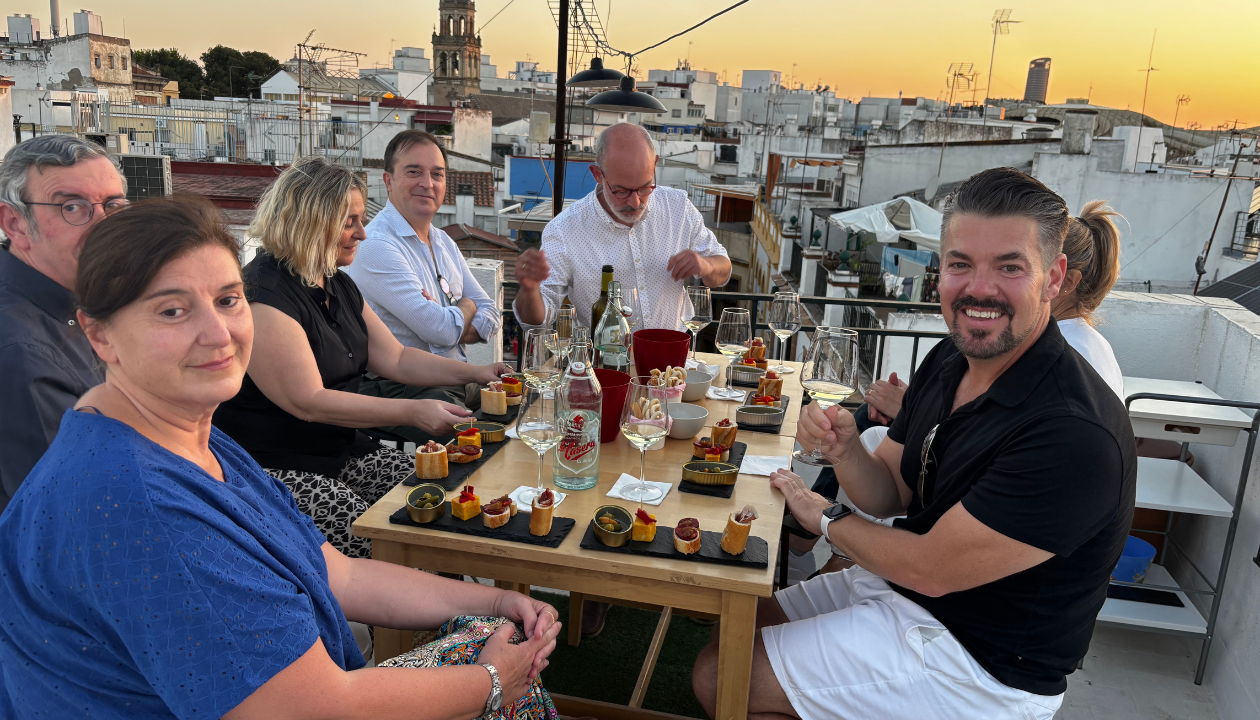
To end Aaron’s immersion week, we shared a relaxed afternoon of wine tasting, a perfect match for his love of Spanish culture and conversation. We visited a small local bodega near the west bank of the Guadalquivir River, far from the busy tourist areas of the city centre.
The setting was informal and welcoming, with soft music and the scent of orange trees nearby. As we sampled local wines from Andalusia, Aaron practiced vocabulary related to flavours and sensations: seco, afrutado, aroma, cuerpo, retrogusto. He quickly began describing what he tasted with growing fluency.
We talked about the traditions that surround wine in southern Spain, and how it connects to celebrations like Semana Santa (Holy Week) and the Feria de Abril (April Fair), when flamenco dancers fill the streets of Los Remedios with colour and rhythm. These conversations gave Aaron new cultural insight and helped him understand how deeply the Spanish language is tied to its festivals and emotions.
By the end of the evening, with a glass of fino in hand and the river glowing at sunset, Aaron said, “This is the best classroom I’ve ever had.” And truly, it was real life, real people, and real Spanish, all in one unforgettable experience.
Ready to Live Your Own Spanish Story in Seville?
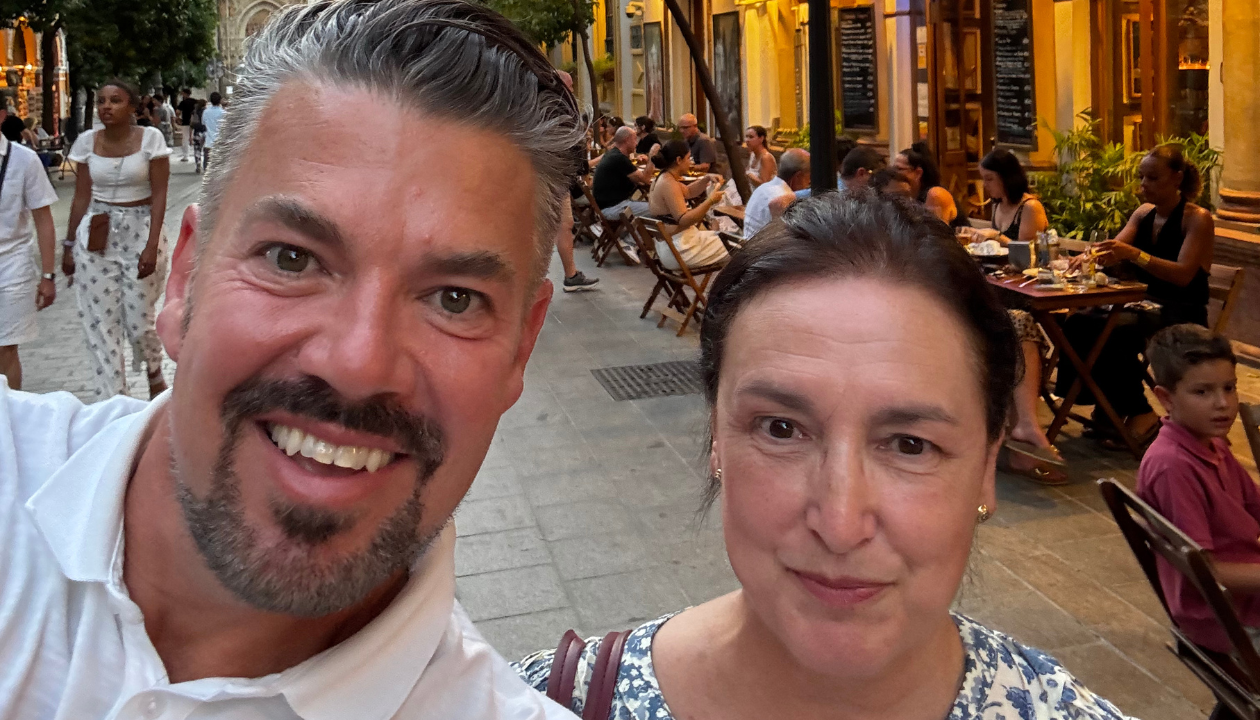
Aaron’s week in Seville was much more than a language course; it was an experience that changed the way he saw Spanish, culture, and himself. Every day brought new discoveries: breakfast chats at home, laughter over tapas, and calm walks by the Guadalquivir River at sunset. Each small moment helped him turn theory into confidence.
By the end of his stay, Aaron was speaking more naturally, describing the world around him in Spanish, and connecting effortlessly with locals. But his greatest achievement wasn’t just in words, it was in feeling at home in Sevilla, Spain.
Living with his teacher gave him a true taste of Spanish life: the rhythm of conversation, the beauty of daily routines, and the warmth of Andalusian hospitality. Learning Spanish in Seville meant living it through culture, friendship, and joy.
As he said goodbye at the Seville Airport, Aaron smiled and told me, “I came here to learn Spanish, but I’m leaving with memories I’ll never forget.”
Now it’s your turn.
If you’re ready to visit Seville and start your own Spanish journey, join the Spanish Homestay Immersion Program (SHIP). Speak the language, live the culture, and feel the heart of Spain just like Aaron did.

Come to Seville, where Spanish becomes part of your life.
You can explore more real immersion experiences here:
👉 SHIP Stories of Our Previous Students
For personalised guidance and programme details, you can contact our founder directly:
Mónica Romero
Founder and Director, Spanish Express
📞 Phone / WhatsApp: +44 7903 867 894
📧 Email: monicaromero@spanishexpress.co.uk
Is Sevilla worth visiting?
Absolutely! Sevilla is one of Spain’s most beautiful cities, full of history, flamenco, and charm. Its vibrant culture, stunning monuments, and warm atmosphere make it a must-visit destination in southern Spain.
How many days in Seville is enough?
Around 7 to 10 days are ideal to explore Seville comfortably. You’ll have time to see major landmarks like the Cathedral, Real Alcázar, and Plaza de España while enjoying local food and relaxed evenings.
What is the number one thing to do in Seville?
Climb the Giralda Tower at the Seville Cathedral for breathtaking views of the city. It’s the perfect spot to appreciate Seville’s blend of Moorish and Christian heritage.
Can I speak English in Seville?
Yes, but Spanish is more common. In tourist areas, many people speak basic English, though locals appreciate it when visitors try speaking Spanish.
What is Sevilla, Spain, known for?
Sevilla is famous for flamenco, Semana Santa (Holy Week) processions, and the Feria de Abril (April Fair). It’s also known for its stunning architecture and rich Andalusian culture.
What is the secret code of Seville?
The motto “NO8DO” appears all over the city. It’s a rebus meaning “No me ha dejado”, “She (Seville) has not abandoned me,” a symbol of the city’s loyalty to King Alfonso X.
What kind of Spanish is spoken in Seville?
Sevillanos speak Andalusian Spanish, a regional dialect known for its soft pronunciation and melodic rhythm, friendly, fast, and full of expression.
Is it Sevilla or Seville?
Both are correct “Sevilla” is the Spanish name, while “Seville” is the English version. Locals, of course, proudly call it Sevilla.
In which country is Sevilla?
Sevilla is in Spain, located in the Andalusia region in the south of the Iberian Peninsula. It’s the capital of the autonomous community of Andalusia.