

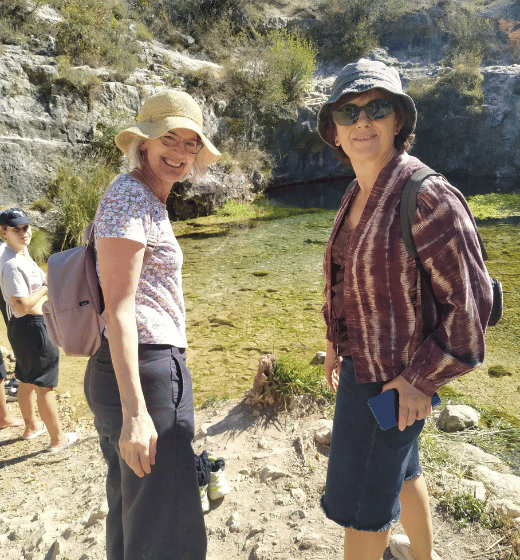
Spain has long been a global benchmark in sustainable tourism, and in 2025, the country is reinforcing that leadership once again. With the UK now joining Spain, the United States, Canada, and Australia in the world’s biggest move toward nature-positive tourism, Spain stands at the centre of a global transformation that connects tourism, biodiversity, and climate action.
On 19 November 2025, Spain took part in the first session of the Nature Positive Tourism Explained webinar series, organised by the World Travel & Tourism Council (WTTC), in collaboration with UN Tourism and the World Sustainable Hospitality Alliance. This series is designed to accelerate how destinations and businesses worldwide shift toward regenerative, nature-positive practices.
For Spain — one of the world’s top tourism destinations with enormous biodiversity, the initiative aligns perfectly with its long-term vision: tourism that restores nature, strengthens communities, and drives climate resilience.
A Turning Point: Nature Action IS Climate Action
The opening webinar took place as world leaders gathered at COP30, putting global pressure on countries and industries to integrate nature into climate strategies. Spain used this moment to reinforce a message it has championed for years:
Protecting nature is not optional for tourism — it is the sector’s future.
Spain showcased how destinations such as Andalucía, the Balearic Islands, and Asturias are already implementing programmes that limit environmental impact while improving local economic resilience.
What Happened in the First Webinar? (19 November 2025)
The first session of the series, Regenerating Destinations Through Nature Positive Tourism, brought together scientists, hoteliers, destination managers, and NGOs from around the world.
Key experts included:
- Dr. Ante Mandić (IUCN TAPAS) – biodiversity recovery & tourism’s global role
- Gwen Raez (Visit Scotland) – regenerative tourism frameworks
- Francesca Mahoney (Wild Survivors) – community-driven conservation
- Camille Drevillon (Abercrombie & Kent) – regenerative tourism business models
- Christiane Zeidan (Red Sea Global) – large-scale sustainable development
- Professor Kelly Bricker – ecosystem finance & academic insights
Spain’s own sustainability successes were referenced repeatedly, especially its marine reserves, rewilding programmes, and strong tourism governance across autonomous communities.
Three-Part Global Webinar Series — Confirmed Dates
Spain is a participating nation in the full three-part Nature Positive Tourism Explained series:
19 November 2025 — Webinar 1
Theme: Regenerating Destinations Through Nature-Positive Tourism
Hosted by: WTTC
Focus:
- Restoring degraded ecosystems
- Destination-level regenerative planning
- Funding models for biodiversity projects
January 2026 — Webinar 2
Theme: Monitoring and Disclosing Your Nature-Related Risks & Impacts
Hosted by: UN Tourism
Focus:
- How destinations and businesses measure nature-related risks
- Biodiversity data systems
- Transparency and compliance with the Global Biodiversity Framework
(The exact date is publicly listed as January 2026, with the final day to be confirmed.)
19 March 2026 — Webinar 3
Theme: Reducing Impact by Working With Your Supply Chain
Hosted by: World Sustainable Hospitality Alliance
Focus:
- Sustainable procurement
- Nature-positive hospitality
- Supply-chain innovation for hotels, resorts, and tourism operators
Why Spain Is at the Heart of the Movement
Spain’s biodiversity is among the richest in Europe from the volcanic landscapes of the Canary Islands to the marine ecosystems of the Mediterranean. With tourism representing nearly 12% of Spain’s GDP, protecting nature is both an environmental necessity and an economic priority.
This makes Spain uniquely suited to lead in several key areas:
🌿 1. Restoring high-pressure ecosystems
Coastal areas, wetlands, and islands where tourism density is high.
🌱 2. Advancing regenerative tourism practices
Spain already leads Europe in protected marine areas and rewilding initiatives.
🏞️ 3. Engaging local communities
Rural tourism communities in Galicia, Asturias, Aragón, and Extremadura play a major role in land stewardship.
🌎 4. Supporting global frameworks
Spain continues to align national tourism policies with the Global Biodiversity Framework and EU Nature Restoration Law.
A Strategic Priority for Tourism and the Planet
According to WTTC and global experts, Travel & Tourism is one of only six industries where 80% of the sector’s value is directly dependent on nature.
This means tourism does not just benefit from healthy ecosystems — it cannot survive without them.
The webinar highlighted the Nature Positive Action Sheet, offering a clear 5-step roadmap for tourism businesses to contribute to ecosystem recovery.
- Prioritise destinations – Focus on locations where biodiversity is most at risk and most relevant to your operations.
- Target action areas – Identify the key nature challenges or ecosystems needing support.
- Choose impactful engagement methods – Select how your business will contribute (funding, operations, partnerships, nature-based solutions).
- Identify strategic partners – Map and choose the right collaborators (NGOs, authorities, communities, tourism bodies).
- Forge lasting partnerships – Build long-term, mutually beneficial collaborations for sustained nature recovery.
Spain’s tourism boards and regional authorities are already integrating these practices into their 2026–2030 sustainability plans.
Governments + Businesses: A Shared Responsibility
The series emphasises that real impact requires collaboration between:
- Governments
- Tourism companies
- Local communities
- Conservation groups
- Academic institutions
For Spain, this means strengthening:
- Conservation funding
- Public-private partnerships
- Local community participation
- Policies that support sustainable business operations
Spain’s demonstrated ability to unify regional and national tourism strategies makes it a powerful contributor to the global nature-positive agenda.
Spain Ready to Lead a Regenerative Tourism Future
The three-webinar series marks the beginning of a profound shift. As the world looks for climate solutions, tourism is evolving from a potential threat to a global guardian of nature, and Spain is positioned to lead by example.
With its rich landscapes, strong governance, and long-standing commitment to sustainable tourism,
Spain stands not just as a participant in this global transformation, but as one of its most influential architects.
Turn Nature-Positive Tourism into a Real Spanish Life Experience
Spain is not only leading the world in sustainable and regenerative tourism, it is also one of the best places to truly live the language and culture behind this global movement. Understanding Spain goes beyond reading about policies and conferences. It comes from sharing daily life, conversations, and local perspectives inside real Spanish homes and communities.
Our Spanish Homestay Immersion Program (SHIP) is designed for this kind of meaningful experience. You live with your teacher, practise Spanish in real situations, and connect with local culture in a responsible, people-centred way.

SHIP is ideal for:
• Busy professionals who want fast, practical progress
• Business learners who need real conversational and workplace Spanish
• Cultural travellers who want more than surface tourism
• Adults of all ages looking for meaningful immersion, not classroom-only study
• Students preparing for Spanish exams such as DELE, SIELE, GCSEs, A-Levels, IGCSE, IB, and other international Spanish qualifications
Immersion stories here:
👉 Spanish Culture, Sustainability & Immersion Stories
For personalised guidance and programme details, you can contact our founder directly:
Mónica Romero
Founder and Director, Spanish Express
📞 Phone / WhatsApp: +44 7903 867894
📧 Email: monicaromero@spanishexpress.co.uk
