

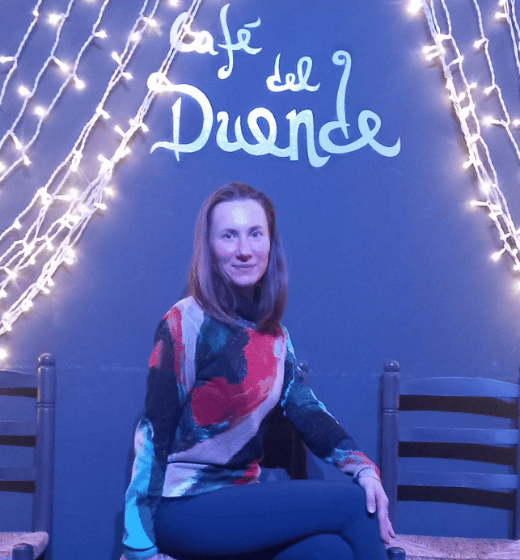
Hi! I’m Pilar, your native Spanish host teacher in Valencia with Spanish Express and our Spanish Homestay Immersion Program (SHIP). One of my favorite parts of teaching is taking students beyond the classroom and into real culture, and that includes flamenco shows, along with many other historical and adventurous excursions.
If you’ve never experienced flamenco live, you might think it’s “just a dance.” But the moment you see a real flamenco performance, you understand: it’s an art form, full of emotional intensity, rhythm, and passion—a living symbol of Spain that has traveled the world.
What is flamenco?
Flamenco is an art form based on various folkloric music traditions from southern Spain, especially the Andalusia region (also called Andalusia). It combines music, song, and dance into one powerful performance style that is both traditional and constantly evolving.
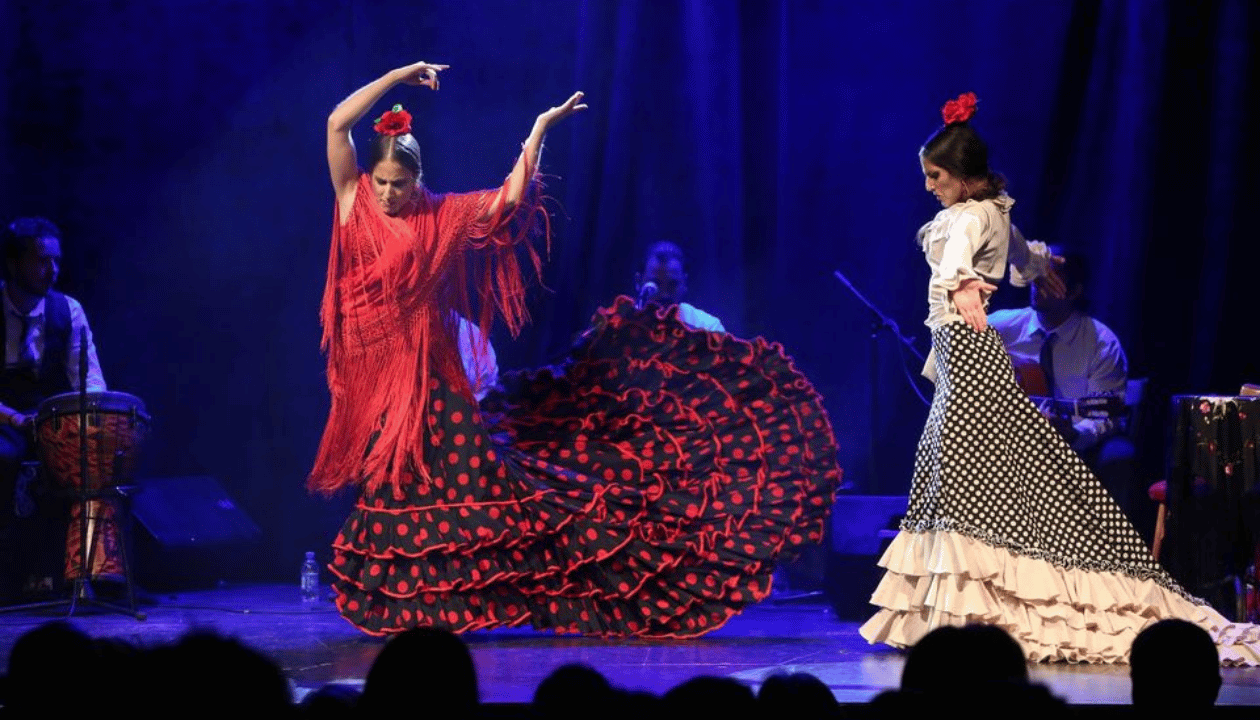
In Spanish, the dance side is called el baile flamenco, often shortened to baile, and it is shaped by dramatic body language, expressive arms, and striking footwork. The music side includes flamenco music, led by a singer, supported by musicians, and anchored by the flamenco guitar and expert guitar playing.
Because of these layers, flamenco is not just entertainment. It is a complete performing art with deep history, strong roots, and a unique place in Spanish identity.
Where flamenco comes from: traditions in Southern Spain
Flamenco grew from a blend of communities and influences in southern Spain, especially within Andalusian cities and towns. It connects to folkloric music traditions from the region and includes many styles influenced by the Gitano (Roma) community. You’ll often hear people talk about gitano-influenced styles and even more gitano-influenced styles when comparing performance energy, improvisation, and body expression.
A very important city in flamenco history is Jerez de la Frontera, known for powerful singing, strong rhythm, and the kind of atmosphere where flamenco feels raw and alive. Over time, flamenco spread from local gatherings to theaters, festivals, and major Spanish flamenco dance companies.
It also sits alongside other Spanish folk dances, but flamenco stands out because it is so intense, personal, and performance-driven.
The essential parts of a flamenco performance
A classic flamenco set usually includes:
1) Cante: the voice and the story
The singer carries the emotional message. Flamenco songs can feel joyful, proud, heartbreaking, or defiant. Many pieces are sung with a raw tone that grips the audience.
2) Toque: guitar and rhythm
The guitarist uses flamenco guitar techniques that sound sharp, percussive, and dramatic. Great guitar playing doesn’t just follow the dance—it leads and responds to it.
3) Baile: the dance and the drama
Flamenco dancing is famous for posture and control—often a proud carriage, strong focus, and moments of stillness that create tension. Some styles feature little movement in the hips and more intensity in the upper body, while others burst with speed and power.
This is where you’ll see intricate footwork, heel strikes, turns, and long rhythmic sequences.
The sound of flamenco: instruments and body percussion
Flamenco uses both musical instruments and the body as percussion. Along with guitar, you may see or hear:
- rhythmic clapping and hand clapping (often called palmas)
- rhythmic stamping of the feet
- occasional additional percussion depending on the show
In live settings, these elements don’t feel “extra.” They are the heartbeat of the rhythm.
Why flamenco dance is so challenging
Flamenco is a highly technical dance style that takes serious training. Many professional flamenco dancers develop intense strength, coordination, and control.
In some productions, especially those by Spanish flamenco dance companies, you’ll notice how the dancers can look elegant and powerful at the same time. Some performers even come from a ballet dancer background, which influences posture, arm lines, and stage presence. That’s one reason flamenco is sometimes connected to ballet training and theatrical structure.
In modern staging, you may also notice a relationship between flamenco footwork and tap—not because they’re the same, but because both demand sharp timing and rhythmic clarity.
The best performances include absolute precision, especially during the fast sequences, and sometimes it looks like lightning-fast footwork performed perfectly in time. You’ll hear people describe it simply as lightning-fast footwork.
Classical flamenco vs modern flamenco
Students often ask me: “Is this traditional or modern?”
Classical flamenco
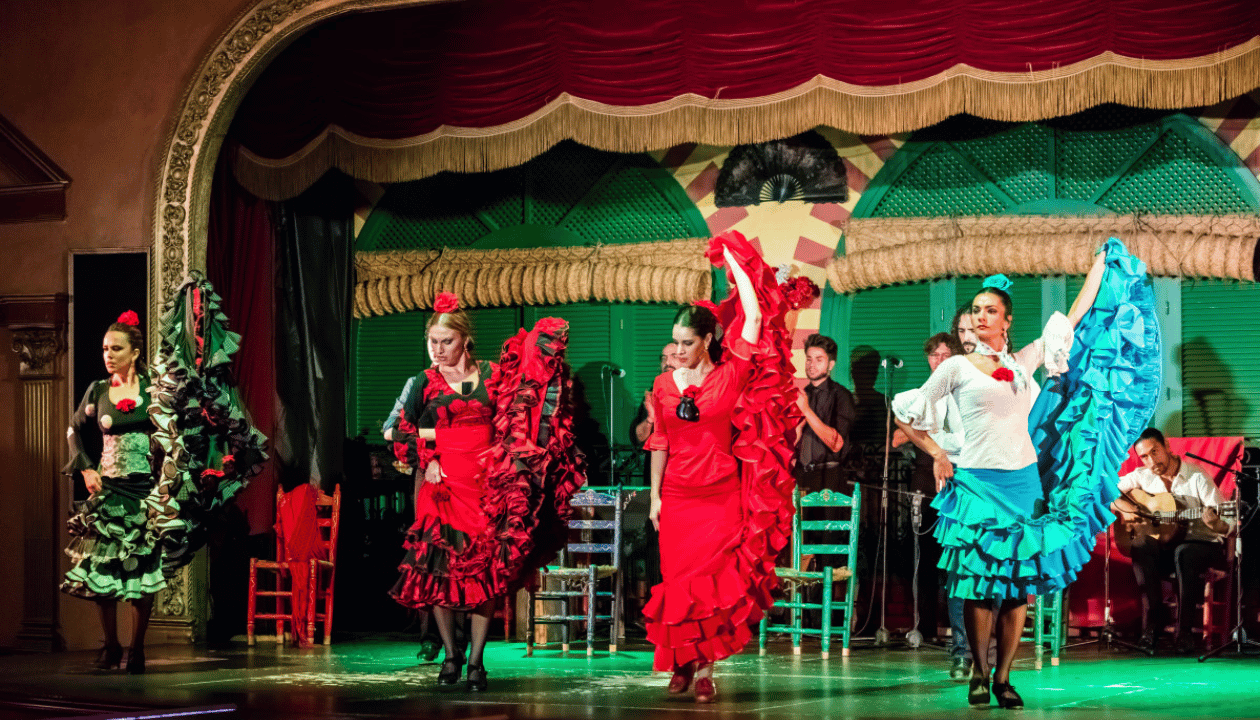
Classical flamenco often follows more formal choreography and structure, especially in staged productions. It’s frequently performed by professional companies and designed for theater audiences. The lines may look refined, and the overall style is controlled and polished.
Modern flamenco
Modern flamenco can still be deeply traditional, but it may use new staging, creative arrangements, and contemporary influences. Some shows mix in fresh musical textures while keeping flamenco rhythm and expression at the center. It’s one reason flamenco continues to evolve and stay relevant in the world.
Styles, traditions, and “palo seco”
Flamenco contains many styles (known as “palos”), each with its own rhythm and emotional tone. Some are festive, some are serious, some are dramatic.
One important concept you might hear about is palo seco—a flamenco approach that is stripped down, often with minimal accompaniment. This highlights the raw voice, rhythm, and intensity.
These differences are part of why flamenco feels like a full artistic language, with deep traditions and expressive variation.
Flamenco clubs and live performances
If you want the most authentic feeling, I always recommend going to live flamenco performances rather than only watching videos.
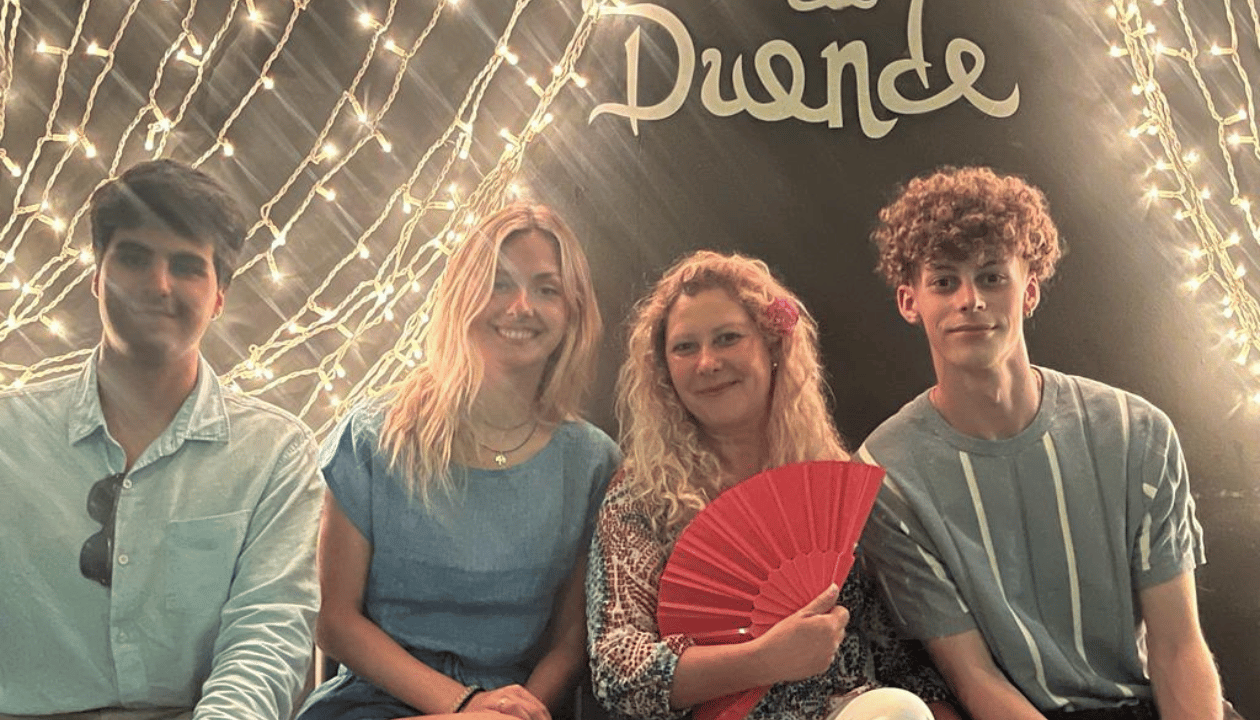
In many places, flamenco clubs such as Café del Duende in Valencia create an atmosphere where the audience is close, and the energy is real. In these spaces, flamenco is not passive. The audience reacts, supports, and participates emotionally.
Flamenco is also frequently performed in theaters, festivals, and cultural centers across Spain—from Madrid to Seville, and beyond.
A quick note on the word “olé”
In flamenco, you may hear “olé!” as encouragement. Some discussions link it to different linguistic origins, including references to the hebrew verb oleh in certain explanations. Regardless of theory, what matters in the moment is how it works: it’s a burst of support—an instant connection between performers and audience.
Why I take SHIP students to flamenco shows
As a teacher, I love how flamenco supports language learning. Students hear real Spanish around them, learn cultural context, and feel what Spanish expression looks like beyond grammar.
On our excursions, flamenco becomes a bridge between language and lived experience. You see the male and female performers, you notice how female performers and female dancers often highlight arm expression and elegance, while male dancers may emphasize power and footwork, though modern training blends these traditions beautifully.
You also see how the movement communicates emotion, and how the music and dance are accompanied by the guitar, clapping, and the singer’s storytelling.
Experience Flamenco with Spanish Express and SHIP
Reading about flamenco is inspiring, but experiencing flamenco in Spain is transformative. At Spanish Express, our Spanish Homestay Immersion Program (SHIP) allows you to live the language while discovering the country’s most powerful cultural expressions, including flamenco shows, historical visits, and meaningful local experiences.

If you’d like to explore available weeks, destinations, or find out whether this immersion approach is the right fit for you, you’re warmly invited to get in touch directly with our Founder and Director:
Mónica Romero
📞 Phone / WhatsApp: +44 7903 867894
📧 Email: monicaromero@spanishexpress.co.uk
We look forward to welcoming you to Spain — and to helping you experience its language, culture, and passion from the inside.
