

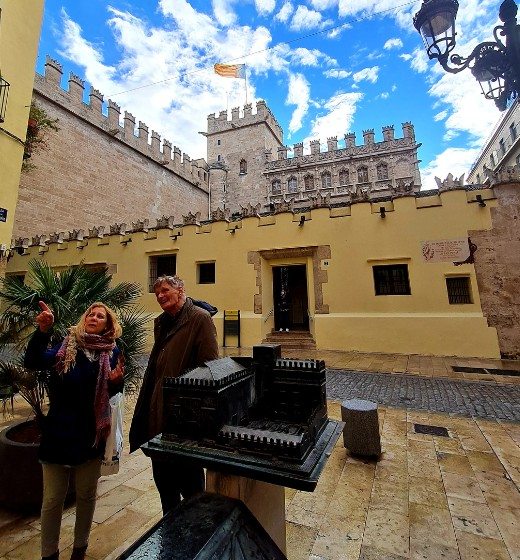
The first thing I do with new students at La Lonja is ask them to stay quiet for a moment. La Lonja, or La Lonja de la Seda, is Valencia’s late-Gothic silk exchange—a former center of trade and commerce that now stands as one of the city’s defining cultural and architectural landmarks. We cross the street from the noise of the Central Market, step through the entrance, and suddenly the city seems to disappear. Stone columns twist upward like palm trees, light moves slowly across the floor, and even the chattiest guests lower their voices. In my experience, that silence teaches more about Valencia than any guidebook, because before the paella and the beaches, this was a town of merchants, ships, and silk, and this building remembers all of it.
I am Pilar, and through the Spanish Homestay Immersion Program (SHIP), students live with me here in Valencia and learn Spanish through real daily life. This is written for Spanish learners, cultural travelers, and anyone curious about how a historic place can make the language more vivid and useful. Instead of studying only from a textbook, we practice the language while shopping, cooking, walking through the old town, and visiting places like this one together. So when we talk about La Lonja, we are also talking about Valencia’s mercantile past, Gothic architecture, Spanish business history, what to notice when you visit, and why places like this give language immersion a depth that grammar exercises alone cannot.
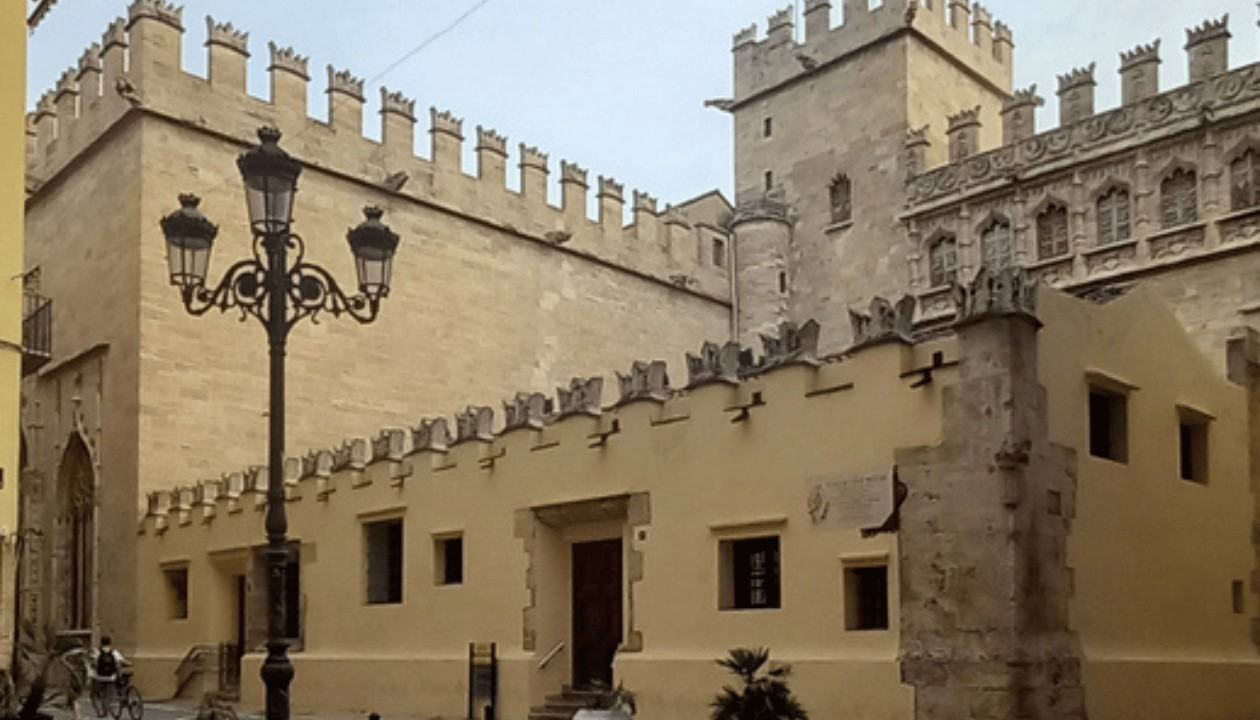
A Short History of La Lonja de Valencia Silk Exchange
Although many visitors come for the architecture, I always begin with the story, because the whole building makes more sense that way. La Lonja de la Seda, the silk exchange, was constructed between 1482 and 1553, during Valencia’s golden age. At that time, the city was a major Mediterranean mercantile city, and silk crossing the sea made local merchants rich and confident. The building quickly became a hub for trade and diplomacy, central to Valencia’s identity.
In fact, it housed the Taula de Canvis, a municipal bank whose name literally means “table” of exchanges, where financial and commercial transactions took place. It also served as the seat of the first merchant marine tribunal in Spain and even played a role in the early development of futures trading. Therefore, when we stand inside, I remind my students that modern business practices have roots right here.
15th Century Late Gothic Architecture With Real Meaning
La Lonja is a masterpiece of civil Gothic architecture, and honestly, few secular buildings in Europe carry this much personality. UNESCO declared it a World Heritage Site in 1996, recognizing its outstanding universal value because it dramatically illustrates the power and wealth of one of the great Mediterranean mercantile cities.
However, what I love most are the details in the walls and stonework, which reveal the building’s original construction. The main facade, which looks onto the Plaza del Mercado, features intricate gargoyles carved to reflect merchant power, and every figure seems to have an opinion as part of that original design. Meanwhile, the late Gothic style continues inside with vaults ribbed in star patterns. For my students, learning to describe this late Gothic architecture in Spanish becomes a game: they point, I give them the word, and the building does the rest.
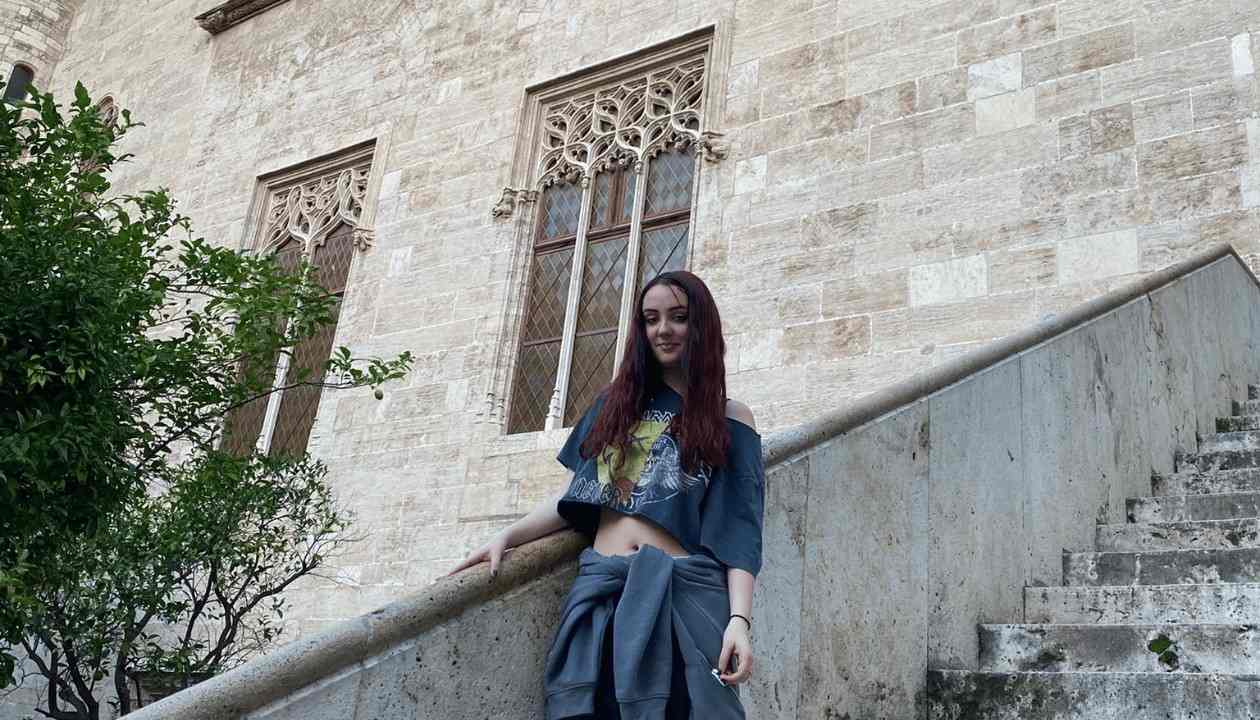
Inside the Trading Hall and the Consolat del Mar
The visit really centers on two rooms, and each one tells a different story. On the ground floor sits the Sala de Contratación, the trading hall and main hall of the complex, where eight helical stone columns twist toward the ceiling like palm trees. Along the central axis of this Hall of Columns, an inscription once reminded merchants that honest commerce would lead to eternal life.
Because of that message, La Lonja shaped a high level of ethical business standards in the local community, which I find remarkably modern. After that, we climb the staircase to the upper floor, where the Consolat del Mar met. This first-floor room is decorated with a gilded wooden coffered ceiling from the 15th century, and students always tilt their heads back and go quiet again. Then the new vocabulary starts flowing naturally.
The Orange Garden, the Tower, and the Chapel
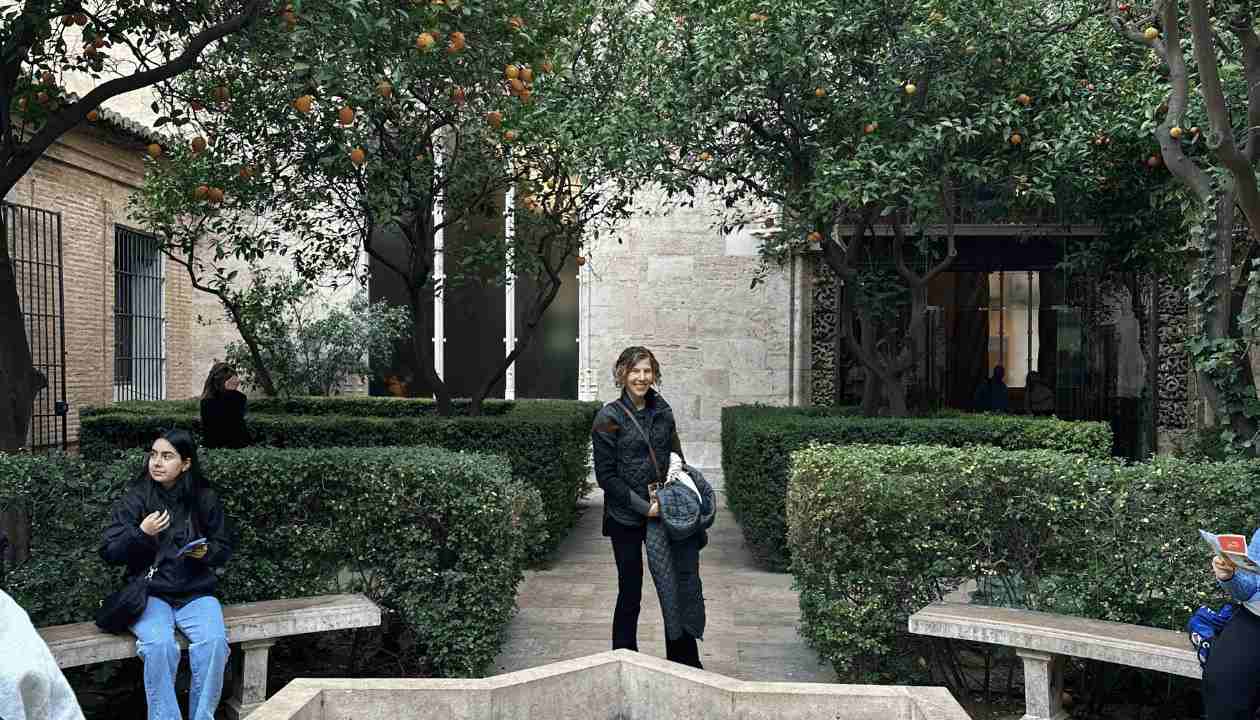
Between the two wings, an orange garden offers a peaceful place to rest, and the orange trees give the stone courtyard color all year. Also, the tower rises 26 meters above ground level, with a chapel at its base and narrow spiral stairs inside. The tower opens to visitors only on special occasions, so if you get the chance, take it. Even so, the courtyard alone is worth lingering in, especially when we sit and review the morning’s new words together.
Practical Tips Before You Visit La Lonja
La Lonja is located in the historic centre of Valencia, right next to the Central Market, with Calle de la Lonja running alongside it. It opens daily from 10 am to 7 pm, regular admission costs two euros, and there is free entry on Sundays and holidays. Plan 20 to 30 minutes inside, although we usually stay longer. Some students ask me if this was the old city hall; it was not, because the actual city hall sits a short walk away, and La Lonja belonged to commerce, not government. Today, it remains a cultural center hosting events and exhibitions, so check what is on. Afterwards, we often taste horchata on a nearby terrace or continue to the museums of the old quarter.
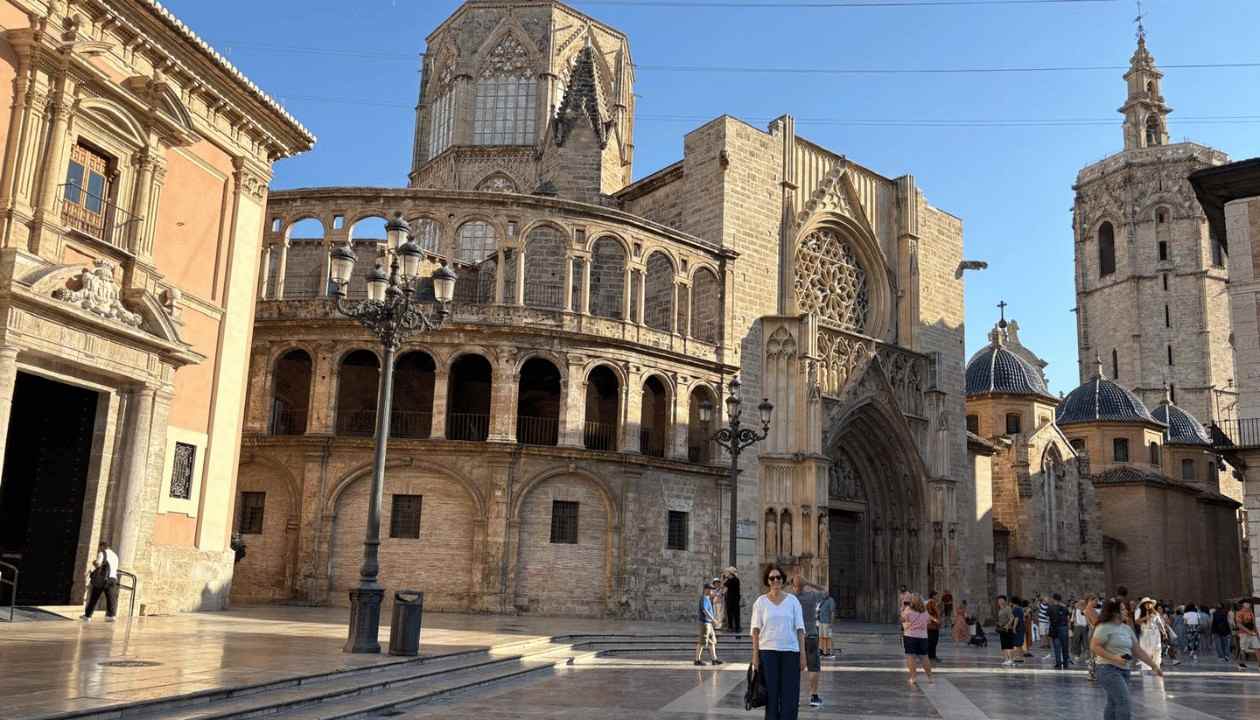
Every time I leave La Lonja with students, I notice the same thing: they walk out speaking more Spanish than when they entered. Something about those columns, the orange trees, and the stories of honest merchants loosens the tongue. That is why I keep returning with every group. Here, Valencia’s past and present sit side by side, and for a little while, my students get to belong to both. Spanish stops being a subject and becomes a lived experience.
So, Come Live Spanish Where History Happened
If La Lonja de la Seda moves you from a photo, imagine standing under those twisted columns while chatting in Spanish with your teacher. Through SHIP with Spanish Express, you stay in my home, share meals, explore Valencia street by street, and turn every market visit and monument into living language practice. More importantly, you gain confidence through real interaction, not memorization, because immersion works when Spanish becomes part of your day.

You can also explore more cultural immersion stories here:
👉 Read Stories of Our Past Visitors Here
For personalised guidance and programme details, you can contact our founder directly:
Mónica Romero
Founder & Director, Spanish Express
📞 Phone / WhatsApp: +44 7903 867 894
📧 Email: monicaromero@spanishexpress.co.uk
