

When my students ask me where paella was born, I never just answer. Instead, I take them to El Palmar de Valencia, a small fishing village inside Albufera Natural Park, about 20 kilometers from Valencia, known for its traditional paella, rice fields, and sunsets over the lagoon. We ride out of the city, and after a while, the buildings give way to water, reeds, and endless green fields stretching to the horizon.
Although it feels like another world, it is close enough for an afternoon trip and rich enough for anyone who wants a more authentic side of Valencia, whether you are learning Spanish, planning a day trip, or simply looking for local food and culture beyond the city center. By the way, if you searched for El Palmar Mexican restaurants and landed here, this is the original Valencian village.
I am Pilar, and through the Spanish Homestay Immersion Program (SHIP), students stay with me in Valencia and learn Spanish through real daily life. Rather than sitting in a classroom, we practice the language while cooking together, exploring markets, meeting neighbors, and taking guided trips like this one. In this guide, I will show you what makes El Palmar special: its history, the natural landscape of Albufera, what to eat, what to do, and how to visit from Valencia, so the trip becomes a Spanish lesson, a food lesson, and a memorable introduction to local traditions.
A Short History Told Over the Water
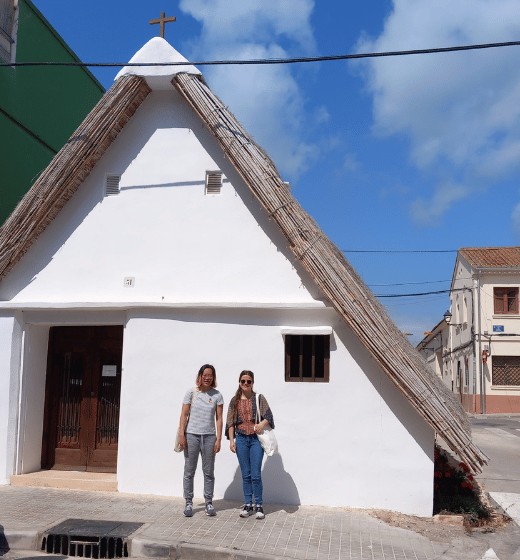
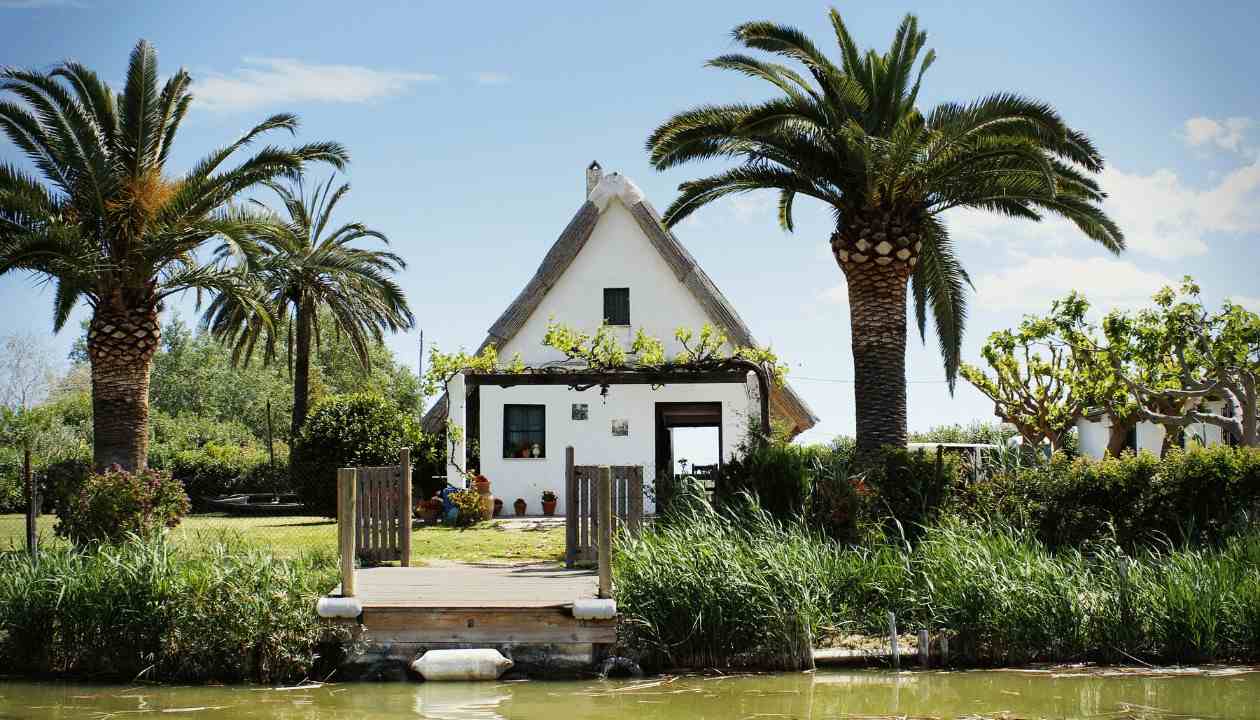
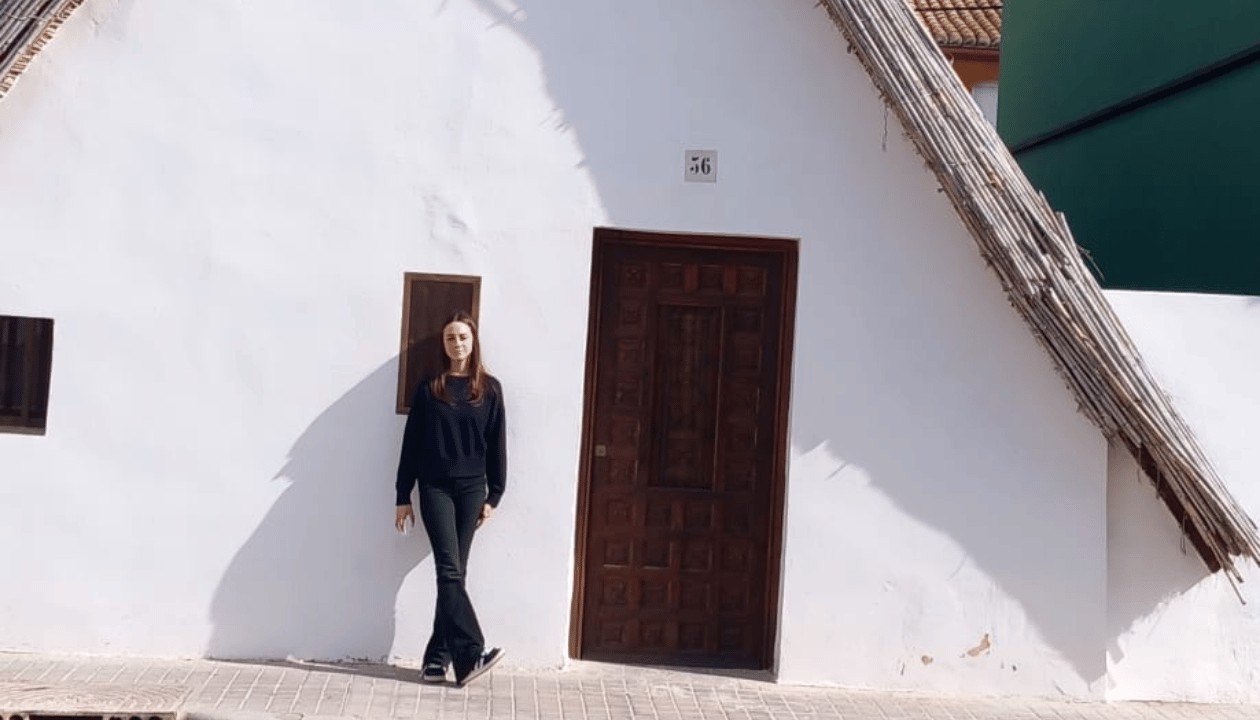
Because the village makes more sense once you know its story, I always begin there. El Palmar’s origins date back to 711 AD, although life here truly changed after King Jaume I conquered Valencia in 1238. After that, fishing activity began on the lagoon, and families lived from eels and mullet for centuries. Later, during the 19th century, rice became profitable, and the fields you see today took shape around the water. Meanwhile, the traditional thatched houses called barracas once filled the village; however, the fire of 1883 reduced their number dramatically. Even so, the oldest barraca, Tío Aranda, was recently restored, and I always point it out to my students because it connects them directly to that older world.
Sunset on the Albufera Lagoon
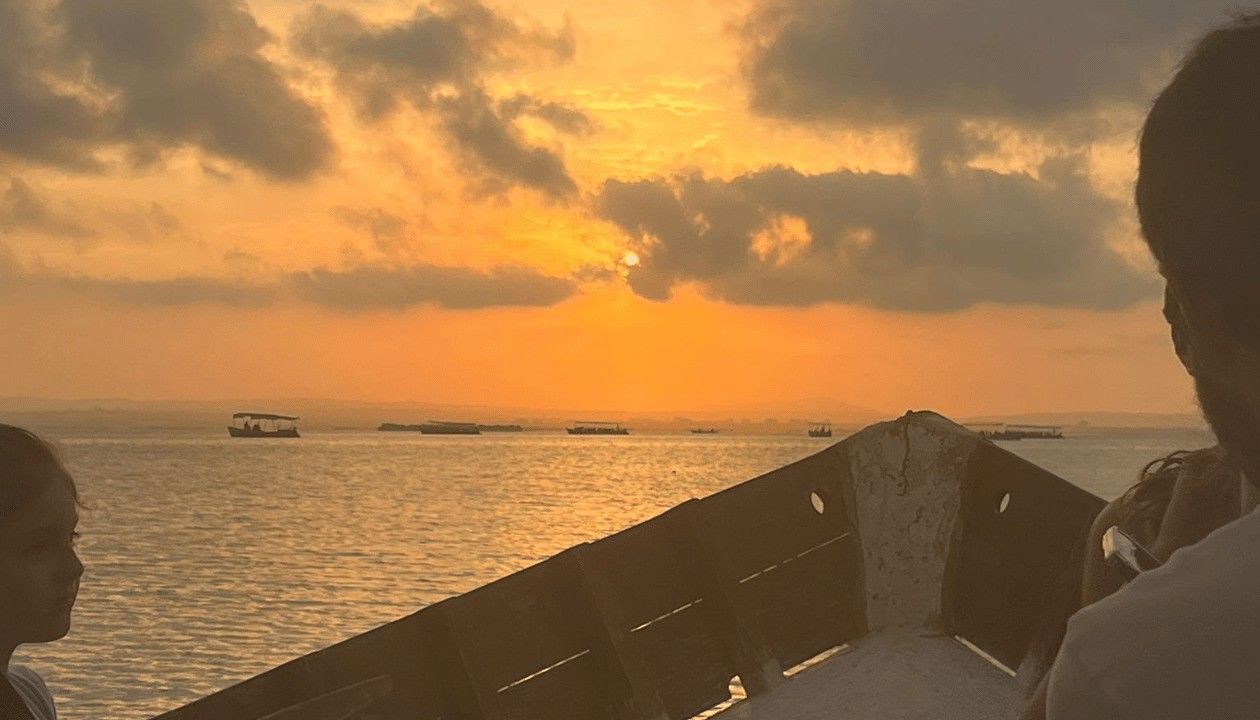
If you only have time for one thing, let it be the lagoon at dusk. Local guided boat rides explore the calm waters of Albufera Natural Park, and boat rides at sunset are especially popular for good reason. In fact, many people say the Albufera lagoon offers some of the most beautiful sunsets in Europe, and after years of visits, I still agree.
The sky turns orange and pink, the water copies it perfectly, and my students usually stop talking mid-sentence. Also, in spring and summer, you can watch lateen sailing exhibitions, when traditional boats cross the lagoon the way fishermen sailed for generations. Therefore, I always check the calendar before we plan our trip.
Delicious Food in El Palmar Village Restaurants
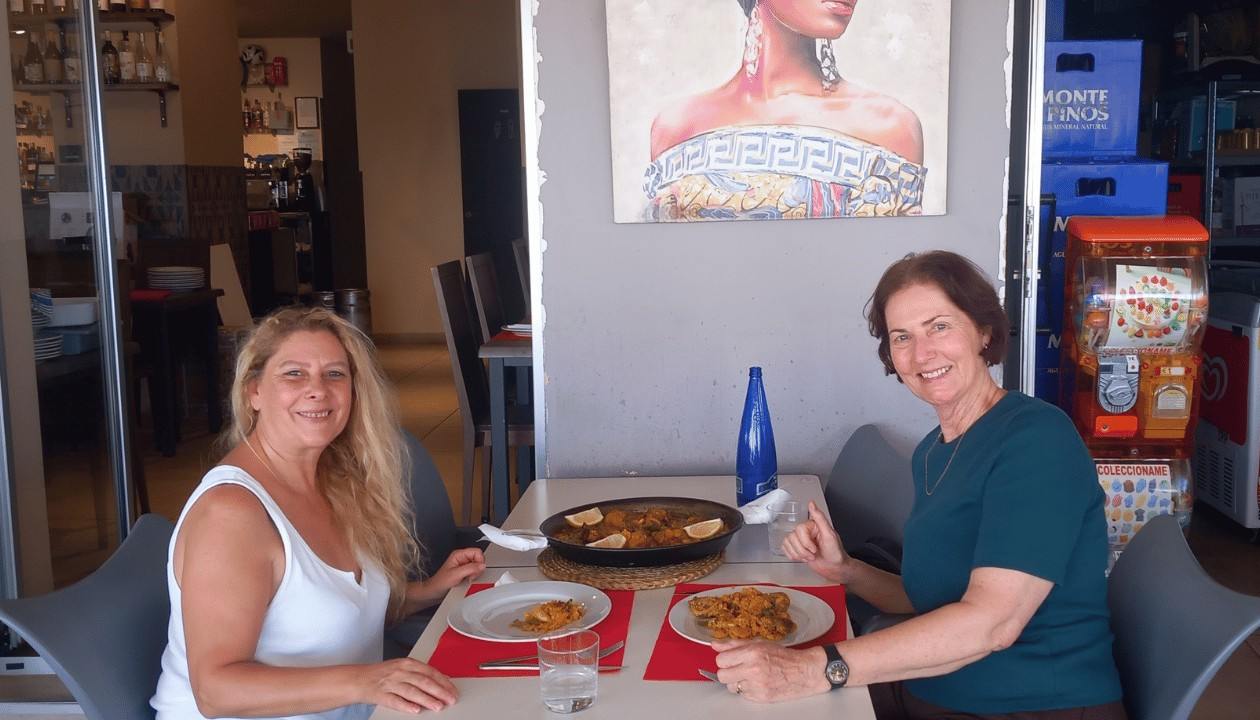
Naturally, we come hungry, because El Palmar is known for its traditional Valencian paella, cooked over fire the way it should be. The village features a surprisingly high density of restaurants specializing in local dishes, and several renowned restaurants serve traditional cuisine passed down through families.
Besides paella, I always encourage students to try all i pebre, a typical dish made with eel, and llisa adobada, which features local gray mullet as its key ingredient. At first, some hesitate; then they taste it and order more. Additionally, the El Palmar fish market sells fresh, sustainably caught fish straight from the lagoon, so the delicious food here is honest as well as memorable. For this reason, lunch in El Palmar becomes our liveliest vocabulary class of the week.
Things to Do and Activities in El Palmar Area
Beyond eating and sailing, the area offers quiet activities that help you relax and slow down. For example, the El Palmar to L’Estell route is an easy walk, a round trip of 6 kilometers along water channels and rice fields, perfect for conversation practice. At the same time, the wetlands of Albufera Natural Park are crucial for migratory bird life, so we often pause simply to watch herons lift off the water. More importantly, these small things teach students to notice, ask, and describe in Spanish, which no textbook can do.
How to Get to El Palmar From Valencia
Getting here is simple, and that surprises many visitors. EMT line 25 provides public transportation from Valencia directly to El Palmar, and the Valencia Tourist Card offers free rides on that same line, so the trip can cost nothing. However, cycling to El Palmar is not recommended because the roads are narrow and shared with cars. Instead, take the bus, relax, and watch the landscape change from city streets to rice fields. Then, once you arrive, everything in the village is walkable.
By the time we ride bus 25 back to Valencia, my students are usually quiet in the best way. They remember the taste of paella beside the water, the sound of Spanish at the market, and that impossible sunset over the lagoon. That is why I keep returning with every group. In El Palmar, Spanish stops being homework, and instead it becomes the language of a day they will never forget.
So, Come Learn Spanish by the Lagoon
If reading this made you hungry or curious, imagine living it in Spanish. Through SHIP with Spanish Express, you stay in my home in Valencia, share real meals, explore the city and its surroundings together, and practice Spanish naturally from breakfast to sunset. Because immersion happens in markets, boats, and kitchens rather than classrooms, your confidence grows with every conversation, and trips like El Palmar become part of your learning story.

You can also explore more cultural immersion stories here:
👉 Read Stories of Our Past Visitors Here
For personalised guidance and programme details, you can contact our founder directly:
Mónica Romero
Founder & Director, Spanish Express
📞 Phone / WhatsApp: +44 7903 867 894
📧 Email: monicaromero@spanishexpress.co.uk
