


Balearic Islands Day 2026 falls on Sunday 1 March, with Monday 2 March also observed as a holiday across much of the archipelago. This regional public holiday commemorates the signing of the Statute of Autonomy on 1 March 1983, the date that formally established the Balearic Islands as an autonomous community within Spain.
Celebrations span all four islands—Mallorca, Menorca, Ibiza and Formentera—along with the protected Cabrera archipelago, though Palma de Mallorca serves as the most visible hub for major public events. For visitors arriving in early March 2026, this extended weekend offers a rare opportunity to experience authentic local culture, traditional festivities and island-wide celebrations, while also requiring awareness of altered shop hours, transport schedules and service availability.

Key Dates and Public Holiday Status in 2026
The Day of the Balearic Islands has a fixed date each year, permanently tied to the anniversary of the 1983 Statute of Autonomy coming into force.
In 2026, the official Balearic Islands Day falls on Sunday 1 March. Monday 2 March 2026 is also treated as a general holiday throughout much of the archipelago, creating an extended long weekend.
Key points about the 2026 holiday status:
- Both 1 and 2 March 2026 are local public holidays in the Balearic Islands only
- These dates are not observed as holidays in the rest of Spain
- Most government offices, banks and schools close on both days
- Many private businesses remain closed or operate reduced hours across the long weekend
- Shops in major tourist zones may partially open, but visitors should expect limited services
Travellers should verify local municipal calendars for exact observance in their specific destination. Towns like Palma, Alcúdia, Ciutadella, Ibiza Town and Sant Francesc Xavier may each have slightly different arrangements for the 1–2 March 2026 period.
Historical Background and Meaning of the Day
The holiday marks a pivotal moment in the islands’ modern history: the entry into force of the Balearic Statute of Autonomy on 1 March 1983. This legal framework granted self-government to the archipelago within Spain’s system of autonomous communities, providing official recognition of the region’s distinct identity.
- The Statute of Autonomy established the Balearic Islands—comprising Mallorca, Menorca, Ibiza, Formentera and the Cabrera archipelago—as a single autonomous community
- This granted the regional government authority over areas including education, health and culture while remaining under Spanish sovereignty
- The autonomy statute distinguished the islands from mainland regions like Catalonia and Valencia, recognizing their unique geographic and cultural position as a Mediterranean archipelago
- The date was first celebrated officially in the 1980s following the statute’s passage
- In 1999, it became a non-working day, transforming into the major celebration it is today
- The holiday symbolises political recognition, protection of the Catalan language (in its Balearic variants), and preservation of islands traditions
This shared history of autonomy coming into effect continues to shape how the Balearic people mark each anniversary, blending institutional commemoration with expressions of cultural pride.
How Balearic Islands Day Is Celebrated
Most events for Balearic Islands Day 2026 run from the last days of February through 1–2 March, with peak activity concentrated on the Sunday holiday itself. The festivities typically combine official ceremonies with vibrant public activities that showcase Mediterranean pride and local identity.
Common celebration elements across the islands include:
- Official ceremonies: Readings of the Statute, flag-raising, speeches by regional officials
- Cultural performances: Concerts, street performances, and traditional folk dances including ball de bot
- Music and entertainment: Xeremiers (traditional bagpipe musicians), gegants (giant puppet figures), and acoustic performances
- Artisan markets: Fairs featuring local crafts, ceramics, leather goods, textiles and jewellery
- Gastronomic fairs: Tastings of local products such as sobrassada sausage, ensaïmada pastries, local wines, olive oils and Mahón cheese
Cultural institutions typically organise special programming with open days at museums and historic buildings, guided tours of heritage sites, language workshops and exhibitions on island history. Families can expect children’s activities, including storytelling, sports tournaments, and community games in town squares.

Celebrations by Island in 2026
Although Balearic Islands Day is one regional public holiday, each island shapes its celebration according to its own character and traditions. Here’s what visitors can expect across the archipelago:
Mallorca
- Palma serves as the main epicentre, with events concentrated around historic landmarks like Consolat de Mar, La Llotja and Parc del Mar
- Activities include traditional family games, theatrical history performances, guided tours and concerts in major plazas
- Expect exhibitions of traditional llaüt boats, fishermen’s association events at Drassana square, and booksellers’ fairs with children’s workshops
- Towns like Inca, Manacor and Alcúdia host their own local festivities
Menorca
- Maó and Ciutadella typically host official ceremonies and craft markets
- Maritime-themed events and activities reflecting Menorca’s distinct history and gastronomy
- Equestrian shows demonstrating the island’s centuries-old dressage traditions
- Harness racing at Maó Hippodrome and guided explorations of natural sites like Cova des Coloms
Ibiza
- Ibiza Town (Eivissa) and Sant Antoni offer music, local product fairs and cultural performances
- Events in Sant Jordi feature traditional horse-drawn cart parades, folk dances and handicrafts markets
- Sports events including 3×3 basketball tournaments, motocross competitions and chess tournaments
- Celebrations reflecting Pitiusan traditions and the island’s creative scene
Formentera
- Smaller-scale but intimate community celebrations centred in Sant Francesc Xavier
- Particular emphasis on local culture, nature and communal gatherings
- Traditional communal paella cookouts celebrating the island’s seafood-centric cuisine
- Sporting events, concerts and exhibitions
Cabrera
- As a protected national park, few or no mass events take place
- The island’s inclusion in the autonomous community is acknowledged symbolically

Public Life, Closures and Practical Logistics in 2026
The 1 and 2 March 2026 period forms an extended holiday when everyday life slows significantly across the Balearic Islands. Understanding what’s open and closed is essential for visitors planning their trip.
| Service Type | Sunday 1 March 2026 | Monday 2 March 2026 |
|---|---|---|
| Government offices | Closed | Closed |
| Banks | Closed | Closed or limited |
| Schools | Closed | Closed |
| Shopping centres | Limited hours | Reduced hours |
| Tourist businesses | Partially open | Partially open |
| Restaurants/bars | Most open | Most open |
Transport considerations:
- Public transport runs on Sunday or holiday timetables with fewer services
- Bus and train frequencies are reduced across Mallorca
- Inter-island ferry schedules may change
- Free public transport has been offered in previous years to encourage participation
What typically remains open:
- Restaurants, bakeries and bars in busy tourist zones and historic centres
- Some shops in resort areas around Palma Bay, Playa de Palma, Magaluf and parts of Ibiza
- Museums and cultural sites with special holiday programming
Visitors should check local information sources—municipal websites, hotel reception desks, transport operators—in late February 2026 for specific timetable announcements or road closures linked to street events.
What to Do as a Visitor on Balearic Islands Day 2026
For travellers planning a March 2026 trip to Mallorca, Menorca, Ibiza or Formentera, Balearic Islands Day offers a unique blend of cultural immersion and festive atmosphere. The holiday provides one of the most authentic moments to experience local life beyond the typical beach holiday.
Making the most of Sunday 1 March 2026:
- Treat Palma de Mallorca as a strong base for experiencing the Día de les Illes Balears festivities
- Wander artisan markets and taste local produce at gastronomic fairs featuring sobrassada, ensaïmada and local wines
- Attend at least one concert or folk dance performance in the old town or waterfront areas
- Visit historic landmarks like La Seu Cathedral, the Royal Palace of La Almudaina and the Parc de la Mar area
- Join guided tours of heritage buildings like La Llotja with its Gothic architecture
Using Monday 2 March 2026:
- Take advantage of the additional holiday for slower-paced sightseeing
- Explore coastal paths, nearby villages or quieter beaches
- Visit smaller towns where local festivities continue in a more intimate setting
- Bear in mind that some attractions may still have limited hours
Check official municipal programmes released by Palma City Council and island councils in February 2026 to time your participation in workshops, guided tours and special cultural events. Booking restaurants in advance is wise during the holiday long weekend.

Local Culture, Language and Gastronomy
Balearic Islands Day 2026 is as much about culture and language as it is about political recognition. The celebration offers visitors an immersive window into what makes this Mediterranean archipelago distinctive.
Language and identity:
- Catalan shares official status with Spanish across the islands
- Balearic variants—mallorquí, menorquí and eivissenc—are widely spoken
- Signage, official speeches and cultural events prominently feature Catalan during the holiday
- The celebration reinforces Balearic identity and local pride in linguistic heritage
Traditional music and dance:
- Ball de bot (traditional circle dances) performed in plazas and festival areas
- Xeremiers (bagpipe-like musicians) providing traditional soundscapes
- Folk groups in regional costumes demonstrating island traditions
- Gegants (giant puppet figures) paraded through streets
Gastronomy to seek out:
- Sobrassada: Spreadable cured pork sausage seasoned with paprika
- Ensaïmada: Spiral-shaped sweet pastry dusted with powdered sugar
- Mahón cheese: Menorca’s famous cow’s milk cheese with protected designation
- Cocas: Flatbreads topped with vegetables, fish or sweet toppings
- Local wines and olive oils: Island-produced varieties featured at holiday markets
- Hierbas liqueur: Traditional anise-based digestif from Ibiza
Artisan products:
- Ceramics reflecting each island’s design traditions
- Leather goods, particularly from historic Mallorcan workshops
- Traditional textiles and jewellery
- Handcrafted items representing local identity and unique heritage
Looking Ahead: Balearic Islands Day Beyond 2026
While this article focuses on the 2026 celebration, Balearic Islands Day is an annual fixture on 1 March. The core themes remain consistent each year: autonomy, cultural pride, language preservation, traditions and community life across the archipelago.
Future editions are likely to continue offering:
- Artisan markets and gastronomic fairs
- Concerts and open-air cultural events
- Official ceremonies and institutional programming
- Family-oriented workshops and activities
- Free or reduced-cost public transport to encourage participation
Recent developments suggest an evolution toward multimedia elements, sustainable tourism initiatives and cross-island collaborations. Windfarm tours on Menorca and short film showcases on Ibiza indicate a shift beyond pure tradition toward contemporary expressions of island identity.
For those planning trips in 2026 and beyond, checking updated calendars and the full programme released by the Govern de les Illes Balears and local councils each February is essential. Municipal websites for Palma, Maó, Ibiza Town and Sant Francesc typically publish detailed event schedules in the weeks before 1 March.
Balearic Islands Day offers one of the most authentic opportunities to experience the islands’ Mediterranean identity—a perfect day for visitors seeking culture, history and genuine local life rather than just sunshine and beaches. Whether you’re drawn to Palma’s Gothic architecture, Menorca’s equestrian heritage, Ibiza’s creative energy or Formentera’s intimate community spirit, the first of March provides a celebration worth planning around.
Experience Balearic Islands Day Like a Local, Not Just a Visitor
Reading about Balearic Islands Day 2026 (Día de les Illes Balears) is inspiring, but the real magic happens when you stand in a sunlit plaza, hear the xeremiers playing, taste fresh ensaïmada from a local bakery, and practise your Spanish while chatting with market vendors.
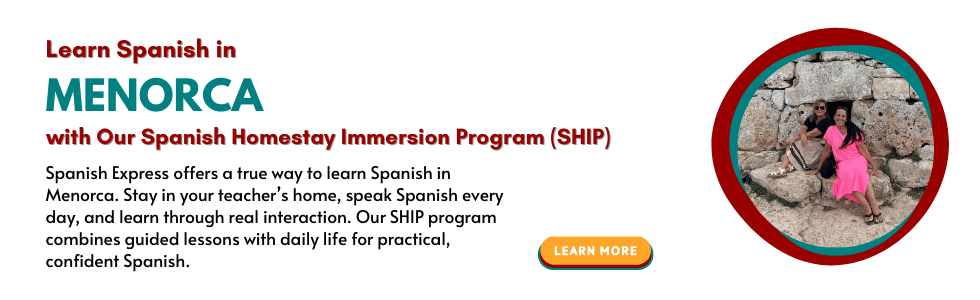
With our Spanish Homestay Immersion Programme (SHIP), you don’t just visit Mallorca, Menorca, Ibiza or Formentera — you live there. You stay in your teacher’s home and experience authentic island life during celebrations like Balearic Islands Day. Imagine learning new vocabulary in the morning, attending artisan markets in the afternoon, and sharing dinner conversations about island traditions in the evening.

This immersive experience forms part of our Spanish Immersion and Cultural Programmes in Spain, designed for learners who want to connect language with real cultural moments from autonomy celebrations to local gastronomy and regional traditions.
You can also explore more stories here:
👉 SHIP Stories of Our Previous Students
For personalised guidance and programme details, contact our founder directly:
Mónica Romero
Founder and Director, Spanish Express
📞 Phone / WhatsApp: +44 7903 867 894
📧 Email: monicaromero@spanishexpress.co.uk
