


Spanish has emerged as a critical language for global business, second only to English in many contexts. With nearly 500 million native Spanish speakers worldwide (over 6% of the world’s population) and a total of around 600 million Spanish users when including second-language speakers, the influence of Spanish spans Europe, the Americas, and beyond. Professionals who speak Spanish enjoy a competitive edge as they can communicate with a vast market across 20+ countries. Fluency in Spanish can significantly enhance career opportunities in international business, finance, hospitality, and trade sectors, enabling professionals to operate effectively in Spanish-speaking markets and work with global organizations. Spanish is not only the second-most spoken mother tongue globally (after Mandarin) but also ranks as the second language of international communication, reflecting its importance in diplomacy, trade, and multinational industries.
Growth of Spanish-Speaking Markets.
The economic clout of Spanish-speaking regions is on the rise. Spain’s economy alone accounts for about 8–6% of the European Union’s GDP, making it one of Europe’s top five economies. In Latin America, emerging markets are rapidly expanding four of the world’s 30 biggest emerging economies are Spanish-speaking nations. Mexico, for example, is forecasted to overtake the UK in GDP by 2030. Additionally, collectively Latin America and the Caribbean (33 countries) form the EU’s 5th largest trading partner. The United States is also a key part of the Spanish-speaking business landscape: it now has the second-largest Spanish-speaking population after Mexico (around 57 million Spanish speakers in the U.S.), and Hispanics comprise 19% of the U.S. workforce (31.8 million workers), the fastest-growing segment of the labor force. In short, whether you’re dealing with the EU, Latin America, or the U.S., Spanish opens doors to major economic opportunities.
The Rise of Online & Hybrid Learning.
As working professionals recognize Spanish as a career booster, many are turning to flexible learning models. Online language courses have become popular for their convenience and customization, in fact, over half of employees prefer to learn at their own pace around their work schedule. Busy entrepreneurs and staff can take classes from home or the office, eliminating commutes and allowing a blend of work and study. Hybrid learning models are also gaining traction, combining online lessons with periodic in-person workshops or immersion trips. This approach offers the best of both worlds: flexibility plus face-to-face practice. Immersive and hybrid learning models allow students to practice Spanish in real-life situations, making the learning process more practical and relevant from the start. The effectiveness of these models is backed by research – studies show that immersive experiences significantly boost language proficiency, and online training can be as effective as classroom learning when done right.
Meet Spanish Express – Your Partner in Business Spanish.
Spanish Express is a leading provider of Business Spanish training that caters specifically to professionals and companies. As a SIELE-accredited center (Servicio Internacional de Evaluación de la Lengua Española), Spanish Express offers authoritative instruction and even exam facilitation for official Spanish certification. Unlike generic language apps or pre-recorded courses, Spanish Express delivers tailored solutions: live online classes, hybrid programs, and the unique Spanish Homestay Immersion Program (SHIP). Throughout this guide, we will highlight how Spanish Express’s approach, from 1-on-1 native tutor sessions to full cultural immersion in Spain, equips professionals with the Spanish skills they need to succeed. Whether you are a manager expanding into Latin American markets, a law student prepping for an international career, or a company human resources director seeking bilingual training for staff, this comprehensive guide will show you why Business Spanish is a smart investment and how Spanish Express can make it a reality for you.

In the sections that follow, we’ll explore the importance of Business Spanish, what it entails, the advantages of learning online and through immersion, and practical pathways to achieve fluency. Let’s dive in!
The Importance of Business Spanish
Spanish as a Key Business Language
Why should professionals focus on Business Spanish specifically? The reasons are compelling. Spanish is not just another foreign language it is a global lingua franca of commerce in many regions:
Second-Most Spoken Language:
Spanish is the second-largest native language in the world, with more native speakers than English. It is an official language on four continents and the official language of 21 countries, including economic heavyweights like Spain, Mexico, Colombia, Argentina, and Chile. Globally, Spanish speakers (native and non-native) now make up about 7.5% of the world’s population. This massive reach means knowing Spanish instantly connects you to hundreds of millions of clients, colleagues, and consumers.
Trade Links and Economic Impact:
Spanish is crucial for international trade. Consider the connections between the UK and Spanish-speaking markets: Spain is one of Britain’s top trading partners (historically in the top 8), and British Council reports have noted that 34% of UK businesses see Spanish as important to their future growth. In the Americas, Spanish is equally pivotal. The NAFTA/USMCA bloc and Latin American markets account for huge trade volumes with the U.S. and Canada, and the EU maintains extensive trade agreements with Mexico, Chile, Central America, and is finalizing one with Mercosur. Collectively, Latin America is so significant that it ranks as the 5th largest trading partner of Europe. In short, mastering Spanish can directly boost a company’s international reach and revenue.
Industries Where Spanish Matters:
Certain sectors particularly demand Spanish proficiency:
Tourism and Hospitality:
Spanish is a must in travel and tourism. Spanish-speaking tourists form a huge client base worldwide. (For example, 18 million Mexican tourists visited the U.S. in 2019, the second-largest group after Canadians.) Hotels, airlines, tour operators, and customer service centers value staff who can cater to Spanish-speaking travelers. Similarly, Spain and many Latin American countries are top destinations where knowing Spanish is essential for foreign professionals in the tourism industry. Professionals often need to prepare for a business trip to Spanish-speaking countries, where practical Spanish phrases and understanding travel logistics are crucial for success.
International Trade and Logistics:
Import-export firms dealing with Spain or Latin America require Spanish for negotiations and documentation. Ports in Spain (like Barcelona, Valencia and Algeciras) are global shipping hubs, and Latin America’s major ports and trade fairs see extensive use of Spanish. If you work in global supply chain management, Spanish is a huge asset for dealing with suppliers and partners.
Finance and Banking:
Spain is home to global banks (Banco Santander and BBVA among others) which operate in dozens of countries. Major financial hubs like Madrid, Mexico City, and Miami (LatAm finance gateway) demand bilingual abilities. Professionals in finance, fintech, or investment who speak Spanish can tap into emerging markets and serve a broader client base.
Law and Diplomacy:
International law firms handle cross-border cases involving Spain or Latin America, where legal documents in Spanish and communication with Spanish-speaking clients are routine. Diplomats and NGO professionals working in Latin America or Spain also need Business Spanish to draft agreements and collaborate effectively.
Customer Service and Sales:
In the United States and parts of Europe, Spanish language skills are highly prized in customer-facing roles. Companies in healthcare, telecommunications, and retail actively recruit bilingual staff to serve Spanish-speaking customers. Multinationals report that having Spanish-speaking sales and support teams leads to higher customer satisfaction and loyalty.
Education and Training:
With Spanish being a core language in international education, English-speaking universities with study abroad programs in Spain/Latin America, or corporate training firms operating in bilingual environments, all benefit from Spanish skills.
The Business Spanish Advantage for Companies
From a corporate perspective, investing in Business Spanish training yields concrete returns:

Expanded Markets:
Speaking Spanish allows companies to enter or expand in Spain, Latin America, and U.S. Hispanic markets with confidence. You can localize products and marketing, negotiate with suppliers or distributors in their language, and build trust with local clients. For example, a UK company with Spanish-speaking staff can more easily forge deals in Latin America’s growing economies (which include 4 of the top 30 global emerging markets). It’s no surprise that British enterprises cite Spanish as the number-one language for future business.
Stronger Relationships:
Language is key to relationship-building, especially in cultures where personal rapport is vital for business. In Spanish-speaking cultures, business often runs on interpersonal connections and understanding cultural nuances. Showing effort in speaking Spanish signals respect and interest. This can be the difference between a closed deal and a missed opportunity. In fact, deficient language skills (and assuming “everyone speaks English”) has been estimated to cost the UK 3.5% of GDP in lost business a striking statistic that underlines how important languages are for economic success. Don’t let language be the barrier that turns away potential clients.
Competitive Differentiator:
If your competitors can’t speak Spanish and you can, you hold a distinct advantage. Imagine bidding on a project in a Spanish-speaking country – having bilingual staff who can pitch and draft proposals in Spanish could clinch the deal. Even in domestic markets, serving Spanish-speaking customers in their native tongue sets you apart. Companies that prioritize language skills “are more likely to export and establish foreign partnerships,” according to research by the British Chambers of Commerce (as cited by the British Council). In essence, bilingual capability is part of a future-proof corporate strategy.
Internal Benefits:
For multinational companies, having a bilingual workforce improves internal operations. Teams spread across Spain, Latin America, and other regions collaborate more smoothly when language barriers are removed. Training materials, corporate communications, and HR policies can be unified if key people speak the same languages. Moreover, employees with additional language skills often demonstrate enhanced cognitive flexibility and problem-solving, which are assets in any role.
In summary, Business Spanish is not just a “nice-to-have” skill, but a strategic asset. It is essential for professionals in certain fields and highly advantageous in almost any international role. By learning Business Spanish, you open yourself (and your company) to a world of opportunities – and potentially avoid the costly mistakes or missed connections that come from language gaps. The next sections will delve into what exactly “Business Spanish” entails and how it differs from general Spanish, as well as the best ways to learn it, including why Spanish Express’s approach is uniquely suited to helping you achieve fluency in the professional context.
What Is Business Spanish?
Not all Spanish is created equal. Business Spanish (español para negocios) refers to the specialized language, tone, and cultural knowledge needed to navigate professional situations in Spanish-speaking environments. It goes beyond everyday conversational Spanish, focusing on formal communication, industry terminology, and cross-cultural etiquette critical for the workplace.

How Business Spanish Differs from General Spanish
Formal Register and Politeness:
Business Spanish typically uses a more formal register than casual speech. In English, we reserve very formal language for certain occasions, but Spanish-speaking cultures use formal language much more broadly to show respect. This means in business settings you’ll use “usted” instead of “tú” (the formal “you”), and polite phrases at a higher frequency. For example, instead of “¿Puedes enviarme el contrato?” (Can you send me the contract?), a business email might say “¿Podría, por favor, enviarme el contrato?” (Could you please send me the contract?). Using titles is also important: you’d greet a colleague as Estimado Señor García or Estimada Doctora López in a letter, including their title (Mr., Dr., etc.), which is something even educated English emails might omit. Failing to use the expected formalities in Spanish can come across as rude or unprofessional, so learning these conventions is a key part of Business Spanish.
Professional Vocabulary:
Business Spanish involves industry-specific terminology and jargon that you wouldn’t encounter in beginner courses or everyday chats. For instance:
In finance, words like activo (asset), pasivo (liability), acciones (stocks), bolsa (stock exchange) are essential.
In legal settings, you’ll need terms like demandante (plaintiff), contrato (contract), ley orgánica (organic law/statute).
In tech/business, acronyms like PYME (SME small/medium enterprise) or terms like correo electrónico (email) and fichero adjunto (email attachment) are common.
Even general business verbs and phrases realizar una presentación (give a presentation), llevar a cabo una negociación (carry out a negotiation), plazos de entrega (delivery deadlines) form part of the lexicon you must master.
Many Spanish business terms have English cognates but beware of “false friends.” For example, fábrica means factory (not fabric), asistir means to attend (not to assist), and actual means current/present (not actual). A focused Business Spanish course will teach you the correct vocabulary for emails, meetings, and documents so you can avoid embarrassing mix-ups. (See our Business Vocabulary Cheat Sheet for a handy list of common terms and their meanings.)
Written Communication Skills:
A large part of business communication is written – emails, reports, proposals, or chat messages. Writing in Spanish has its own format and style conventions. For example, a formal Spanish business email typically opens with a courteous salutation and a colon, e.g., “Estimado/a Señor(a) Pérez:” (Dear Mr/Mrs Pérez,), and might include a polite introduction line (“Espero que al recibir este correo se encuentre bien.” – “I hope you are well upon receiving this email.”). The body should maintain a respectful tone, using impersonal constructions and formal connectors. Even closings differ: instead of “Sincerely” you might write “Atentamente,” “Cordialmente,” or longer phrases like “Le saluda atentamente,”. Knowing these phrases is crucial. Small details like not abbreviating words (write martes instead of mar. for Tuesday in a formal context), or formatting numbers (1.000,00 vs 1,000.00) also matter. In Business Spanish training, you learn how to craft letters, memos, and reports in a way that meets Spanish-language professional norms. For more guidance on this, check out our complete guide on How to Write an Email in Spanish.

Oral Communication and Presentation:
Business Spanish also requires comfort with speaking in formal contexts, giving presentations, participating in meetings, or making phone calls. You’ll notice differences such as using a more formal intonation, avoiding slang or filler words, and employing polite forms (“permítame” = allow me, “quisiera preguntar” = I’d like to ask). Additionally, presentational language (like how to structure a talk, introduce an agenda, or field questions politely) can differ from what you might say informally. Business Spanish training will equip you with set phrases for these scenarios (e.g., “En resumen, los resultados del trimestre indican…” “In summary, the quarterly results indicate…”).
Cultural and Regional Nuances:
One cannot fully separate language from culture. “Business Spanish” encompasses understanding cultural norms in Spanish-speaking business environments. For example, the level of formality and business etiquette can vary between Spain and Latin America:
In Spain, business culture is relatively egalitarian but direct. People may address colleagues by first name and use jokes once acquainted, but they still observe courtesy and a professional tone in initial interactions. Communication is often frank and straightforward (a Spaniard might tell you “no” or critique an idea more bluntly).
In Latin America, generally a more formal tone and indirect communication are preferred, especially in initial dealings. There’s a strong emphasis on courtesy and avoiding open conflict. For instance, in Mexico it’s common to “sugarcoat” negative feedback to avoid hurt feelings, whereas a Spaniard might be more candid. Titles and last names are used until a closer relationship is formed. Business meetings might start with small talk (inquiries about family or weekend) as a way to build rapport which is not wasted time, but an important trust-building step.
Regional Vocabulary Differences:
There are also vocabulary variations. A “ computadora” in Mexico is an “ordenador” in Spain (computer). “Cell phone” might be “celular” in Latin America vs. “móvil” in Spain. Even common business terms can differ: the word for “business” itself can be “negocio” or “empresa” depending on context. A Business Spanish course will highlight these differences so you can adapt your language depending on whether you’re dealing with, say, a client from Madrid or one from Bogotá. You want to be aware, for example, that “correo electrónico” (email) is understood everywhere, but simply “mail” (pronounced like English) is also used colloquially in Spain; or that “manejar” means “to drive” in Latin America (as in manejar un carro), whereas Spaniards say “conducir” (conducir un coche). These nuances help you avoid confusion and appear culturally savvy.
In essence, Business Spanish is a tailored version of the language that equips you for professional success. It’s about speaking and writing with the right mix of clarity, formality, and cultural appropriateness. Even if you’re already conversational in Spanish, learning Business Spanish will fill the gap between informal chat and boardroom discussion. It prepares you to do things like lead meetings in Spanish, negotiate contracts, understand a financial report in Spanish, or network at a conference with native speakers. The next logical question is: how should you go about learning Business Spanish effectively, especially as a busy professional? We’ll answer that by looking at the benefits of online and immersive learning, and why Spanish Express has become a go-to solution for business-focused Spanish training.
Why Learn Business Spanish Online with Spanish Express?
If you’re convinced you need Business Spanish, the next step is choosing how and where to learn. Traditional classes at a local institute or self-study apps might come to mind, but for many working professionals, these options can be either too inflexible or insufficiently tailored. This is where Spanish Express stands out. Spanish Express offers a modern, flexible, and results-driven approach to learning Business Spanish online**(and through hybrid and immersion options)** that is specifically designed for busy adults and corporate clients.
If you are interested in improving your Spanish proficiency for business, explore the tailored programs and resources offered by Spanish Express.
Here’s why learning Business Spanish online with Spanish Express is an ideal choice for professionals:
1. Flexibility and Convenience – Learn at Your Own Pace
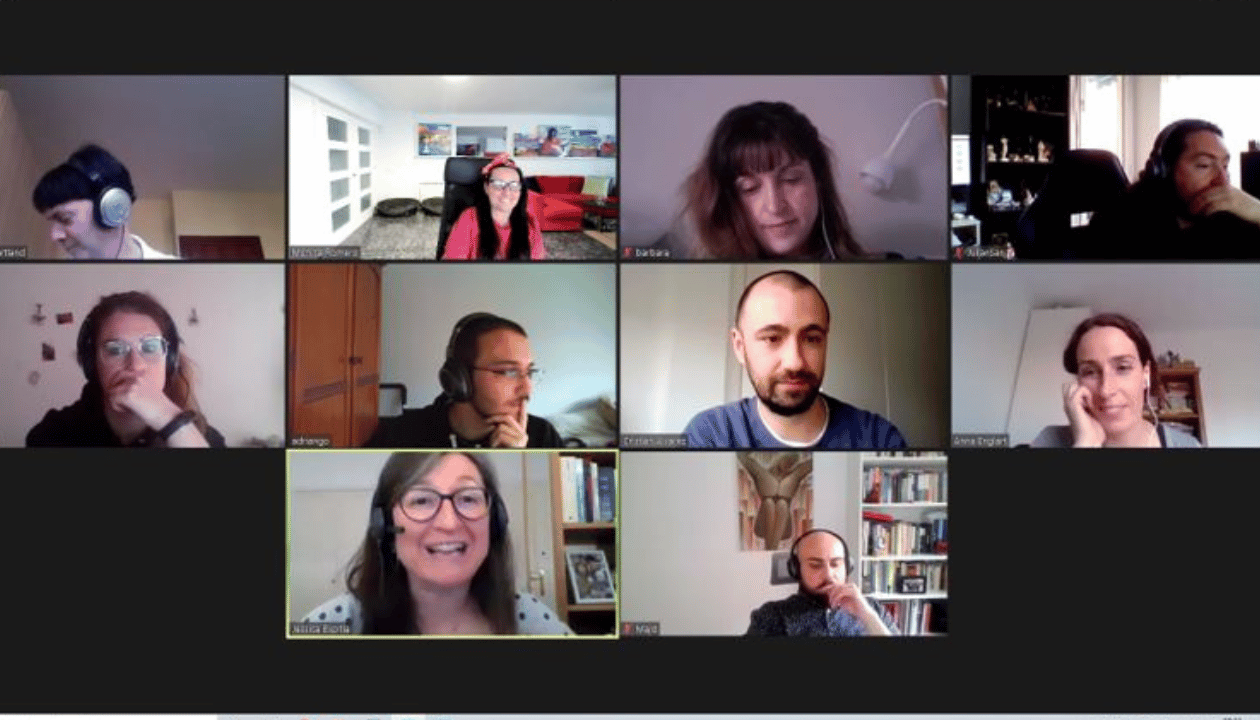
One of the greatest advantages of online learning is flexibility, and Spanish Express leverages this fully. As a professional, your schedule is packed, you might be balancing 9-to-5 work, business trips, family commitments, and more. Spanish Express’s online classes allow you to integrate language learning into your life seamlessly. You can schedule live lessons at times that suit you be it early morning before work, during a lunch break, or in the evening after the kids are asleep. All you need is a device and internet connection.
With Spanish Express, you won’t waste time commuting to a school; instead, your classroom comes to you. This means you can take a lesson from your office, home, or even a hotel room if you’re traveling. The course structure is often one-on-one or small group, which means personalized pacing. If you need to slow down to grasp a difficult concept (like complex past subjunctive forms used in legal Spanish), you can. If you already know certain basics, you can accelerate. The curriculum can be adapted in real time to your progress. Busy week at work? Spanish Express can adjust the homework load or reschedule a session – the learning plan bends to your needs, not vice versa. Such flexibility is crucial; studies find that 58% of employees prefer self-paced learning because it fits better with their responsibilities.
2. Customized for Professionals and Industries
Spanish Express exclusively focuses on Spanish (it’s not a generic platform for all languages), and they understand the needs of professional learners. The program isn’t a one-size-fits-all Spanish course it’s a bespoke training tailored to business use cases. When you enroll, Spanish Express will typically assess your current level and discuss your specific goals. Are you an entrepreneur in import-export needing to learn trade terms and how to draft contracts in Spanish? Or perhaps an attorney preparing for cross-border cases who needs legal Spanish and court formalities? Maybe you’re in hospitality management dealing with Latin American tour operators, so you need customer service Spanish and cultural training. Spanish Express crafts the lessons around your context.
This might involve specialized modules or vocabulary lists for your industry. Spanish Express tutors can simulate relevant scenarios: e.g., practicing a sales pitch in Spanish, doing role-plays of negotiating a supplier agreement, or reviewing real documents you use at work (emails, presentations) and helping you translate or write them in Spanish. The immediate applicability of what you learn is motivating, you’re not just learning “the weather and the supermarket” (as in many general courses), but how to introduce yourself in a meeting, how to discuss a project timeline, how to handle a phone call with a Spanish-speaking client, etc., from day one.
Spanish Express is also keenly aware that professionals may eventually seek certification or formal proof of their Spanish ability (for CVs or job requirements). As a SIELE accredited centre, they don’t only train you in business language but also prepare you for official exams like SIELE or DELE, which include business-related language competencies. We’ll talk more about these certifications later, but the key point is Spanish Express provides a holistic pathway, you learn practical business communication and can also achieve recognized qualifications, all under one roof.
3. Live Interaction with Native Tutors – Authentic & Culturally Informed
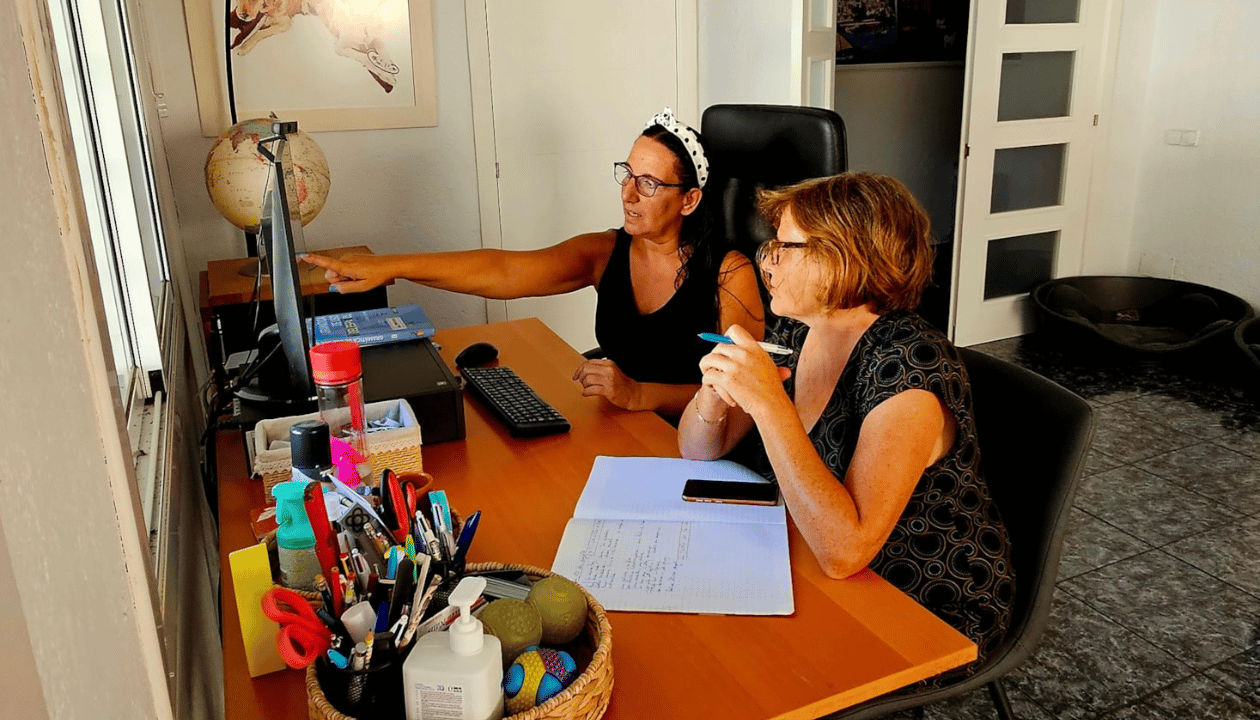
When learning a language for business, having a live tutor who is a native speaker is invaluable. All Spanish Express instructors are native Spanish speakers (from Spain or various Latin American countries) and are often bilingual professionals themselves. This means they bring real-world cultural insight into your lessons. They won’t just teach you textbook phrases; they’ll coach you on how things are really said in the boardrooms of Madrid or Mexico City. For example, a native tutor can tell you that while “negociar” is “to negotiate,” in Latin America you might hear “llegar a un acuerdo” (reach an agreement) more often in polite speech. They can teach you subtle differences in tone – like how to soften a request so it sounds polite in Spanish (“Sería tan amable de…” “Would you be so kind as to…”). These are nuances you can best learn from a human expert, not from a software program.
Learning with native tutors accelerates fluency because you’re exposed to genuine pronunciation, intonation, and idiomatic expressions from the start. Research indicates that interaction with native speakers improves language learners’ pragmatic skills essentially, knowing what is appropriate to say and how to say it in context. In a business setting, this is critical. For instance, a native-speaking tutor from Spanish Express might guide you on culturally appropriate small talk: in Spain, it might be okay to discuss certain current events openly at work, whereas in some Latin American cultures you’d avoid topics like politics in initial meetings. They might explain hierarchy: e.g., in Mexico or Colombia, using Don or Doña plus first name can show respect to senior figures, something you’d only know through cultural immersion.
Spanish Express tutors also provide instant feedback and correction, something self-study can’t do. If your phrasing is too direct or if you accidentally used an informal tone in a role-play, the tutor will gently correct you and explain how to adjust it. This kind of real-time coaching ensures you don’t form bad habits. Essentially, with Spanish Express you get a personal coach who guides you step by step, keeps you accountable, and keeps the learning experience human and engaging – which is so important for staying motivated.
(Conversational but professional aside: Many Spanish Express students find that they develop a great rapport with their tutors lessons feel like dialogues with a colleague or mentor. This makes learning enjoyable and less stressful, which in turn promotes better retention. You can ask all the “dumb questions” freely, practice as much as you need, and even network, your tutor might be from the industry or have connections that enrich your understanding further.)
4. Hybrid Learning Opportunities
While online classes are fantastic for flexibility, Spanish Express goes a step further by offering hybrid learning options. This means you can combine online instruction with periodic in-person sessions or workshops. For example, if you’re based in London (where Spanish Express has a presence) or another city they serve, you might take weekly lessons online but also attend a monthly in-person intensive or networking event. These in-person components allow you to practice face-to-face communication skills – like interpreting body language, participating in group discussions, or simply getting more immersive speaking practice in a live setting.
Hybrid learning is a great solution for companies. Spanish Express can conduct on-site training sessions for staff or intensive weekend workshops, supplementing the regular online classes employees attend. This keeps learners engaged and can fast-track progress. It’s also useful if you want a taste of immersion without immediately traveling abroad: a local immersion day where everyone speaks only Spanish, over coffee breaks and meeting simulations, can be arranged. Spanish Express has the flexibility to incorporate offline elements whenever beneficial.
5. Spanish Homestay Immersion Program (SHIP)
One offering that truly distinguishes Spanish Express is its Spanish Homestay Immersion Program (SHIP). This is a powerful add-on or capstone to your online learning: you get to live in Spain with a host tutor and completely immerse yourself in the language and culture. Why is this so valuable for Business Spanish? Because immersion is the fastest way to supercharge your fluency and cultural understanding. When you’re on SHIP, every day becomes a learning experience, you practice Spanish from breakfast to bedtime, in real-life contexts.

Spanish Express’s SHIP is tailored for professionals, meaning your immersion is not just general Spanish, but can be angled towards business contexts:
You might stay in a city known for your industry (for example, a finance professional might be placed in Barcelona, a tourism professional in Cádiz, etc.).
Your host is not just a Spanish teacher but a local who can introduce you to business customs. They might take you to visit a local company, a chamber of commerce event, or even informal gatherings with local professionals so you can practice networking in Spanish.
During the homestay, you typically have daily structured lessons (to reinforce grammar/vocab) plus guided cultural activities. For instance, you might practice presentations in Spanish with your tutor in the morning, then accompany them to run errands or meet people in the afternoon, where you’ll naturally use business courtesy phrases in real interactions. Ordering at a restaurant, you learn how to do it politely (and maybe discuss how business lunches work in Spain). Meeting the tutor’s friends or family, you practice the art of the casual but professional introduction in Spanish.
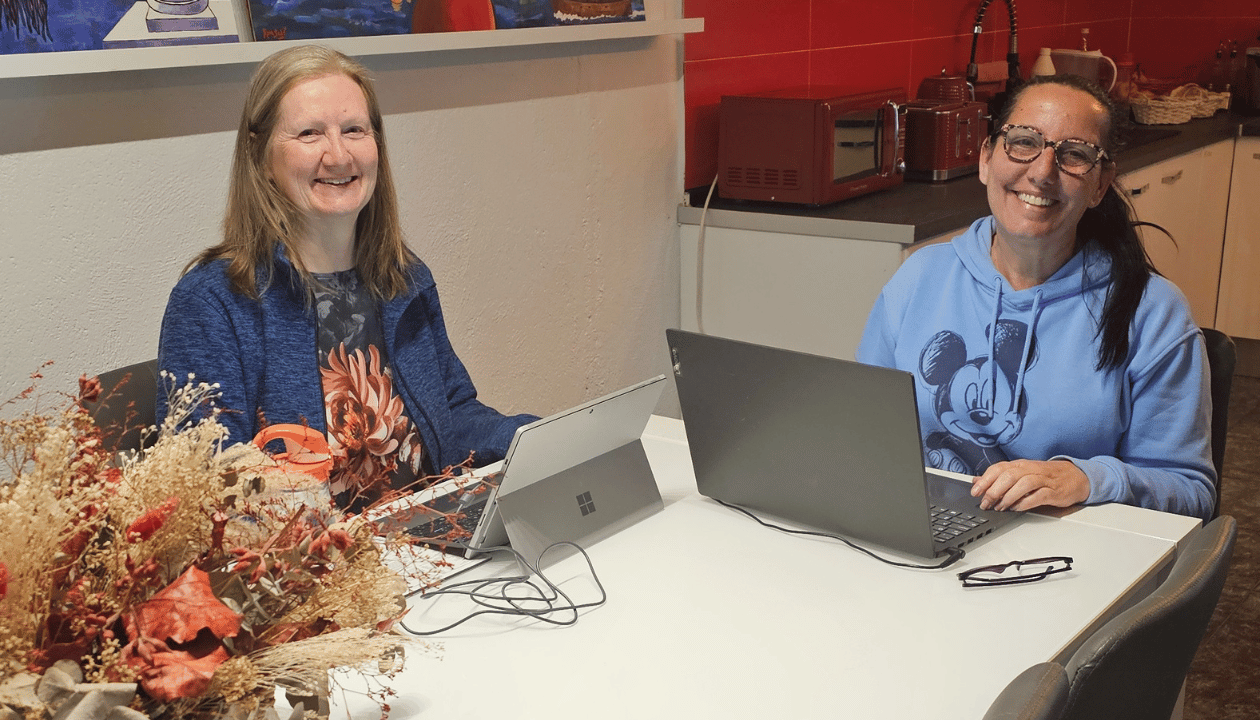
Research in language acquisition underscores that immersion accelerates learning by providing continuous, contextualized input, essentially, you are thinking and living in Spanish, which rapidly improves fluency. Even a short 1-2 week immersion can dramatically boost your confidence and pronunciation. Spanish Express’s SHIP is designed to be time-efficient for busy adults (you can do a one-week intensive homestay which might be equivalent to months of regular study). Many professionals use it as a “boot camp” to break through from intermediate to advanced. Plus, it’s an unforgettable cultural experience you’ll gain first-hand insight into Spanish business etiquette, social norms, and lifestyle, which is invaluable if you plan to work with Spaniards or Latin Americans. (And let’s be honest: enjoying Spanish cuisine, exploring local markets, and getting a mini-vacation vibe are nice perks while you learn!)
6. Results-Driven and Supportive Learning
Ultimately, Spanish Express understands that professionals need results improved communication skills, passed exams, or successful usage of Spanish on the job. Their programs are structured to deliver outcomes. Progress is measured through periodic assessments or mock scenarios. If you’re preparing for something specific (like a presentation in Spanish or a DELE/SIELE exam), they will simulate those conditions and ensure you’re ready. The one-on-one nature means you get 100% of the tutor’s attention, and any weaknesses (say, listening comprehension on fast conference calls, or using the past subjunctive correctly in formal writing) will be spotted and addressed.
At the same time, Spanish Express prides itself on being supportive and engaging. You’re not just a number in a huge class. The tutors and staff build a relationship with you they want to see you succeed and often go the extra mile, providing extra practice materials targeting your needs, or flexing schedules around your big work deadlines. Having that partner in your learning journey keeps you accountable and motivated. Many alumni of Spanish Express mention how this personalized, human approach kept them on track even when work got busy.
In summary, learning Business Spanish online with Spanish Express offers unmatched flexibility, custom-tailoring to your professional needs, access to native expert tutors, and the possibility to augment with hybrid and immersion experiences. It’s a comprehensive ecosystem to take you from “hola” to negotiating contracts in fluent Spanish. As a working professional, this approach maximizes your limited time and turns it into maximum language gain.
In the next section, we’ll outline the specific learning pathways Spanish Express provides from pure online courses to the hybrid model and SHIP immersion and how each pathway works to build your Spanish proficiency step by step.
Spanish Express Learning Pathways
Spanish Express recognizes that each learner has unique needs and constraints. To accommodate all types of professionals whether you prefer fully online learning, occasional face-to-face sessions, or complete immersion Spanish Express offers multiple learning pathways. You can even combine them for a richer experience. Here’s an overview of the main pathways and what to expect from each:
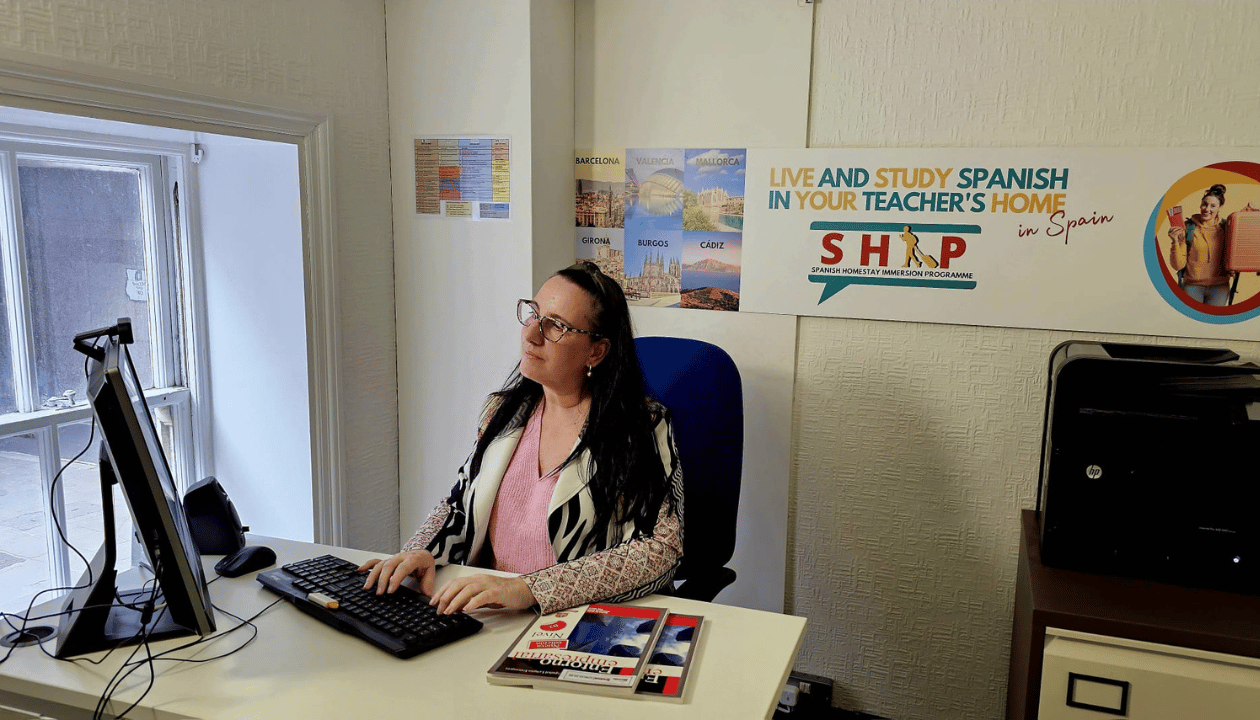
1. Online Classes (Live 1-to-1 or Group Sessions)
Format:
Live virtual classes via video conferencing (Zoom, Teams, etc.), typically 60-90 minutes per session. Options include one-to-one lessons or small group classes (often grouped by level or company teams).
Tailoring:
In online classes, the curriculum is customized to Business Spanish from the get-go. After an initial assessment, your tutor will create a lesson plan targeting your objectives. For example, a typical sequence for an intermediate learner might cover:
Week 1-2: Business introductions, job titles, talking about your company/industry.
Week 3: Email writing format and polite phrases.
Week 4: Phone call practice making inquiries and setting appointments.
Week 5: Presentation skills describing charts and trends in Spanish.
Week 6: Negotiation role-play bargaining and agreeing terms.
All along, you build relevant vocab (like ingresos for revenue, acuerdo for agreement, etc.) and reinforce grammar needed for formal speech. Homework might involve writing short emails, reading Spanish business news articles, or preparing short presentations all reviewed by your tutor who gives feedback.
Benefits:
Interactive and communicative: Unlike pre-recorded courses, live classes keep you speaking and listening actively. You can ask questions on the spot and get instant clarification.
Accountability: Having scheduled classes ensures you dedicate regular time to Spanish amid your busy week. The personal tutor relationship also motivates you to show up and progress.
Peer learning (if in a group): In a small group class, you might be placed with peers of similar level possibly other professionals. This can simulate meetings or group discussions, giving you practice in listening to others speak Spanish with different accents or styles. It also adds a social element; you’re in it together, which can be encouraging.
Typical Outcome:
After a few months of online classes, many learners find they can handle basic business interactions in Spanish writing emails with fewer errors, holding simple conversations about work, and understanding much more of what they read or hear in a business context. With continued training, you can reach a level where you conduct entire meetings or negotiations in Spanish. (Spanish Express often uses CEFR levels as a benchmark e.g., taking a B1 level professional to B2 level in fluency, which is a strong working proficiency.)
2. Hybrid Learning (Online + In-Person Workshops)
Format:
A combination of regular online classes (as above) with periodic in-person sessions. The in-person component might be:
Workshops or Bootcamps:
e.g., a full Saturday session once a month, or a 2-day intensive every few months.
On-site Corporate Training:
If your company partners with Spanish Express, an instructor might come on-site to conduct group training, while supplemental learning continues online.
Content:
The in-person workshops often focus on practical skills and immersive practice. For instance:
A workshop might simulate a conference scenario – participants give presentations in Spanish to the group, engage in Q&A, and network during coffee breaks (all in Spanish). The tutor observes and gives feedback.
Another workshop might be a “Spanish-only” day, reinforcing immersion: you might do activities like business role-playing games, cultural training (like dining etiquette for business lunches in Spain), or field trips (perhaps visiting a Spanish trade fair or a Spanish-speaking company’s local office if available).
If multiple learners are involved, group dynamics like meetings or team negotiations can be practiced, which is something harder to do in one-on-one online sessions.
Benefits:
Reinforcement of Skills: Meeting your instructor (and possibly fellow learners) in person helps solidify what you learned online. It challenges you to use Spanish in real-time, face-to-face, which can improve confidence.
Nuanced Feedback: The instructor can pick up on body language, pronunciation subtleties, and other details more easily in person to correct any persistent issues.
Motivation Boost: In-person events often energize learners. They break the routine and show you how far you’ve come (or what still needs work) in a tangible way. Many find that after a day of immersion in a workshop, their listening comprehension or speaking fluency jumps noticeably.
Networking: If the workshop brings together professionals from different sectors all learning Spanish, it’s a chance to expand your network. You’re practicing Spanish while making new connections a win-win.
Ideal For:
Hybrid learning is great if you crave some face-to-face interaction and real-world practice but cannot commit to a long immersion abroad yet. It’s also an excellent solution for companies employees do the bulk of training online at their own pace, and then the team comes together for synergistic training periodically.
3. SHIP – Spanish Homestay Immersion Program

Format:
Full immersion experience in Spain (or another Spanish-speaking country), typically from 1 to 4 weeks. You live with a carefully selected host tutor (a qualified teacher) in their home. The program integrates daily structured lessons with informal immersion in the host’s daily life and local community.
Let’s break down a typical day on SHIP:
Morning:
After breakfast with your host (en español, of course), you have a formal Spanish lesson (2-3 hours). This might review grammar points that you’ve struggled with, introduce new business vocab, or practice specific tasks (e.g., writing a report summary, delivering a prepared speech, etc.). Because it’s one-on-one, the lessons can be tailored precisely to your needs (say you want to simulate a job interview in Spanish, they’ll do that).
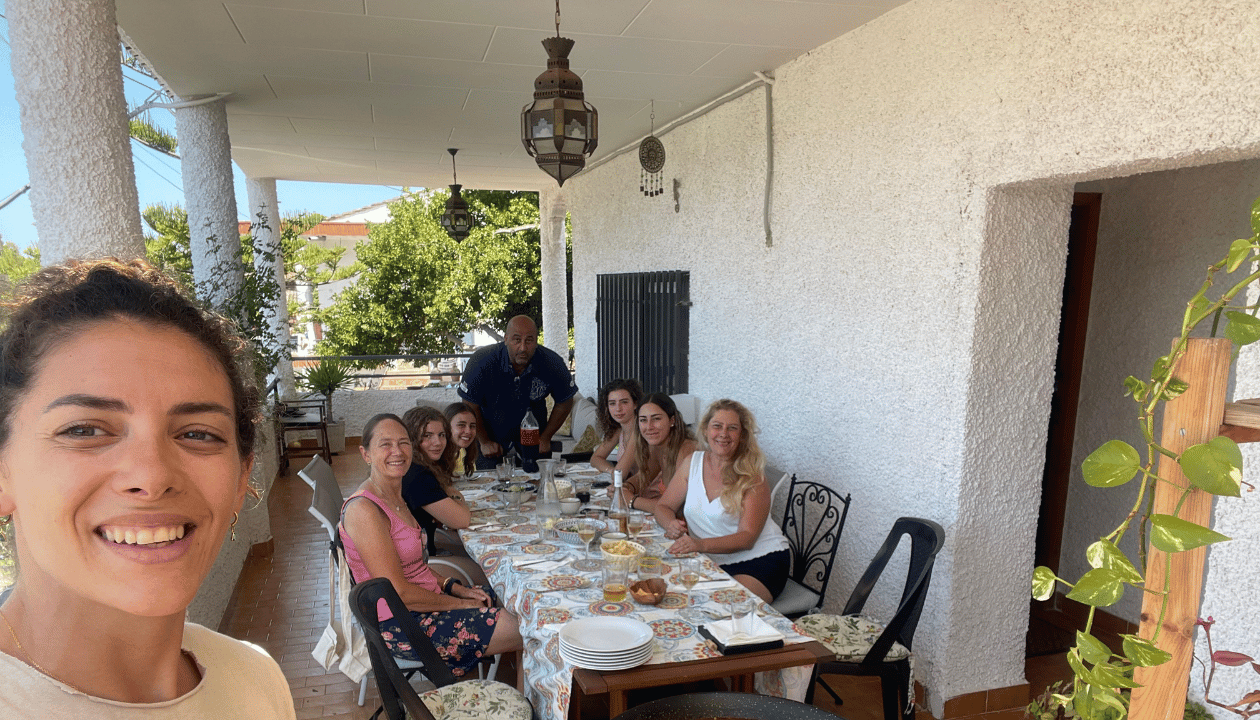
Afternoon:
You might accompany your host to do errands or meet people. For example, you might visit a local mercado (market) to practice transactional language, or join your host for a lunch with a colleague of theirs giving you a chance to practice conversational Spanish in a social-business setting. Spanish Express ensures hosts involve students in varied activities: perhaps visiting a bank, a local business, or attending a community event. Every situation is a chance to learn new terminology and cultural cues. (Picture yourself discussing differences in Spanish and British work culture over café con leche, or learning how Spaniards conduct business networking at a social gathering.)

Evening:
You might have some free time or self-study (your host might assign a brief journal entry to write in Spanish, for example). Then share dinner with the host family. Dinner is another language lesson in disguise topics could range from current events (great for learning political/economic terms) to daily recap. This is where you really improve listening and spontaneous speaking as you relax, you’ll find Spanish words coming more naturally.

Business Focus:
During SHIP, since you’re an adult learner, hosts often integrate business elements:
You might visit your host’s workplace if appropriate (some hosts are professionals who can take you for a tour.
Spanish Express could arrange short internship-like experiences or observations – e.g., spending an afternoon at a local company or attending a seminar. (For instance, if you’re in education management, you could visit a Spanish language school’s admin office; if in hospitality, maybe tour a hotel).
You definitely get cultural training. For example, you’ll observe how people greet and address each other in a business context in that locale, how punctuality is treated (in Spain, meetings often start a bit later than scheduled, punctuality has some flexibility), how direct or indirect people are, etc. These insights are invaluable, no textbook can truly teach them.
Benefits:
Rapid Skill Development: Immersion has been shown to significantly boost speaking fluency and listening skills in a short time. Many learners come back thinking in Spanish. It forces you to stop translating in your head and start operating in Spanish naturally.
Cultural Confidence: By living the culture, you gain confidence. When you later interact with Spanish-speaking colleagues or clients, you have a cultural frame of reference. You know, for example, how a typical Spanish office might function, or how meals are a key part of relationship-building. This confidence translates to stronger relationship management you’re not an outsider who only knows phrases; you’ve experienced their way of life.
Lasting Memories and Motivation: An immersion trip is often a highlight of one’s learning journey. It’s fun and challenging. The positive memories (like successfully joking with locals or handling a tricky situation in Spanish) fuel your motivation to keep improving even after the program. Plus, you build friendships, your host might become a long-term professional contact or friend you can visit again. Now you have a personal stake in the Spanish-speaking world, which keeps you engaged.
Spanish Express Support: Spanish Express coordinates SHIP meticulously. They match you with a host that fits your profile (considering profession, interests, etc.). They prepare an itinerary to ensure a balance of study and cultural exposure. You’re not “on your own” you have a structured program and someone guiding you throughout, which differentiates SHIP from just traveling abroad independently. It’s an immersive course!
4. Customized “Business Focus” Modules
Within any of these pathways, Spanish Express can incorporate custom modules. For example:

Legal Spanish Module: If you need to learn legal terminology, they have a curriculum for that (perhaps taught by a tutor with a law background).
Tourism Spanish Module: Focuses on hospitality terms, customer service dialogues, etc.
Exam Preparation Module: If your goal is to pass DELE B2 or SIELE, they will include exam drills and strategies in your course.
Pronunciation Clinic: Some professionals request help to sound more native-like (useful in presentations). Spanish Express can dedicate sessions solely to accent reduction and pronunciation practice.
They also offer resources like online vocabulary databases, flashcards, or access to Spanish media (articles, videos) curated for business learners. These can be used alongside your classes for extra practice.
Comparison of Pathways
To summarize the differences, here’s a quick comparison:
| Learning Pathway | Mode | Frequency & Duration | Key Advantages |
| Online Classes | Virtual (live) | Flexible scheduling (e.g., 2 hours/week ongoing) | Maximum flexibility; personalized pacing and content; continuous feedback. |
| Hybrid Learning | Virtual + In-person | Online weekly + In-person monthly/quarterly | Face-to-face practice enhances immersion and speaking confidence; peer interaction. |
| SHIP Immersion | In-person (Spain) | Short-term intensive (1–4 weeks full-time) | Rapid fluency boost; cultural immersion; context-rich learning; “real life” Spanish usage. |
| Custom Modules (add-on) | Varies (can be online or in-person) | As needed, integrated into above pathways | Targeted skill development (industry-specific or exam-specific); addresses special goals. |
(Table: benefits of each Spanish Express pathway – online vs hybrid vs immersion.)
As you can see, you might start with online classes to build a foundation, add hybrid workshops to refine and practice, and perhaps do a SHIP immersion to solidify your skills at a higher level. Spanish Express can advise the best mix based on your timeline and goals.
Many students do something like: Online for 6 months -> 1 week SHIP immersion -> continue online. After this, they often find they’re ready to take a certification or start actively using Spanish in their job. The support doesn’t end there, Spanish Express can continue advanced coaching or occasional refresher sessions to ensure your skills stay sharp.
In conclusion, Spanish Express offers a comprehensive, flexible set of learning pathways that cater to any professional’s needs. Whether you learn entirely online or dive into an immersion experience, you’ll receive top-notch instruction and a curriculum focused on what matters for your career. Next, we’ll explore the global relevance of Business Spanish in more detail essentially, why all this effort is incredibly worthwhile given the economic trends and workforce developments in the Spanish-speaking world.
Global Relevance of Business Spanish
Learning Business Spanish is not just a personal skill upgrade; it’s an investment aligned with global economic and demographic trends. Spanish is a language of growing importance in international business, trade, and the workforce. Let’s examine why:

Spain’s Economy and Role in the EU
Spain is a significant player in the European and global economy:
Major EU Economy:
Spain is the 4th largest economy in the Eurozone (after Germany, France, Italy) and about the 6th in the EU overall by nominal GDP. It contributes roughly 8.6% of the EU’s total GDP. Sectors like banking, renewable energy, infrastructure, and aerospace in Spain are world-class and international in scope (think of companies like Santander, Iberdrola, Telefónica, Inditex (Zara), or Airbus Spain). Professionals working in or with these sectors will find Spanish invaluable.
Trade and Investment Hub:
Spain’s strategic position and historical ties make it a gateway for Europe to Latin America (and vice versa). Madrid is home to the Ibero-American General Secretariat, fostering EU-Latin America cooperation. Spanish companies are major investors in Latin America and even in the US (for example, Spanish infrastructure firms manage airports and toll roads globally). Conversely, many Latin American multinationals use Spain as their European base. This two-way investment flow means bilingual professionals are needed to manage transatlantic operations.
Tourism and Exports:
Spain is a tourism powerhouse (2nd most visited country pre-pandemic), which means a lot of business between Spain and other nations happens in Spanish in the hospitality and travel sector. It’s also a top exporter of goods like automobiles, machinery, wine, and olive oil to global markets. Understanding Spanish can facilitate trade deals and partnerships with Spanish suppliers or distributors.
In the EU context, Spanish is one of the official languages of the European Union, so it’s used in EU institutions and documentation. For anyone working with EU agencies or in pan-European roles, Spanish helps in dealing with policies or communications involving Spain and other Spanish-speaking constituencies. Furthermore, as Spain often acts as a cultural and economic bridge to Latin America for the EU, having Spanish language skills positions you to participate in EU-Latin America projects (for instance, trade agreements, development projects, or joint ventures).
Latin America’s Economies and Trade Partnerships
Latin America (predominantly Spanish-speaking, except Brazil and a few others) is a region rich in resources, emerging markets, and population (~660 million people). Its relevance in global business is only growing:
Emerging Market Growth:
Several Latin American countries have seen steady growth and are classified as emerging or even high-income economies. Mexico (with a GDP around $1.3 trillion) is part of USMCA and deeply integrated with North American supply chains knowing Spanish is key if you want to tap into manufacturing or tech sectors spanning the U.S. and Mexico. Chile, Peru, Colombia, Argentina all have significant industries (mining, agriculture, tech start-ups, energy) and participate in free trade agreements (like the Pacific Alliance). If your company does business in these countries, Spanish is often the only way to communicate effectively since many small to mid-size businesses there operate in Spanish.
Trade Agreements:
The Latin American bloc collectively is huge for trade. As mentioned, Latin America and the Caribbean combined are the EU’s fifth-largest trading partner. There are numerous trade deals: EU-Mexico, EU-Mercosur (pending ratification but on the horizon), EU-Chile (being updated). The UK post-Brexit has sought bilateral trade deals with Latin nations too. For professionals in international trade, understanding Spanish gives you insight into local trade regulations and ease in negotiation. It’s much easier to build trust with a Latin American partner if you can speak their language many Latin American executives and officials do speak English, but they will always appreciate and often open up more in Spanish. It can be a competitive edge in winning contracts or government tenders in those countries.
Natural Resources and Industry:
Latin America is a powerhouse of natural resources (oil in Venezuela and Mexico, copper in Chile and Peru, lithium in Bolivia/Argentina, agriculture across the region). Many foreign companies engage in extraction or import/export, which entails navigating local regulations and community relations often conducted in Spanish. Having Spanish skills is crucial for roles in international development, environmental consulting, or energy companies working in Latin America.
Growing Middle Class & Consumer Market:
Over past decades, tens of millions have joined the middle class in countries like Mexico, Colombia, Peru, etc. This means new consumer markets for everything from banking to smartphones to travel. International firms expanding into Latin America will need marketing and customer service in Spanish. For example, if you’re a marketing professional, you’ll need not just to translate but to localize campaigns for Spanish-speaking audiences, understanding their cultural references and idioms.
In short, Latin America presents vast opportunities and Spanish is the key to unlocking them. Even within the U.S., understanding Latin American Spanish is valuable due to the huge Hispanic market (over $1.5 trillion purchasing power and numerous binational businesses).
Spanish in the U.S. Workforce and Corporate Environment
The United States, often seen as an English-dominant country, actually has a domestic Spanish boom:
Hispanic Population Growth:
The U.S. Hispanic population is about 62 million (as of 2020). It’s projected that by 2060, nearly 1 in 3 Americans will be Hispanic. Already, the U.S. is considered the second-largest Spanish-speaking country by number of speakers. Projections even suggest that by 2050 the U.S. could have more Spanish speakers than any other country (possibly around 130 million Spanish speakers). This has profound implications for businesses operating in the U.S.: bilingual capability is increasingly necessary to serve the domestic market.
Spanish in the Workplace:
As of 2023, Hispanics made up 19% of the U.S. labor force, and this share is rising. Many industries from construction and healthcare to banking and media have large numbers of Spanish-speaking workers and clients. For example, in healthcare, Spanish is critical when serving patients with limited English; a report noted that in US hospitals, Spanish is by far the most commonly spoken non-English language. In corporate America, there’s recognition that bilingual employees contribute to reaching a wider market. Nine out of ten U.S. employers (across various sectors) say they rely on employees with language skills other than English, with Spanish being the top in-demand language. Companies like AT&T, Bank of America, or Facebook have actively recruited Spanish speakers for customer engagement roles.
Career Impact:
There’s tangible career benefit in the U.S. for Spanish speakers. Being bilingual (English-Spanish) can lead to hiring preference and salary premiums. Indeed, certain roles sales, public relations, social services, education – often list Spanish as either required or strongly preferred. A study by New American Economy found that in some states a significant percentage of job postings in certain fields were seeking bilingual candidates (with Spanish being by far the leading language sought). Knowing Spanish in the U.S. corporate context also allows for involvement in Latin American regional teams, essentially expanding your role beyond U.S. borders.
Multilingual Teams and AI:
As global teams become the norm, U.S. companies are coordinating with Latin American branches or partners more than ever (especially with nearshoring trends e.g., tech teams in Mexico working with U.S. offices). This creates multilingual team environments. Being the person on your team who can bridge English and Spanish communication makes you extremely valuable, you can ensure nothing is “lost in translation” culturally or linguistically. And while AI translation tools are improving, companies still heavily rely on human bilingual skills for nuanced communication. In fact, with more AI-generated content, companies need bilingual staff to verify and refine those translations for accuracy and tone. The human element understanding context, humor, irony, and building rapport cannot be fully replicated by a machine. So your Spanish skill is future-proofing your career in an era of automation.
A Global Language of Diplomacy and Culture
Beyond business transactions, remember that Spanish is a language of global diplomacy and culture:
It’s one of the six official languages of the United Nations and is used in international organizations like the Organization of American States, Mercosur, IMF/World Bank meetings (via interpreters, but delegates from Spanish-speaking countries often prefer using Spanish). If your career might involve international law, government, or NGO work, Spanish is incredibly useful. It’s often considered one of the must-know languages (after English and maybe French) in diplomatic circles.
The Spanish-speaking world has a rich cultural output literature, film, journalism that influences global perspectives. Being able to consume media in Spanish (from Spanish-language business journals to influential newspapers like El País or financial outlets like Expansión or La Nación) gives you direct insight into regional viewpoints and news, which can inform your business strategies.
The Next 20 Years: A Spanish Surge
Population Trends:
As noted, the growth of Spanish speakers is outpacing many other languages. Instituto Cervantes reports an upward trend each year (crossing 600.6 million globally in 2024). Africa is even seeing increases in Spanish learners (in countries like Morocco and Equatorial Guinea, Spanish has presence). This could mean new markets and interactions where Spanish is relevant.
Economic Influence:
Latin America’s share of world GDP could grow, especially if stability and integration improve. Spain’s economy, while mature, continues to be an integral part of European value chains and is pioneering in fields like renewable energy and high-speed rail Spanish companies may drive global projects, meaning Spanish remains a language of innovation as well.
Technology & Remote Work:
With the normalization of remote work, companies are hiring talent internationally. Don’t be surprised if your future team has members from Mexico City, Buenos Aires, or Madrid, all collaborating daily. Multilingual remote teams will be commonplace, and Spanish will be among the top languages used besides English. Even the rise of remote outsourcing (like customer support centers or virtual assistants) means a U.S. or UK company might serve Spanish-speaking customers via teams in Latin America. Who manages and coordinates these teams? Bilingual professionals.
International Collaboration:
Global challenges (climate change, public health, etc.) require international collaboration. Spanish-speaking countries (which include two G20 economies – Mexico and Argentina – plus Spain) are key players. Whether it’s international business coalitions, academic research, or non-profits, Spanish is going to be part of the conversation more than ever.
In summary, the trajectory of the world suggests that Spanish will continue to be a high-value skill in global business for decades to come. It’s not just relevant, it’s becoming imperative in many contexts. By learning Business Spanish now, you’re positioning yourself at the vanguard of this wave – gaining the ability to operate in a huge portion of the world’s markets and to connect with one of the largest cultural-linguistic groups on the planet.
Now that we’ve established the why and where of Business Spanish’s importance, let’s look at an interesting angle: what does research say about how to effectively learn a language (like Spanish) as an adult? The next section will delve into evidence-based language learning methods – confirming some of the approaches Spanish Express uses (like immersion, native tutors, etc.) and why they’re effective from an academic standpoint.
Evidence-Based Language Learning
Language learning is sometimes approached haphazardly, but there is a wealth of research in linguistics and education that points to methods which truly work especially for adult learners and professionals. Spanish Express’s methodology isn’t just intuitive; it aligns with many of these evidence-based practices. Let’s explore a few key findings and how they apply to learning Business Spanish:

The Power of Immersion and Comprehensible Input
Renowned linguist Dr. Stephen Krashen and others have emphasized the importance of comprehensible input basically, being exposed to language that you can mostly understand, which gradually builds your ability. Immersion naturally provides tons of comprehensible input in real contexts. When you’re living or consistently interacting in Spanish, your brain is constantly processing the language even if you don’t produce sentences perfectly at first, you are absorbing patterns.
Krashen famously said, “We acquire language in only one way: when we understand what people say and when we understand what we read.” In immersive situations, you get exactly this: meaningful, understandable language aimed at communicating something real (not just drilling grammar rules). Over time, this leads to subconscious acquisition and then you start “feeling” what sounds right.
Research on immersion programs (like study abroad or intensive language environments) shows significant gains in fluency and confidence:
A 2019 Erasmus+ impact study found that 88% of participants in study-abroad programs improved their language skills. Students also reported that they spoke more fluently and with greater ease after an immersion experience.
Other studies have noted that immersion helps particularly with speaking and listening skills. One cited by the Erasmus report showed Oral Proficiency Interview levels jumping from Higher Intermediate to Advanced after as little as 6 months abroad.
Immersion also deepens sociolinguistic competence the ability to use language appropriately in social contexts. This is crucial for Business Spanish (knowing how to phrase things politely, how to interrupt in a meeting without offending, etc.). Learners in immersion pick up those nuanced cues by observing native speakers daily.
In essence, immersion accelerates language learning by providing high volume, varied context, and real need to communicate. Spanish Express’s SHIP program leverages this fully, which is why we often see clients making leaps in ability after an immersion stint that might have taken much longer in a classroom-only setting.
Structured Learning and Adult Learners
While immersion is fantastic, research also suggests a blend of structured learning can be beneficial for adults. Adults have the ability to think about language (metalinguistic awareness) – we can learn grammar rules and vocabulary systematically, which can complement immersive exposure.
Combining Formal Instruction with Immersion:
Studies have found that students who had classroom preparation before or during study abroad tended to leverage the immersion better. The formal lessons give a scaffold – you know, for example, how Spanish verb tenses are formed, so when you hear them in the wild, you recognize them faster. Spanish Express’s approach of mixing classes with immersion (hybrid, or preparation before SHIP) aligns with this. They give you the tools in classes, and then you apply them in immersion, which reinforces and contextualizes your classroom knowledge.
Deliberate Practice:
Research by psychologist K. Anders Ericsson (famous for expertise studies) would likely advocate deliberate practice in language too focusing on specific challenging aspects and practicing them with feedback. For example, if you consistently struggle with rolling the “rr” or using the subjunctive mood, a structured lesson can target that explicitly. Spanish Express’s tutors design such deliberate practice sessions (drills, targeted exercises) to break through plateaus. Over time, these targeted improvements compound, making your overall communication much stronger.
Memory and Spaced Repetition:
From cognitive science, we know that spaced repetition helps in memorizing vocabulary and phrases. A good course will reintroduce new words over intervals so they move to long-term memory. Spanish Express uses this concept by reviewing previous material in later lessons and possibly using flashcard apps or quizzes for reinforcement. This approach is more effective than cramming – your brain needs repeated exposure over time.
Native Tutors and Authentic Communication
Does learning from native speakers make a difference? Research and common experience say yes. While non-native teachers can be excellent (especially at early stages), native tutors bring immersion into the lesson. They provide authentic input (accent, idioms, cultural references) and can model the target like a live example.
Studies show that learners often improve pragmatic skills (like knowing what is polite or how to phrase things appropriately) better when they have more exposure to native speaker input. In business settings, pragmatics are everything saying “Quiero… (I want)…” might be grammatically correct, but a native might suggest “Me gustaría…” (I would like…) as more polite in a request. A native tutor will teach you those nuances from day one.
Additionally, having a native tutor often means immediate cultural feedback. If you propose to say something that is grammatically fine but culturally odd, the tutor can steer you. For instance, maybe you draft a formal email that is too flowery (in English sometimes we overuse super polite terms that sound unnatural in Spanish). The tutor might say, “In Spain, we would actually be a bit more direct here,” saving you from a potential miscommunication later.
Another advantage: listening comprehension. Many learners find it hardest to understand fast spoken Spanish. Regularly conversing with a native tutor accustoms your ear to natural speed and rhythms. It’s like training with a weight so the real conversation outside isn’t as heavy. Over time, you start catching those rapid-fire phrases in meetings that previously zoomed past you.
Online Learning Effectiveness
Is online learning as effective as in-person? Multiple studies, including meta-analyses by the U.S. Department of Education, have found that online learning can be equally or even more effective than traditional classroom learning for adults, largely because it can be tailored and self-paced.
Specifically for language learning:
A study published in Language Learning & Technology (Gonzalez-Lloret, 2020, for example) noted that online platforms, when well-designed, promote interaction and can incorporate multimedia that enhances input (videos, audio, interactive exercises).
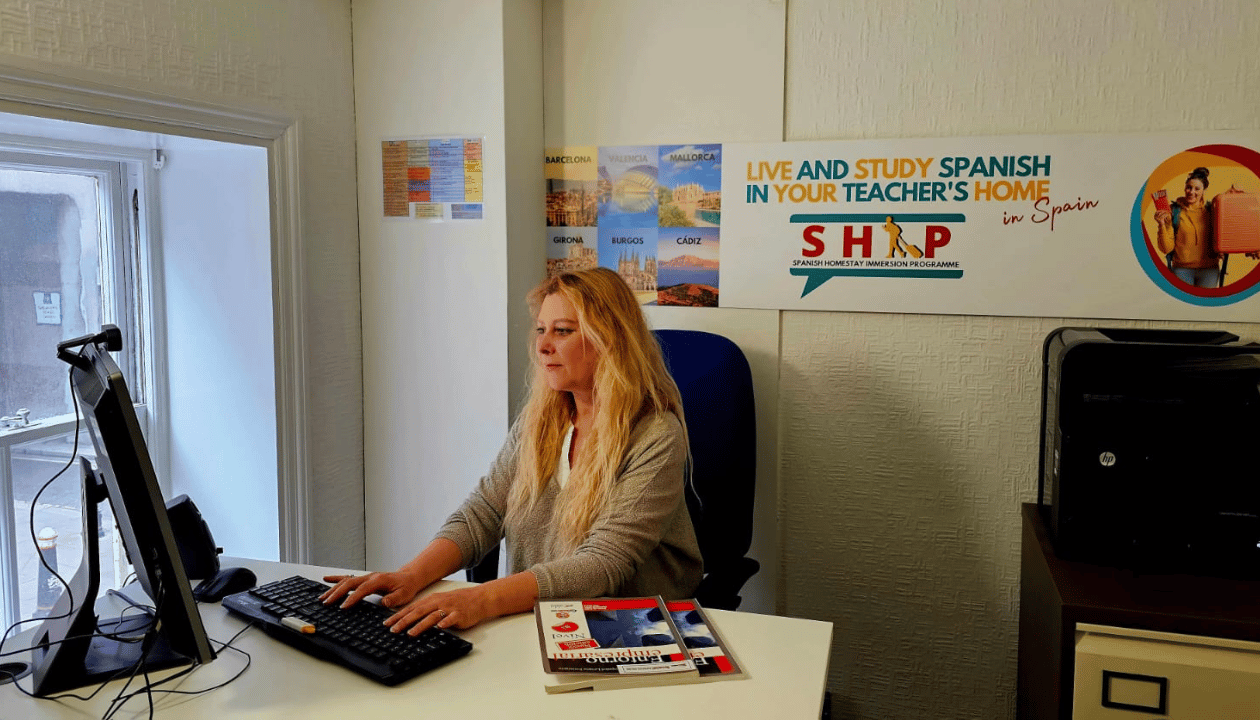
Many online learners do better because they have less anxiety practicing behind a screen than in a physical classroom. This is important for speaking practice – if being in your home office makes you less nervous to speak up, you’ll practice more and improve faster.
Online tools like recordings of sessions, or AI-powered pronunciation feedback, can supplement the teacher’s guidance. So you effectively get more practice hours than the live session alone.
Spanish Express has embraced online learning, but critically, they keep it live and human (not solely software-driven). This follows best practice: technology is used to connect you to real instructors and provide flexibility, rather than replacing the teacher or authentic interaction. The result is you get the effectiveness of a personal tutor combined with the convenience of online.
Why Learning with Native Tutors Accelerates Fluency
We touched on this above, but to reinforce with evidence:
A 2017 study in Foreign Language found that students who had conversation sessions with native speakers (through teleconferencing) showed greater gains in oral proficiency than those who only practiced with fellow learners. Interaction with natives pushes you to adjust to more natural speech and can be more challenging (in a good way) so you improve more.
Native tutors can also help with cultural motivation. They share stories, humor, and perspectives that make the language come alive. According to socio-educational models (Gardner’s research on language motivation), cultural integration elements boost a learner’s motivation and persistence. If you enjoy talking to your tutor about Spanish food or soccer or politics, you associate positive feelings with the language, which keeps you engaged.
The Role of Certification and Structured Goals
Setting goals like obtaining a DELE or SIELE certification can also positively structure your learning it gives a clear target. Research on goal-setting in language learning shows that having a concrete objective and assessment can improve outcomes because it focuses your efforts. Spanish Express’s ability to prepare you for such exams means they incorporate the four skills (reading, writing, listening, speaking) in a balanced way, and you practice task-based skills like letter writing or oral presentations similar to exam tasks. Even if you ultimately just need Spanish for work and not for a certificate, training as if for an exam ensures you cover all bases and reach a well-rounded proficiency.
In conclusion, the methods Spanish Express employs immersion, native interaction, personalized feedback, structured learning, and usage of technology are all supported by linguistic research and educational psychology. The result for you as a learner is an efficient, effective, and enjoyable learning journey grounded in what we know actually works.
Now, let’s shift from the learning process back to the application of what you learn. Next, we’ll discuss specific business communication skills in Spanish from writing emails to giving presentations and some tips and considerations for each, including cultural aspects. This will tie together many points we’ve covered, illustrating concrete examples of Business Spanish in action.

Business Communication Skills in Spanish
To be successful in professional settings, you’ll want to develop proficiency in all four language skills writing, speaking, listening, and reading within a business context, as well as an often overlooked fifth skill: cultural competence. Let’s examine each skill area and highlight how they manifest in Business Spanish, along with tips and relevant examples.

Writing in Spanish: Emails, Proposals, and More
Why it matters:
Much of business communication is in writing whether emails, reports, or contracts. Writing in Spanish requires attention to formality, clarity, and correctness.
Emails and Letters:
We discussed formal email structure earlier. Remember to start with a proper salutation (e.g., “Estimado Sr. Gómez:”) and use a courteous closing (“Atentamente,” or “Saludos cordiales,”). Keep sentences well-structured and paragraphs focused. Spanish business writing tends to be a bit more flowery or polite in openings, but also can be quite direct in the body once introductions are done. For example, after the greeting you might include a courtesy line (“Espero que se encuentre bien.”). Then state your purpose: “El motivo de este correo es…” (The purpose of this email is…). Use connectors like Además (Moreover), Por consiguiente (Therefore), Sin otro particular (Without further ado), common in Spanish letters to signal you’re wrapping up). Always double-check for correct use of usted forms (third person conjugation) and proper punctuation (e.g. opening question/exclamation marks in Spanish ¿ ¡ when needed).
Tip:
Templates help. Have a few Spanish email templates saved (for inquiries, for apologies, for scheduling meetings). You can adapt these each time, which ensures you maintain polite phrasing. Over time, using these repeatedly will imprint the formal language in your mind.
Reports and Proposals:
If you need to draft longer documents in Spanish, focus on formal language and clarity. Avoid overly complex sentences that could confuse (this is a general writing advice, but especially for non-native writing it’s better to be clear than to attempt an elaborate literary style). Use headings in Spanish, bullet points etc., just as you would in English. Be mindful of number and date formats: In Spanish, 1,000.50 (English) would be written 1.000,50 (Spanish uses comma for decimal). Dates are day-month-year (31/12/2025 or 31 de diciembre de 2025). These details can matter in official documents.
Tip:
Learn some common report phrases: “Según el informe adjunto…” (According to the attached report…), “Como se muestra en la gráfica…” (As shown in the chart…), “Hemos constatado que…” (We have found that…). Phrases like these help your writing sound more natural and professional.
Contracts and Legal Writing:
If your work involves contract language, note that legal Spanish is quite formal and uses specific terminology (often old-fashioned terms). It might say “comparece” (the party appears [in an agreement]) or “manifiesta” (hereby states) frequently. If you aren’t a legal expert, it’s wise to consult one for drafting, but being able to read and roughly understand these is useful. A tip is to familiarize yourself with “legalese” like “en virtud de” (by virtue of, under [a law]), “otorgar poder” (grant power/authority), etc.
Speaking in Spanish: Meetings, Negotiations, Presentations
Meetings and Discussions:
In meetings, it’s important to use polite forms when appropriate. In Spanish, you often say “¿Qué opina usted?” (What is your opinion?) to invite someone to speak, rather than a blunt “You, talk.” If you need to interrupt, you could use “Disculpe, una cosita…” (Excuse me, one thing…) as a soft entry.
Presenting an Opinion:
“En mi opinión, ***(…)” (In my opinion…), “Considero que…” (I consider that…). These phrases signal your input diplomatically. If you disagree, prefacing with “Con el debido respeto…” (With due respect…) or “Entiendo su punto, sin embargo…” (I understand your point, however…) can soften the disagreement.
Negotiations:
Negotiating in Spanish can have some cultural steps. In many Spanish-speaking cultures, building a personal rapport before diving into business is common. So, don’t be surprised if initial meetings involve some chit-chat – it’s part of negotiation indirectly. When you get into the details:
Use conditional and subjunctive to be polite but firm. For instance, “Nos gustaría proponer que se revise el plazo de pago.” (We would like to propose that the payment term be reviewed – using subjunctive revise to be a bit softer/formal).
Learn key negotiation vocabulary: “plazo” (term/deadline), “condiciones” (terms/conditions), “descuento” (discount), “garantía” (warranty/guarantee), “penalización” (penalty).
Tactics: Indirect communication is often used. Instead of outright saying “No, that’s unacceptable,” you might say “Me temo que no nos sería posible aceptar esas condiciones.” (I’m afraid it would not be possible for us to accept those terms.) It conveys the same message but in a less confrontational way.
Tip:
If negotiation is critical in your role, consider learning some business idioms in Spanish. For example, “llegar a un punto medio” (reach a middle ground), “estar dispuesto a ceder” (be willing to give in on something). Using such idioms at the right moment can signal your fluency and build trust. However, use them correctly and sparingly; misusing an idiom can confuse the conversation.
Presentations:
When giving a presentation in Spanish:
Start with a greeting and address your audience: “Buenos días a todos, gracias por estar aquí.”
State your purpose: “Hoy, voy a presentarles…” (Today, I’m going to present to you…).
Use signposting language to guide through: “En primer lugar,… En segundo lugar,… Por último,…” (Firstly, secondly, lastly) to structure your points. “Como pueden ver en esta diapositiva,…” (As you can see on this slide,…).
Mind your formal vs informal language: In a serious presentation, you likely stick with usted/ustedes. If it’s a casual team update among colleagues, tú might be fine (e.g., at a startup in Argentina, colleagues would use vos or tú). Gauge the company culture.
End with a summary and invite questions: “En resumen,… Muchas gracias por su atención. Ahora, con gusto responderé a sus preguntas.” (In summary,… Thank you for your attention. I will now gladly answer your questions.)
Nervous about speaking? Practice with your Spanish Express tutor by simulating these situations. There’s evidence that role-play and rehearsal in a safe environment dramatically reduce anxiety when doing the real thing. Over time, you’ll develop muscle memory for common phrases and the confidence to improvise the rest.
Listening & Reading in Spanish: Comprehending Business Materials

Listening:
Business Spanish listening might involve:
Understanding spoken Spanish in meetings or on phone calls (often trickier because there are no visual cues).
Listening to presentations or conference calls (could include different accents from Spain, Mexico, etc.).
To improve:
Exposure is key. Listen to Spanish business news (e.g., watch news channels like CNN en Español, or listen to podcasts like “Noticias Económicas” or “TED en Español” for professional topics). This attunes your ear to formal vocabulary in context.
Practice with different accents. Castilian Spanish (from Spain) has a distinct sound (the “theta” lisp for z and c, etc.), Caribbean Spanish might drop some consonants, Argentine Spanish uses “vos” and a shhh sound for ll. In business, you can encounter any of these accents. Spanish Express likely exposes you to a variety (especially if you have tutors from different countries at different times or via multimedia materials). Embrace it – it’s challenging at first, but it pays off. If you understand a fast-talking Chilean, you can understand almost anyone!
Active listening strategies:
When on a call or meeting in Spanish, don’t panic if you miss a word. Focus on the overall meaning. Train yourself to infer from context. Take notes in Spanish or English – whichever helps you keep track. If needed, politely ask for clarification: “Disculpe, ¿podría repetir el último punto?” (Could you repeat the last point?) No shame in that – it’s better to clarify than misunderstand an important detail.
Reading:
In Business Spanish, you’ll encounter emails, reports, news articles, market studies, etc. Strategies:
Develop a specialized vocabulary bank. If you work in finance, words like “acciones, bonos, tasa de interés, balance general” (stocks, bonds, interest rate, balance sheet) will pop up often – learn those proactively. For tech, learn words like “desarrollador” (developer), “usuario” (user), etc. Knowing key nouns and verbs of your sector will allow you to parse texts more easily.
Skimming & Scanning:
These are reading techniques. Skim a document to get the gist – read titles, headings, first sentences of paragraphs. Spanish business writing often has long paragraphs, but the first sentence usually gives the main idea (idea principal). Then scan for specific info (numbers, dates, names – which are easy to spot). After that, you can decide which parts need deeper reading.
Use context for unknown words:
If you see “la rentabilidad experimentó un aumento interanual del 5%”, maybe you don’t know rentabilidad (profitability) or interanual (year-on-year), but seeing 5% increase gives you a clue it’s about some financial performance metric improving. Context will help deduce many words, especially those with Latin roots (rentabilidad ~ rentability in an economic sense).
Leverage cognates but beware false friends:
Many English-Spanish cognates in business are accurate (e.g., inflación, corporación, digital, plan estratégico). But always double-check the meaning of a cognate in context to ensure it means what you think (e.g., “actualmente” means currently, not actually).
When deeper comprehension is needed (like an important contract or technical report), don’t hesitate to use tools – a good Spanish-English dictionary, or even a quick machine translation to verify your understanding (just ensure you refine it; machine translation might miss nuance). Over time, as your vocabulary grows, you’ll rely on tools less.
Cultural Competence: Etiquette and Communication Styles
We cannot overstate how culture and language go hand in hand in business communication. Cultural competence means understanding the values, norms, and expected behaviors in the Spanish-speaking business world.

Forms of Address & Hierarchy:
We’ve covered the tú vs usted choice, which is a linguistic reflection of formality. Culturally, Spanish-speaking workplaces might have certain protocols, like addressing senior colleagues as “Señor(a) [Last Name]” initially, or using job titles (Licenciado, Doctor, Ingeniero) as a sign of respect in some countries (particularly in Latin America). For example, in Mexico it’s common to address someone as Lic. Ramírez (if they have a bachelor’s) in writing. Pay attention to what locals do, and mirror that. It’s usually safer to start more formal and let others invite you to be more informal.
Politeness and Indirectness:
Hispanic cultures generally emphasize politeness. There are phrases that don’t translate literally but are used for courtesy. e.g., “Con permiso” (literally “with permission”) said when stepping away or past someone, akin to “excuse me.” Or “A sus órdenes” (at your orders) often said when offering help, similar to “at your service.” Even if you’re not required to say these, understanding them is important.
Small Talk and Personal Touch:
Don’t jump straight to business at the beginning of interactions. A bit of small talk (weather, how was your weekend, compliment the city or country if you’re a visitor) goes a long way to create a comfortable atmosphere. In Spain, you might chat about football or weekend plans; in Spain and Latin America, asking about someone’s family (in a respectful way) is common once you know them a bit. This kind of personal connection is viewed as building trust. Ignoring it and being “all business” might come off as cold or pushy.
Non-Verbal Communication:
Be aware of non-verbal cues. Hispanics often have a smaller personal space bubble colleagues might pat shoulder or do a light cheek kiss (in Spain or some LatAm countries as a greeting) once you are acquainted. Follow the local lead on that (in business, usually a handshake on first meeting; cheek kisses or hugs possibly when relationships are warmer). Eye contact is usually seen as honest and confident, so maintain good eye contact. And note that enthusiastic gestures or interruptions can be normal in conversation in some cultures (like overlapping talk isn’t always rude in, say, Argentina or Spain; it can signal engagement). If you know this, you won’t feel offended or try to apply an American/British lens of strict turn-taking.
High-Context Communication:
Many Spanish-speaking cultures lean toward high-context communication, meaning not everything is said explicitly you’re expected to read between the lines. Pay attention to tone and what’s not said. For instance, a direct “no” might be avoided; you might hear “sí, pero…” with a long explanation, which essentially is a polite “no” or “unlikely.” If someone tells you “Vamos a ver” (“We’ll see”) it might be a gentle way of not committing rather than a definite plan. These subtleties are why cultural immersion and learning are important. With time, you’ll catch the drift.
Cross-Cultural Skills:
If you’re negotiating a deal between, say, a British company and a Colombian company, your awareness of both cultures allows you to be a bridge. You can prevent misunderstandings by explaining one side’s expectations to the other in a culturally sensitive way. This is a huge asset. There are studies on intercultural business communication that show projects often fail due to cultural miscommunication rather than technical issues. By learning Business Spanish (and thus the culture), you’re equipping yourself to avoid those pitfalls. You become someone who can build “cultural synergy.”
A study in Harvard Business Review discussed how understanding local norms (like negotiation styles, attitudes toward time, etc.) is as important as language in international deals. If you speak Spanish, you’re more likely to get candid insights from local colleagues about these norms, than if everything was through a translator.
Putting It All Together
Imagine you’ve learned all these skills: You start your day reading El Financiero (Mexican financial paper) understanding the latest market news. You then join a Zoom call with colleagues in Peru and Spain, you greet everyone with “Buenos días/ Buenas tardes” appropriately, make small talk about the recent holiday in Spain, then efficiently discuss the project, navigating accent differences. Later, you draft an email to a potential client in Argentina, crafting it politely and clearly in Spanish, and you’re confident it hits the right tone because you know the phrases and courtesy level expected.
By honing writing, speaking, listening, reading, and cultural skills, you become a truly competent bilingual professional, not just in language but in the way you do business. Spanish Express’s training covers all these bases from email etiquette workshops to role-playing negotiations, to listening comprehension drills with real business media.
Next, we will talk about certifications & recognition formal benchmarks of your Spanish ability (like DELE and SIELE exams) which can add credibility to your resume and how Spanish Express can help you achieve them.
Certifications & Recognition
In the professional world, certifications serve as proof of competency. When it comes to Spanish language skills, there are a couple of prestigious certifications that can validate your proficiency for employers or academic institutions. The most recognized are DELE and SIELE, which are internationally accredited Spanish exams. Additionally, there are business-specific language certifications (e.g., from the Spanish Chamber of Commerce) that focus on commercial Spanish. Spanish Express, being a SIELE accredited center, is equipped to prepare learners for these certifications and even administer some of them.
Let’s break down what these certifications are, why they matter, and how Spanish Express helps with them:
DELE: Diploma de Español como Lengua Extranjera
What is DELE? The DELE is the official Diploma of Spanish as a Foreign Language, issued by Instituto Cervantes on behalf of Spain’s Ministry of Education. It’s been around since 1989 and is a widely recognized qualification. DELE exams are available at several levels corresponding to the CEFR: A1, A2, B1, B2, C1, C2.
Business Relevance:
Having a DELE diploma (especially at B2, C1, or C2 level) is a strong asset on a CV. It formally certifies your Spanish proficiency with no expiration date. For jobs that list “Spanish required” or “Spanish preferred,” being able to say “I have a DELE C1 Diploma” immediately shows you meet that requirement.
DELE C1 or C2 indicates advanced mastery, which could be vital if you’re going to be drafting official documents or doing nuanced communication in Spanish. For example, law firms or universities often look for DELE certification in candidates who need a certain language skill.
Some universities (in Spanish-speaking countries or bilingual programs) may require DELE for admission if you didn’t do prior education in Spanish. Similarly, some professional licensing or membership organizations in Spanish-speaking regions might accept DELE as evidence of language ability. If you foresee being in a role where you might testify in Spanish, translate, or lead negotiations, a DELE Diploma gives external validation of your skill – not just “I think I’m fluent”, but an official diploma saying you are.
About the Exam:
DELE exams test reading, writing, listening, and speaking. Each level’s content is geared to what is expected at that proficiency. For instance:
B2 (Upper Intermediate) might include writing a formal letter or essay, reading newspaper articles, listening to radio interviews, and a speaking part where you might have to defend an opinion or simulate a meeting situation.
C1/C2 (Advanced/Mastery) exams will have more complex tasks: summarizing long texts, giving a structured formal presentation in the oral, understanding implicit meanings, etc. C2 can be quite challenging, like nearly native-level tasks.
Spanish Express prepares students for DELE by focusing on the exam format and required skills:
Curriculum alignment:
If you aim for B2, they ensure you’ve covered the grammar and vocabulary expected at that level (like past tenses, subjunctive, idioms, etc.).
Practice exams: Spanish Express uses past DELE exam papers and mock exams, so you become familiar with the style of questions (e.g., multiple-choice reading comp, fill-in-the-blank cloze texts, listening to dialogues and answering, etc.). Timed practice helps manage the actual exam time pressure.
Speaking practice: The DELE speaking is a live interview with examiners. Spanish Express tutors simulate these with you, you practice the presentation part, the conversation part, etc., and get feedback. This is invaluable because you learn how to structure a 2-minute monologue or how to handle tricky questions succinctly.
Writing correction:
They will assign DELE-like writing tasks (emails, reports, argumentative essays depending on level) and provide thorough correction, even using official DELE scoring criteria. Over time, you learn to avoid common mistakes and include the kind of rich language examiners like to see (connectors, varied vocabulary, etc.).
No Expiry:
Keep in mind, a DELE diploma is valid for life. That is great once you’ve got it, it’s yours forever as proof of proficiency at that level.
SIELE: Servicio Internacional de Evaluación de la Lengua Española
What is SIELE? SIELE is a newer Spanish proficiency exam, launched in 2016, backed by Instituto Cervantes, the University of Salamanca, and UNAM in Mexico. Unlike DELE which is paper-based and pass/fail for a specific level, SIELE is entirely electronic and adaptive:
It covers levels A1 through C1 (not C2) and rather than choosing a level to take, you take one exam and get a score that corresponds to a level. So, for example, you might score at a B2 level overall. In that sense it’s like TOEFL or IELTS in the English world.
It consists of four parts: Reading, Listening, Writing, and Speaking – all done on a computer. The results give you a score out of 1000 and detail each sub-score with an equivalent CEFR level.
SIELE is known for being flexible: you can schedule it year-round, and results come fast (within about 3 weeks). Also, you can take just one or some of the sections if you want (they have modules), but the full SIELE Global is all four.
SIELE’s business relevance:
It’s digital and internationally recognized, which is great for modern HR systems. You get a certificate with a QR code; employers or universities can verify it easily.
Because it’s multi-level, some people prefer it you don’t risk “failing” if you aimed too high; you’ll just get whatever level you achieved. For instance, if you’re between B2 and C1 and take SIELE, your certificate might say B2 if that’s your demonstrated level, whereas with DELE if you took C1 and failed, you get nothing. So SIELE is often recommended for being less stressful and more flexible.
One catch: SIELE certificate is valid for 5 years. This is similar to how IELTS/TOEFL expire. So it’s a snapshot of your proficiency. The idea is language skills can diminish if not used, so they want relatively current proof.
Many companies and educational institutions accept SIELE as proof of Spanish ability. SIELE has been gaining recognition swiftly because it’s convenient (e.g., a university program might accept SIELE B2 for admission to a course taught in Spanish).
Spanish Express and SIELE:
Spanish Express is accredited as a SIELE exam center, meaning you can take the SIELE exam through them (likely remotely or at their site as proctors). That’s super convenient the same people who train you can also handle your exam scheduling and environment.
Preparation-wise, SIELE tasks are similar to DELE’s skill areas but the format on computer has certain characteristics. Spanish Express will familiarize you with the computer-based interface and question types (like drag-and-drop answers, typing out written responses in a text box, recording your voice for the speaking part, etc.).
They might give you diagnostic tests to estimate your level, then tailor training to improve one band if it’s weaker (say your listening is B1 but others are B2, they’ll work extra on listening so your overall score can hit B2).
Because results come quickly, Spanish Express can also help you plan, for example, maybe you train for 3 months, take SIELE and see you got B1, then decide to train 3 more months to reach B2 for a job requirement and then retake it. It’s a bit more flexible to retake than DELE (DELE happens only on fixed dates a few times a year).
Spanish Express might also advise which exam suits you. Some professionals opt for SIELE if they need a quick certification for a job application deadline. Others might do DELE if they want that permanent diploma for personal satisfaction or specific credential needs. As a SIELE center, Spanish Express likely has insight into both and can guide you.
Spanish Chamber of Commerce Certifications
There is also a certification specifically geared toward business Spanish, often referred to as the Certificado de Español de los Negocios (Spanish for Business Certificate) offered by the Madrid Chamber of Commerce in collaboration with the University of Alcalá. They have had exams at B2/C1 levels focused on commercial language. Similarly, there’s one for Spanish for Tourism.
Why consider these?
These exams are niche but targeted. If you work in a trade environment or in Spain, having the Chamber of Commerce certificate could be a plus. It demonstrates not only language skill but familiarity with business contexts and terminology.
The Chamber’s Spanish for Business exam typically covers things like writing a business letter, understanding economic texts, and oral tests like role-play in a business scenario.
Spanish Express can help here by:
Offering specialized preparation courses for these exams (they’d cover vocab like balance sheets, marketing terms, etc., and practice with past tests).
Given they are SIELE/DELE oriented, even if they don’t formally administer Chamber exams, the skills they teach for business are directly relevant. Often if you can pass DELE C1 and you’ve learned business vocab, you can likely pass a Business Spanish certificate exam.
Other Recognitions
Don’t forget more informal recognition:
Spanish Express can likely provide a certificate of completion for your course, which while not an official diploma, still shows you undertook X hours of professional Spanish training. This might be useful to show your employer as evidence of your improvement or commitment.
Also, if Spanish Express is part of professional networks (maybe they have ties with the Spanish Chamber in London, etc.), mentioning your training with them might carry weight as they’re known in language education circles (particularly being Instituto Cervantes accredited or SIELE accredited is a mark of quality).
Incorporating Certification Prep into Your Plan
If getting certified is one of your goals, Spanish Express will integrate that into your learning pathway:
For instance, they might divide your course into two phases: general skill-building then exam-focused coaching.
You might do a mock exam half-way to gauge if you’re on track for the level you want.
They’ll also handle registration details or at least guide you through it since it can be a bit bureaucratic (with DELE, you often have to register a couple months in advance and choose a center; with SIELE, you create an account etc. Spanish Express as a center can streamline that).
Achieving a certification can also be great for motivation. It’s a clear target. Spanish Express likely has success stories like “X student went from B1 to C1 in a year and passed DELE C1” those are tangible outcomes that both student and teacher are proud of.
Conclusion of this section:
Earning a DELE or SIELE certificate solidifies your Business Spanish credentials. It signals to the world that your Spanish proficiency is real and assessed by reputable institutions. With Spanish Express’s guidance, the journey to these certifications can be smooth and successful – they ensure you aren’t just fluent in practical terms, but also exam-ready with strategies to showcase your language abilities under test conditions. Combining the practical skills from earlier sections with an official certification gives you the best of both: real communication ability + recognized proof of that ability.
Next, we’ll address something all busy professionals worry about: how to actually fit studying into their jam-packed lives. The following section will discuss study plans for busy professionals, offering suggestions on weekly time commitments and how Spanish Express helps tailor to one’s schedule.
Study Plans for Busy Professionals
One of the biggest challenges for working professionals is finding the time and consistency required to learn a language to fluency. Unlike school students who might have daily classes, professionals juggle jobs, meetings, travel, and personal commitments. The good news is, with the right approach and support from Spanish Express, even the busiest person can make steady progress. It’s all about smart planning, efficient use of time, and integrating Spanish into your routine.
Let’s outline how a busy professional can approach studying Business Spanish, including recommended weekly study hours, scheduling strategies, and how Spanish Express creates personalized timetables.

How Many Hours per Week?
The hours you dedicate will of course influence how fast you progress. Here are some general guidelines, which Spanish Express can adapt to your level and goals:
How Many Hours per Week?
The hours you dedicate will determine how steadily you progress. Spanish Express helps you create a realistic study rhythm around your lifestyle. Here’s how the journey usually looks when paired with the timelines we outlined earlier:
Beginners (A1/A2 aiming for B1–B2):
- About 4–6 hours per week (e.g., 2 hours of live classes + 2–4 hours of practice/immersion) is sustainable for busy professionals.
- At this pace, reaching solid working proficiency (B1–B2) often takes 2–4 years, depending on consistency and exposure.
Intermediate (already B1, aiming for B2+):
- Aim for 6–8 hours per week, with a balance of structured lessons and independent practice (reading, podcasts, role-plays, writing emails).
- Progress from B1 to B2 can take 1–2 years, since higher levels require more nuance and cultural awareness.
Advanced (B2 aiming for C1+):
- Expect to dedicate 8–12+ hours per week for steady progress. This includes advanced reading, business writing, presentations, and daily exposure to Spanish in authentic contexts.
- Moving from B2 to C1+ usually takes another 1–2 years.
Key Insight: At higher levels, progress feels slower because improvements are subtle—but they’re also the most valuable. Spanish Express ensures your study hours are high-impact by tailoring lessons to your professional field, so every effort gets you closer to real-world results.
Quality vs Quantity: It’s not just about raw hours; how you use them matters. Four concentrated hours of studying spread across the week (with focus and good material) can be better than ten hours of half-hearted effort. Spanish Express coaches clients on effective habits – e.g., 30 minutes of focused study a day is usually more productive than one 3.5 hour marathon on the weekend where you’re exhausted halfway.
Scheduling Strategies
Integrate Spanish into your daily routine:
Micro-sessions: Even on the busiest day, you likely have “dead time” – commuting, waiting for a meeting to start, lunch break. Use these for microlearning: review flashcards on your phone, listen to a Spanish news brief, or read a short article. 10-15 minutes here and there adds up. For example, 15 mins in the morning (Duolingo or flashcards), 15 mins listening on the drive home = that’s a half hour/day extra, or 2.5 hours a week just from idle time.
Fixed Class Times: Work with Spanish Express to set class times that you treat as non-negotiable appointments. Early morning before the office might work for some (get it done first thing), or just after work as a buffer before heading home. Some do lunchtime sessions if time zone difference allows. Having it in your calendar makes it part of your work rhythm. If colleagues know “John has Spanish class every Tuesday at 8am” it becomes accepted like any other standing meeting.
Batching on Weekends: If weekdays truly provide zero spare time, Spanish Express can accommodate more intense weekend classes. For instance, two 2-hour sessions on Saturday/Sunday. You’d then do lighter practice during the week (like homework exercises at night). Be honest with yourself about energy levels though; ensure you won’t burn out doing long sessions after a tiring week. But many find weekend mornings are great study times.
Use Work to your Advantage: If possible, align learning with work tasks. For example, if you have documents at work in Spanish (maybe from a partner company or reference materials), use them as reading practice. Need to send an email to a Spanish client? Draft it yourself in Spanish first (then have a colleague check or send it to your Spanish Express tutor for a quick review before sending). Turning real work tasks into learning opportunities is a win-win and doesn’t require separate time.
Break Up the Skills: Perhaps dedicate different days to different skills to keep it interesting. Monday for one hour of listening practice (watch a video, do a comprehension quiz), Wednesday for writing an email or short essay for tutor feedback, Friday for reviewing the week’s new vocab, etc. This variety prevents monotony and hits all competencies.
Total Immersion Days: If your schedule allows occasionally, have a “Spanish Immersion Day” once a month on a weekend: watch a Spanish film, read Spanish blogs, cook following a Spanish recipe, etc., no English media. This can boost your comfort and it feels like a mini language retreat. Spanish Express might even organize such theme days with multiple students (like a Spanish lunch or a group cultural outing where only Spanish is spoken).
Spanish Express’s Personalized Timetables
One of the benefits of Spanish Express is their personalized approach to scheduling and curriculum.
Here’s how they help busy professionals:
Initial Consultation: They will ask about your schedule constraints and learning preferences. If you travel often, they’ll consider that and plan around it (maybe more self-study materials for weeks you’re abroad, and more classes when you’re in town). If you’re a morning person vs. night owl, they align class times accordingly.
Flexible Booking: Need to move a session because the CEO called a meeting? Spanish Express usually tries to be flexible with rescheduling (with proper notice). They understand business is unpredictable. They might use an app for scheduling where you can see tutor availability and shift your slot within a week if needed. This flexibility ensures you don’t have to miss learning because work got hectic; you can slide it to a better time.
Customized Pacing: Some people want an intense crash course (like preparing for a relocation, or an important conference in 2 months). Spanish Express can design an intensive short-term plan. Others prefer a slow-but-steady long-term approach (like 2 hours a week over a year). They will adjust assignments and expectations to the pace – for instance, intensive plan might have daily homework and quick ramp up of difficulty, whereas long-term might allow more reinforcement and revision.
Periodic Reviews: Spanish Express often conducts progress reviews. If after 4 weeks you feel overwhelmed or conversely under-challenged, they’ll tweak your study plan. Maybe they find you love learning through music – they’ll incorporate more of that into your homework to keep you engaged. Or if your schedule changed (new job role, etc.), they might re-plan the frequency or focus.
Accountability & Motivation: Having a tutor waiting for you in class naturally holds you accountable. But Spanish Express might also set up gentle accountability systems: like weekly goals (e.g., “This week, learn 20 new marketing terms. We’ll review Friday.”) or if you like challenges, maybe a leader board if you’re in a group course. They also celebrate progress – issuing maybe a certificate of intermediate completion, or just giving positive reinforcement as you hit milestones.
Integration with Professional Life: Spanish Express can tailor content to your actual work. If you have a presentation in a month in Spanish, they’ll incorporate preparing that as part of lessons. Or if your company has Spanish documentation, they might use that for reading practice. This means you’re not learning in a vacuum – it directly ties to what you need (which also saves time; you are learning and doing work simultaneously).
Maintaining Commitment
It’s common that busy professionals have spurts of study then drop off when life gets busy. Spanish Express likely advises on sustainable routine. Some tips that they might give (and we echo here):
Don’t overload yourself initially. It’s better to start with 2 hours a week consistently than 6 hours a week and quitting after 3 weeks from burnout.
Use Spanish in fun ways so it’s not a “chore”. If you like soccer, follow a Spanish football club’s news in Spanish, it doesn’t feel like study but you’ll learn sporting/business terms. If you like social media, switch your phone’s language to Spanish or follow Spanish-speaking influencers in your industry.
Find a study buddy or group (maybe via Spanish Express group classes or forums). When others are learning with you, you can share progress and tips, which keeps motivation.
Remind yourself of the goal: maybe it’s that next promotion, or closing a deal in Latin America, or being comfortable on that conference stage. Spanish Express might help by periodically showing you how far you’ve come (remember when you couldn’t even introduce yourself and now you wrote a full page report in Spanish!). That sense of achievement fuels further effort.
Professional Commitments and Learning Balance
Integrating language learning with professional life means sometimes work will take priority (that’s okay, your job is ultimately paying the bills and possibly even paying for the course). The key is not to let a break turn into a stop. If you have a 2-week crunch where you couldn’t study, Spanish Express will help you get back on track after, maybe with a review session to refresh and re-motivate you.
Consistency over time beats intensity in a short time then nothing. They’ll encourage you to keep up small habits even during busy times (e.g., maybe you can’t do classes for a month due to a project, but at least listen to 10 minutes of Spanish radio during your commute, that’s consistency).
Example Study Plan:
For illustration, here’s what a week might look like for a mid-level manager at B1 level aiming for B2, working 50 hours a week:
Monday: 7:30-8:30 am Online lesson with tutor (review weekend homework, practice speaking about last week’s work events in Spanish, learn new grammar).
Commute: listen to a 15-min Spanish podcast.
Lunch break: 10 min review of vocabulary flashcards.
Tuesday: No class. In the evening, spend 30 min doing an exercise from Spanish Express workbook, writing a short email or doing an online quiz.
Wednesday: 8:00-9:00 pm Online lesson (focus on listening skills, play audio of business meeting and answer questions; do role-play negotiation).
Thursday: During afternoon coffee break, read a short article from a Spanish business news site (15 min).
Later at night, watch one episode of a Spanish series (with Spanish subtitles) to relax – still learning! (45 min).
Friday: No class. You can schedule a quick 20-minute call with a Spanish Express conversation partner or a language exchange partner for casual practice (optional but fun). Alternatively, you may review the week’s class notes for 15 minutes.
Saturday: Spend 1 hour in the morning on your Spanish Express writing assignment (for example, write a 200-word summary of a report in Spanish). Afterwards, self-check your work using a dictionary.
Sunday: Dedicate about 1 hour to a longer immersion activity, such as reading a Spanish magazine or completing a segment of an interactive online course.
This adds up to around 6–7 hours of well-distributed practice, which is manageable even during a busy week if you make it a priority. Of course, everyone will find their own rhythm—what feels like too much for some may feel too little for others. Spanish Express’s role is to adjust and fine-tune the plan to fit your individual needs.
Integration with Corporate Programs:
If your company is sponsoring your Spanish training (or a group of employees), Spanish Express can design study plans that fit the company schedule. For instance, lunchtime classes at the office twice a week (so it doesn’t even eat into personal time), plus a suggestion that employees do a certain app for 10 min each day. They might give periodic progress reports to HR if needed (to show ROI). This structured, supported environment can help professionals stick with it because it’s built into the work day.
In summary, no matter how busy you are, there is a pathway to learn Spanish if you plan wisely and get support. Spanish Express’s expertise in scheduling and customizing study plans ensures that you can integrate language learning into your life in a sustainable way. They take into account your workload, help set a realistic pace, and provide the encouragement and flexibility needed to keep you going. With their personalized timetables, you won’t feel that learning Spanish is a burden, but rather a regular part of your weekly routine that you can look forward to as a break from the daily grind, a time to invest in yourself and your future opportunities.
Next, let’s bring some of this to life with case studies and success stories examples of professionals who have gone through this journey, their challenges and achievements, and how Business Spanish made a difference in their careers.
Case Studies & Success Stories
Hearing about professionals who have successfully mastered Business Spanish can be both motivating and instructive. Below are two hypothetical—but very realistic—success stories that highlight how Spanish Express programs can transform a career. Each case study explores the challenges faced, the strategies used to overcome them, and the concrete results achieved through dedication and the right guidance.

Case Study 1: From Zero to Negotiating Deals – John’s Journey
Background: John is a 35-year-old British engineer working for a manufacturing firm that sources parts from Spain and Mexico. Three years ago, John spoke no Spanish beyond “hola”. His company was expanding in Latin America, and he saw an opportunity to advance if he could manage supplier relationships in Mexico. However, John had a full schedule and traveled frequently for projects.
Challenges:
Starting from scratch: John needed to learn Spanish from the very basics while focusing on business-relevant language.
Time constraints: With a demanding job, he struggled to consistently attend evening language school classes.
Communication stakes: His goal was to eventually lead negotiations with Spanish-speaking suppliers a high-pressure task even in one’s native language, let alone a new language.
Approach with Spanish Express:
John enrolled in Spanish Express’s one-to-one online program. This allowed him to take classes from hotel rooms during travels and adjust class times when necessary.
Customized Curriculum: Spanish Express built a syllabus around supply chain and engineering terminology. Early on, lessons included how to talk about manufacturing processes, quantities, and pricing in Spanish.
Progression:
In the first 6 months, John went from A1 to A2. He could hold basic conversations and write simple emails. Spanish Express used John’s actual work context for practice: one exercise had him write a mock email to a supplier about a delivery delay – something he soon had to do for real.
After 1 year, John reached a solid B1. He attended an industry trade fair in Mexico. Thanks to Spanish Express role-play practice, he navigated small talk at the fair confidently. In fact, he made a great impression on a potential Mexican supplier by conducting the meeting in Spanish – something his competitors couldn’t do.
SHIP Immersion:
To reach a solid B2 level, John dedicated two weeks to the Spanish Homestay Immersion Program (SHIP) in Valencia, Spain. 【Success】 During the program, he lived with a host who was both an engineer and a teacher, giving him the chance to combine everyday conversation with industry-specific Spanish practice. They even visited a local factory, where John practiced technical discussions in real-life contexts. Spanish Express tailored the immersion schedule so John could continue working remotely while fully engaging in the program. The experience dramatically sharpened his listening skills—he returned able to catch subtle nuances in fast-paced speech. Inspired by this progress, John went on to join other Spanish Express immersion programs in different destinations, always finding the right balance between work and language growth.
Certification:
Spanish Express encouraged John to get certified. He passed the SIELE exam at B2 level after 24 months of study. This was a concrete validation of his skills.
Results:
Within 2 years, John was leading conference calls in Spanish with suppliers in Monterrey and Barcelona. He could negotiate prices and terms without an interpreter. Co-workers started relying on John whenever a Spanish email came in – he became an internal go-to person, increasing his value to the firm.
Career Growth:
John’s company expanded operations in Latin America and John was promoted to Supply Chain Manager for the Americas. His bilingual ability was cited by his boss as a key reason – the company saved money and built stronger supplier relationships by having John manage those accounts in Spanish (no miscommunications, better rapport).
Personally, John found it immensely rewarding that he could travel to these countries and connect. On a trip to Spain to visit a partner’s plant, he gave a presentation in Spanish about his company’s technology. Post-presentation, a Spanish manager told him in Spanish, “I forgot you weren’t a native Spanish speaker for a minute!” a compliment reflecting how far he’d come.
John’s journey shows that even starting from zero in mid-career, fluency is achievable. With Spanish Express tailoring to his needs and schedule, he turned a professional challenge into a triumph. Now, deals that once required translators or were out of reach are ones John confidently handles himself.
Case Study 2: Polishing for Professionalism – Maria’s Leap to Leadership
Background: Maria is a bilingual American of Latino heritage (she grew up hearing some Spanish from her family). She works in a U.S. bank’s international division and could speak conversational Spanish, but her grammar was shaky and she lacked business Spanish vocabulary. She aimed for a regional director role, which would mean regularly liaising with banks in Latin America. She could get by in casual chats but worried about her ability to draft formal reports or speak in high-stakes meetings in Spanish.
Challenges:
Intermediate plateau: Maria was stuck at an intermediate level (around B2 minus). She made a lot of small mistakes (mixing ser/estar, missing subjunctive, using informal phrases in formal settings) that made her self-conscious in professional scenarios.
Polishing needed: Essentially, she needed to refine her Spanish to sound professional – to go from “kitchen Spanish” to boardroom Spanish.
Confidence: Because Spanish wasn’t her dominant language at work, she sometimes froze when called upon to use it in formal contexts, fearing she’d mess up or be judged for not being “professional enough” in Spanish.
Approach with Spanish Express:
Maria enrolled in an advanced Business Spanish course with Spanish Express. Her tutor immediately identified patterns in her speech – e.g. dropping verb conjugations and using slang.
Focused Training: They created a plan focusing on formal vocabulary and grammar accuracy. For grammar, Spanish Express provided Maria with targeted exercises on subjunctive, conditional politeness, and complex sentence structure (things like “Aunque la situación sea difícil, es imprescindible que….”). They practiced these in context, e.g., drafting a sample policy memo in Spanish where those forms are needed.
Professional Writing: Each week, Maria wrote a one-page business document (a report summary, an email to a client or an executive summary of financial results) and her tutor corrected it, explaining more natural phrasing. Over time, Maria’s writing became more concise and polished. She learned to avoid Anglicisms (translating English phrases too literally) and use authentic Spanish business expressions instead.
Speaking & Presentation Skills: Spanish Express did mock presentations with Maria on banking topics. Initially, Maria was translating in her head and stumbling. The tutor taught her connectors and “stalling phrases” to give herself time to think in Spanish (like “Es decir,” “En efecto,” to gather thoughts). They also played recorded speeches from Spanish bank executives for Maria to mimic intonation and jargon.
Maria joined a Spanish Express group workshop on Zoom with other advanced learners where they debated economic trends entirely in Spanish. This helped her get comfortable thinking on her feet in Spanish and responding to complex arguments.
Results:
After six months of training, Maria’s colleagues began to notice real improvements—her emails read smoothly, without awkward phrasing, and her tone sounded more professional. She soon led several conference calls with a partner bank in Argentina. During one high-stakes negotiation, her boss remarked that her Spanish “sounded very professional and precise.” The meeting ended with a signed agreement that proved highly beneficial to her company.
Confidence boost:
With improved skills, Maria’s fear diminished. She volunteered to represent her division at a finance conference in Colombia. There, she participated in a panel conducted in Spanish. She delivered her talking points clearly, used technical financial terms accurately (thanks to vocabulary work with Spanish Express), and even navigated a tricky question from the audience with a polite, well-structured answer. This visibility and performance helped solidify her promotion to regional director.
Maria’s success story shows that even if you already “know” Spanish, professional refinement can elevate your skills to the next level. By dedicating time with Spanish Express to eliminate errors and practice formal usage, she grew from a passable bilingual into a truly effective bilingual leader. Today, she chairs meetings where both Spanish and English flow naturally, seamlessly switching between languages to bridge her team across the Americas. Her journey is living proof that polishing your Business Spanish can unlock leadership opportunities and drive cross-cultural success.
Case Study 3: Corporate Training Success – The Multilingual Team
Background: A mid-sized UK-based tourism company decided to train a cohort of their staff in Business Spanish. They had plans to expand offerings in Spain and Latin America, and wanted their customer service and sales teams to handle Spanish-speaking clients directly. They partnered with Spanish Express for a tailored corporate training program.
Program Outline:
Spanish Express conducted a needs analysis. They found the staff had varying levels: some absolute beginners, some intermediate (GCSE-level from school days).
They designed a cluster program: Beginners track and Intermediate track. Classes were held twice a week on-site (or via video for remote staff) for 12 months.
The content was tailored to tourism: handling inquiries in Spanish, explaining travel itineraries, resolving complaints politely, etc.
They included immersive elements: a Spanish “culture day” at the office with Spanish lunch and only Spanish conversation, and even arranged optional one-week homestay immersions for top learners in Spain (through SHIP).
Results:
By end of the program, 15 staff members went from zero to conversational (A2+), and 10 intermediate staff reached B1+ level. They collectively obtained a SIELE certification (Spanish Express arranged an on-site SIELE exam for them, which was a great motivator and team-building event).
The company started getting rave reviews from Spanish-speaking clients. One instance: a family from Madrid had an issue on their UK tour; when they called, they reached a representative who handled everything in fluent Spanish – the family was so impressed they mentioned it in a review, which became a marketing point for the company (“Hablamos español”).
Business impact: The company reported a 20% increase in bookings from Spanish-speaking markets in the year after training. They attributed part of that to their improved communication – Spanish travel agencies found it easier to do business with them, and word spread that this UK company could cater to Spanish speakers.
Internally, staff morale and skillset improved. Several employees said learning Spanish with colleagues was rewarding and broke departmental silos (sales and customer service teams trained together and bonded). Management saw who took initiative in learning – some of those staff later moved into international roles as the company expanded, essentially growing the talent pipeline.
This success story underlines that investing in employee language training can yield ROI in market growth and customer satisfaction. Spanish Express’s flexible corporate approach – blending language teaching with industry-specific content – made the learning immediately applicable.
These case studies illustrate different pathways and outcomes:
John showed it’s never too late to start and that you can achieve a high level if you persist.
Maria demonstrated the value of polishing and the career leap possible when you move from intermediate to advanced proficiency.
The tourism company’s story highlighted how group training can transform an organization’s capabilities and market reach.
Your journey might look like one of these or completely unique – but what they all have in common is that with clear goals, structured learning, and cultural immersion, Business Spanish proficiency is attainable and pays off. Spanish Express has guided many such success stories, and they stand ready to guide yours.
Up next, we’ll address common hurdles learners face (time, cultural misunderstandings, motivation dips) and how to overcome those challenges, so you too can become a success story.
Overcoming Challenges
Learning Business Spanish as a professional is a rewarding endeavor, but it’s not without its hurdles. It’s important to acknowledge common challenges you might face during this journey and discuss strategies to overcome them. Spanish Express has extensive experience coaching learners through these rough patches. Here are some typical challenges and how they can be addressed:
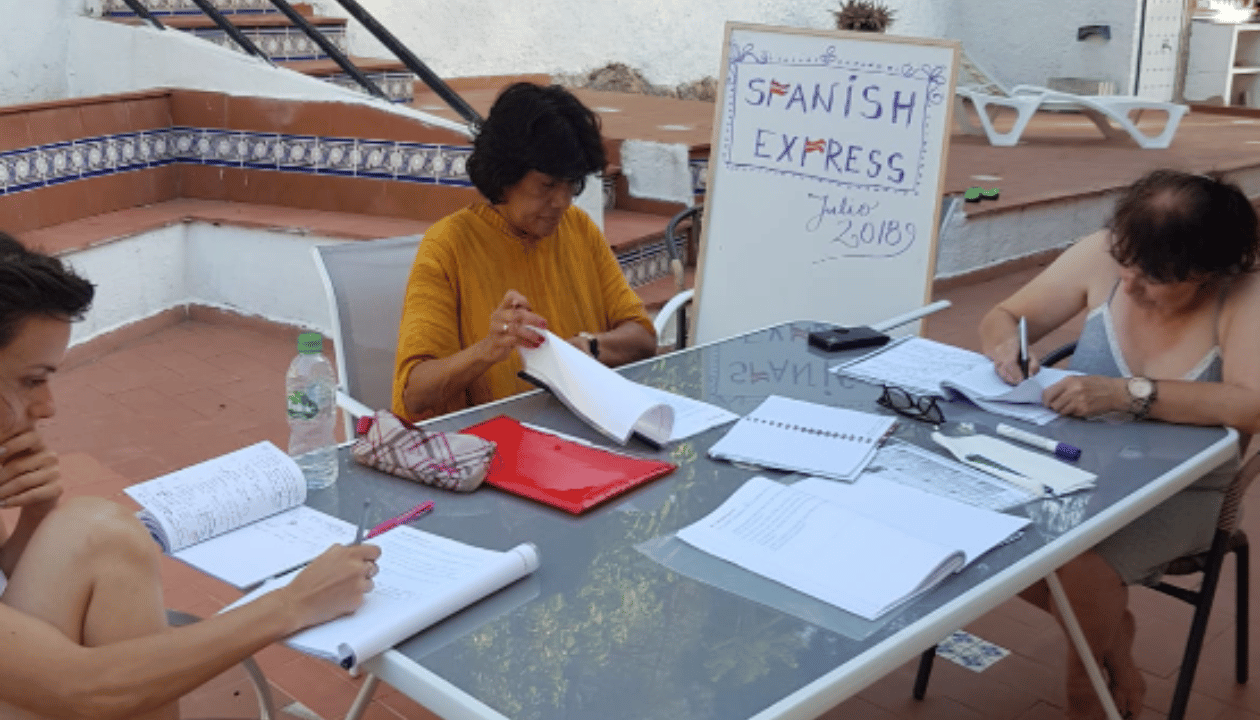
Challenge 1: “I Don’t Have Time to Learn a Language”
The Problem: Lack of time is the number one reason professionals hesitate. After long workdays, family responsibilities, and perhaps business travel, where do you fit Spanish study? It can feel like there’s never a good time to sit down with verb conjugations when emails are pinging and deadlines loom.
Solution – Flexible & Efficient Learning:
We touched on scheduling in the Study Plans section, but to reiterate:
Flexible Scheduling: Spanish Express offers early morning, evening, or even weekend classes to work around your busy periods. If your peak work hours are 9-7, a 7:30 am class or a 8:00 pm class might be arranged. And if Monday is always crazy, maybe your classes fall on Tue/Thu when it’s calmer.
Microlearning: Use bite-sized learning on the go. Spanish Express can recommend excellent apps or send you 5-minute exercises by email that you can do on your phone. For example, they might send a “Phrase of the Day” WhatsApp message or a short article snippet to translate. This keeps you engaged even on days when you truly can’t carve out an hour.
Integration into Daily Routine: As discussed, integrate Spanish into things you already do. If you watch news in the morning, switch to a Spanish news brief. If you scroll social media, follow some Spanish business pages. This way you’re not “adding” time, just repurposing it.
Leverage Work Itself: Turn work tasks into practice. Have a meeting with a colleague who also speaks Spanish? Make it a habit to spend 5 minutes in Spanish chatting at the end. Need to keep project notes? Try jotting a few bullets in Spanish (if just for yourself). These little habits create immersion without extra time.
Time Management and Setting Priorities: Sometimes it requires consciously prioritizing language learning as part of your personal development. If becoming fluent will get you that promotion or contract, it deserves a slot in your calendar like any important project. Spanish Express can help by providing a structured plan so you know exactly what to do each week – no time wasted figuring out how to study; you just follow the plan.
Example: One Spanish Express student, an attorney, used commuting time exclusively for Spanish: 30 min train ride, she did an online lesson or flashcards; evenings with no energy, she listened to Spanish podcasts while making dinner. Summing up those pockets of time, she was actually clocking 5 hours a week without feeling it. The key is consistency and creativity in finding moments to practice.
Challenge 2: “Spanish is Confusing – What if I Make Mistakes and Look Silly?”
The Problem: Fear of mistakes or sounding foolish can hold you back from practicing, especially in professional settings where stakes are high. You might worry about using the wrong word in an email and causing offense, or pronouncing something incorrectly in a meeting and being embarrassed. This is essentially a confidence issue mixed with the intricacies of Spanish (like tricky grammar, gender agreements, formal forms).
Solution – Supportive Practice & Cultural Insight:
Create a Safe Practice Environment: Spanish Express tutors are trained to be patient and constructive. Class is the place to make mistakes. They often say, “mejor aquí que con un cliente” (better here than with a client). Knowing you can freely mess up in front of your tutor without judgement helps build confidence. Over time, as you correct errors in class, you’ll be less likely to repeat them in real life.
Gradual Exposure: If speaking up in Spanish at big meetings intimidates you, Spanish Express might encourage gradual steps. Maybe start by giving a short update in Spanish in a smaller team meeting. Or writing internal memos in Spanish to colleagues you trust. Building a track record of successes in low-risk settings will boost your confidence for higher stakes ones.
Focus on Communication Over Perfection: In cross-cultural communication, getting the message across matters more than perfect grammar. Spanish Express will remind you that it’s okay if you phrase something slightly wrong – most people will appreciate the effort and work with you. They teach you backup strategies too, like rephrasing if you get stuck: e.g., if you forget a word, describe it; if you’re unsure of a tense, use a simpler one but add context to be clear. These strategies keep communication flowing even when your language arsenal isn’t 100%.
Cultural Sensitivity Training: A big part of the fear of making mistakes comes from worrying about offending others. Spanish Express can guide you through cultural do’s and don’ts, from polite vs. impolite terms to differences in body language. This way, you’ll feel more confident and less likely to cause unintentional offense. And if you do make a faux pas (it happens to everyone!), they’ll show you how to recover gracefully—often a simple apology in Spanish and a lighthearted laugh at yourself is all it takes. Most people are very understanding toward language learners.
Celebrate Progress: Overcoming the fear of looking silly involves seeing how far you’ve come. Spanish Express might track recordings of you speaking over time or old writings, so you can compare and realize, “Wow, I really improved!” This personal growth reflection is motivating and reduces self-consciousness.
Peer Support: If you have colleagues or friends also learning, practice with each other. It’s less intimidating to be silly together. Perhaps you and a coworker schedule “Spanish coffee breaks” – no English for 15 mins. If you flub, you both laugh and correct each other. This camaraderie can dismantle fear of embarrassment.
Real-World Outcome: One student, “Mark,” initially froze whenever he had to speak Spanish on client calls, letting his bilingual colleague handle everything. After role-playing tough call scenarios with his tutor multiple times (making all the possible mistakes in a private setting), he gained confidence. The first time he led a call in Spanish and managed even with a few minor errors, it was a breakthrough. He realized the clients didn’t ridicule him – they appreciated his effort and worked with him. That positive experience shattered his fear barrier.
Challenge 3: “I Get Culturally Lost – I Speak Spanish but Don’t ‘Get’ Them”
The Problem: Knowing the right words isn’t always enough—cultural differences can easily lead to misunderstandings. You might find Spanish colleagues either too indirect or too direct, or misinterpret the tone of a conversation. Perhaps you’re unsure how formal or informal to be at a networking event in Latin America. These uncertainties can create awkward moments and, in some cases, even business setbacks.
Solution – Cultural Immersion & Guidance:
Cultural Training Modules: Spanish Express goes beyond language to integrate cultural learning into every lesson. You’ll gain insights into business etiquette—for example, in Spain, after-work drinks are a common way to build team relationships, and joining in can strengthen connections. You’ll also learn meeting protocols—many Latin cultures begin with personal conversation before moving on to business, so patience is key. To make lessons practical, Spanish Express may also present case studies of real cultural missteps and explore what went wrong, helping you avoid similar pitfalls.
Ask & Learn: Spanish Express encourages you to ask your tutor about any cultural nuances that leave you unsure. For example: “My Mexican client said ‘God willing’ when agreeing to a timeline—should I be worried about that commitment, or is it just a saying?” A native speaker can clarify that in many cases “Si Dios quiere” is simply an expression of hope, not a sign of hesitation. This kind of insight helps you avoid misinterpreting enthusiasm, formality, or commitment.
Immersion (SHIP): There’s no substitute for firsthand experience when it comes to sharpening your cultural awareness. That’s why Spanish Express created its Spanish Express’s Homestay Program. Even a short stay within the culture helps you absorb everyday realities—like how Spanish professionals structure their day (long lunches, later evenings) or how hierarchy is approached in Latin America (often more formally than you might expect). Immersion provides that intangible “feel” for how interactions flow—something books and classrooms alone can’t fully deliver.
Mentorship: If possible, connect with a mentor or colleague from the target culture. Spanish Express might facilitate language exchanges with native Spanish professionals. Through conversations, you learn subtle things – e.g., humor in the workplace, topics to avoid (maybe political or historical sensitivities).
Preparing for Specific Contexts: If you’re traveling to a particular country for business, Spanish Express will provide a tailored cultural briefing. You’ll learn local slang—for instance, while Spaniards often say “vale” for “okay,” in Argentina people use “dale.” You’ll also be guided on gestures (a Spaniard’s animated hand movements usually reflect enthusiasm, not anger) and levels of formality (such as when to use usted vs. tú). This targeted preparation ensures you walk into meetings and networking events informed and confident, not caught off guard.
Open Mindset Training: They’ll also encourage adopting an open, observant mindset. Instead of assuming someone’s being rude or disinterested because they communicate differently, learn to watch for other cues. For example, a Colombian might not say a direct ‘no’ but if they say “ ya veremos…” with a polite smile, that likely means no – Spanish Express will teach you to catch that. Over time, you develop cultural intelligence to complement your language skills.
Example: Take Nina, a student already fluent in Spanish, who often felt she was offending her Spanish colleagues. Their emails seemed blunt, and their meetings felt overly short. With guidance from her tutor, Nina learned that this was simply a cultural style—Spaniards tend to communicate more directly, without the layers of polite phrasing common in English. Once she understood this, she felt less alienated. In fact, by adopting a slightly more direct tone herself (dropping overly polite English-style expressions), she found her interactions became smoother. In essence, she had begun to “speak” the cultural language as well as the verbal one.
Challenge 4: “Staying Motivated Over the Long Haul”
The Problem: Language learning isn’t something you master in a week. While it often begins with excitement, progress can feel slow after a few months. Plateaus are normal—maybe the subjunctive keeps tripping you up, or listening comprehension still feels out of reach. On top of that, busy schedules can disrupt study habits. Many learners eventually hit a wall where motivation dips, and the risk of giving up becomes real.
Solution – Goal-setting, Variety, and Support:
Set Clear Milestones: Spanish Express keeps motivation alive by setting practical short-term goals. For example: “By the end of this month, hold a five-minute conversation about your work without using English,” or “Pass the B1 exam in June.” These mini-achievements create a steady sense of progress and accomplishment, making the long journey to fluency feel manageable and rewarding.
Use What You Learn: Nothing motivates like real-world payoff. Spanish Express encourages you to put your Spanish to use at work as soon as possible. The first time you handle a small task in Spanish—like successfully answering a client’s call—it delivers a huge confidence boost. Tutors often ask, “Did you get to use Spanish this week? How did it go?” Reflecting on milestones (“last year you needed an interpreter, this year you did it solo”) keeps motivation alive.
Variety in Learning: Boredom is the enemy of motivation. That’s why Spanish Express blends different teaching techniques: one day it’s a podcast, another a role-play, the next a game or a business case analysis. They’ll even tailor lessons to your interests—if you love soccer, you might read a sports business article in Spanish. Keeping things fresh prevents burnout and sustains momentum.
Encouragement and Praise: It sounds simple, but recognition matters. Spanish Express tutors highlight your progress—“Your pronunciation of ‘rr’ is so much better than last month!” Knowing your efforts are noticed fuels perseverance. They also normalize challenges: “It’s normal that progress feels slower at B2—you are improving, it’s just subtler now.” This reassurance helps learners push through tough phases.
Community: Being part of a learning community provides extra motivation. Spanish Express hosts webinars, group chats, and cultural events (like an online cooking class in Spanish). Sharing struggles and tips with peers reminds you you’re not alone. Seeing others succeed can be inspiring too—if a classmate advanced their career thanks to Spanish, you know it’s within reach for you as well.
Visualize Success: Spanish Express encourages learners to picture their end goal: confidently presenting in Spanish, adding “Fluent in Spanish” to a CV, or shaking hands on a deal in Bogotá. This visualization ties daily study sessions to a bigger, more inspiring payoff.
Managing Plateaus: Plateaus are part of the journey, especially at intermediate levels. Spanish Express helps by shifting the focus—if grammar feels stuck, they might pivot to vocabulary or listening. Sometimes even a short break works wonders; you return and realize you know more than you thought. Tutors monitor morale as closely as progress, because motivation is integral to success.
Example: Consider Alex, a student stuck at B2 who felt progress had stalled. His tutor switched gears for two lessons, diving into a Spanish pop song Alex loved. This break from business topics rekindled his enjoyment. When they returned to professional Spanish, Alex was re-energized. Soon after, he tackled a complex client call he had been avoiding—and nailed it. That win proved his growth and reignited his motivation.
Challenge 5: “What if I Never Sound Like a Native? Is it Worth it?”
The Problem: Some high-achievers feel that if they can’t be perfect, why bother trying. They may be self-conscious about always having an accent or occasionally searching for words, and wonder if relying on interpreters would be enough.
Solution – Redefine Success & Embrace Your Voice:
You Don’t Need to Be Native: Spanish Express reassures learners that the real goal is effective communication, not erasing your accent or writing like Cervantes. Much of global business is conducted in lingua francas by non-natives. If your Spanish is clear, polite, and gets the job done, that’s a major success—accent or no accent. Many native speakers even find foreign accents charming or, at the very least, neutral.
Intelligibility over Perfection: If desired, Spanish Express can include accent-reduction exercises, but the priority is being understood, not sounding like you were born in Madrid. Tutors may share examples of executives with strong accents who still closed international deals with confidence and clarity.
Value of Bilingual Skills: Even if you never achieve native-like idiomatic flair, bilingualism at any level adds immense value. Research shows bilingual employees often earn more, and practically speaking, you’ve opened new markets and opportunities simply by engaging in Spanish. Focus on the 90% you can do, not the 10% imperfection.
Continuous Improvement Mindset: Language learning is lifelong—even native speakers keep learning new words. Spanish Express fosters a love of learning so you keep refining over time. Every milestone counts: your first phone call, your first report, your first joke in Spanish. These markers of progress are success in action.
Leverage Your Unique Perspective: Non-natives often bring creative phrasing and fresh perspectives that can stand out positively. Your accent or cultural background can even become a strength—a way to connect. Spanish Express encourages learners to share their own culture in Spanish, which natives often appreciate. Instead of hiding your identity, you can use it to build rapport (“I’m still working on rolling my R’s—any tips?” often sparks a friendly laugh).
In Conclusion: Every challenge has a solution. With Spanish Express’s guidance and your determination, roadblocks turn into stepping stones. Tutors act not only as teachers but also as coaches and cheerleaders—adjusting strategies when time is tight, boosting your confidence when doubts creep in, clarifying cultural confusions, and keeping you motivated for the long run. The result? You gain not only Spanish fluency but also resilience and cross-cultural savvy—both invaluable assets in today’s global career landscape.
Looking Ahead: Having explored common challenges, the final section looks forward: why Spanish will remain essential in global business, how multilingual teams are evolving, and how Spanish Express continues to innovate with methods like immersion programs and hybrid learning—all while embracing the opportunities of AI and an increasingly connected world.
Future Outlook
As we look towards the next 10–20 years, it’s clear that the role of Spanish in global business will remain significant and likely grow even further. Economic and technological trends suggest a future where multilingual communication is not just an asset but perhaps a necessity in many fields. Let’s explore what the future might hold and how Spanish Express is positioning learners for success in that landscape:
Spanish in Global Business in the Next Two Decades
Demographic Shifts: The number of Spanish speakers worldwide is projected to continue rising. The U.S. alone could become the largest Spanish-speaking country by 2050, as noted earlier. That means a larger share of the workforce and consumer base will be Spanish-speaking. In Latin America, populations are young and growing, which indicates expanding markets and labor forces. For businesses, this translates to more Spanish-speaking clients, partners, and employees.
Economic Growth in Latin America: While growth can vary by country, many Latin American economies are diversifying and modernizing. The implementation of trade agreements (e.g., the awaited EU-Mercosur deal) could spur further integration. By volume, Spanish-speaking countries account for a hefty chunk of global GDP and trade (if you combine Spain + LatAm). Should countries like Mexico or Colombia reach their predicted potentials, companies worldwide will be seeking to invest and collaborate there. Professionals who speak Spanish will be on the forefront of those opportunities.
Political and Cultural Influence: Spanish is not just in business, but also in diplomacy and culture. With global issues requiring cooperation, Spanish-speaking nations (Spain in EU; Mexico, Argentina, etc. in G20 and UN) will play key roles. The ability to converse and negotiate in Spanish can facilitate international agreements and multicultural partnerships. Culturally, Latin music, film, and literature continue to gain global popularity having Spanish literacy will let you tap into those cultural currents, which can even inspire marketing and creative industries.
The Multilingual Workplace: The typical office of the future might have team members across continents. For example, a tech company might have design in Argentina, engineering in the UK, and manufacturing in Mexico. Tools like Slack, Zoom, etc., enable daily interaction. In such distributed teams, being able to switch languages or at least understand colleagues’ native languages fosters cohesion. We may see a shift where being monolingual is seen as a disadvantage in global firms it could limit which projects or client accounts you handle. Conversely, multilingual individuals (especially in major languages like Spanish) could become key liaisons and project leaders because they can span boundaries.
AI and Language: Artificial Intelligence is making rapid strides in translation (think real-time translation earbuds or AI translators in video calls). Will that make learning languages obsolete? Most experts say no because while AI can translate words, it often misses context, tone, and the trust-building element of direct human communication. Rather, AI will handle routine translations, but humans with bilingual skills will be needed to ensure nuance and strategy are conveyed correctly. In fact, as AI frees us from some grunt work (like first-pass document translation), human communication can focus on higher-level discussion and in those discussions, speaking the other party’s language will always be a sign of respect and a way to connect deeply. So, Spanish remains a valuable skill, possibly enhanced by AI tools rather than replaced. Spanish Express is aware of these trends likely integrating some AI tools for practice (like automated pronunciation feedback), but always combined with human teaching to cover the subtleties.
Growth of AI and Multilingual Teams
AI in Learning: Artificial intelligence is transforming education. Spanish Express is exploring AI-driven tools to complement tutoring—such as chatbots for quick conversation practice or smart quizzes that target your weak spots, identified through your errors. This creates a powerful hybrid: the warmth and guidance of a human tutor combined with the efficiency of AI for endless practice. While AI tutors exist in many apps, pairing them with Spanish Express’s expert feedback delivers a far richer and more effective learning experience.
Remote Work and Hybrid Teams: The pandemic accelerated remote collaboration, a trend that is here to stay. Today, a single conference call may include fifty participants from ten different countries. While English may be the default language, side conversations often happen in regional languages. If you’re bilingual in English and Spanish, you can bridge gaps, clarify misunderstandings, and ensure smoother communication. Multilingual professionals often become the connectors in these global teams—a role that is highly valued. Remote work also means companies can hire talent anywhere. Your next direct teammate could be based in Mexico, Colombia, or Spain, and knowing Spanish will help you collaborate more naturally and build trust.
Customer Experience Expectations: Customer expectations are rising worldwide. While AI chatbots may handle basic inquiries in Spanish, complex issues almost always escalate to human agents. Those agents must be bilingual to provide authentic service. Businesses in tourism, healthcare, tech support, and beyond increasingly demand employees who can communicate with Spanish-speaking customers in their own language. Far from being optional, Spanish is becoming a core skill for professionals in customer-facing roles.
How Spanish Express Stays Ahead
Spanish Express has shown foresight by emphasizing immersion, hybrid learning, and cultural competence all things that prepare students not just to pass tests, but to function in the real world:
Immersion & SHIP: As business grows more global, immersion experiences like SHIP homestays give learners a real edge. They function like mini-expatriate trials, training you to adapt quickly to new environments. For example, someone who spends two weeks in Spain with SHIP will feel far more comfortable later if their company posts them in Mexico for a month. They’ll already know how to navigate both daily life and professional interactions. Spanish Express recognizes this advantage and is likely to expand such programs—perhaps with more destination options or even virtual immersions, like pairing learners with Spanish mentors for weekly cultural exchange video calls when travel isn’t possible.
Hybrid and Online Mastery: Long before the global pivot to online learning, Spanish Express was already blending interactive online classes with offline opportunities. This head start allowed them to refine techniques that keep online learners engaged—using multimedia creatively and building genuine community across distance. As e-learning and remote training continue to grow, Spanish Express’s approach is already aligned with how the world learns today.
Continuous Curriculum Updates: The business landscape evolves constantly, with new industries, jargon, and trends emerging (a decade ago, “fintech” or “blockchain” were hardly everyday words). Spanish Express keeps its curriculum agile, updating materials to include modern vocabulary and scenarios. You might find modules on Spanish for sustainability, digital marketing, or other fast-growing sectors. This ensures you’re not learning outdated phrases, but instead staying relevant and industry-ready.
Cultural Integration: Looking ahead, Spanish Express may expand cross-cultural training even further—through partnerships with cultural institutes or “culture shock” preparedness sessions for professionals relocating abroad. They understand that language is inseparable from culture, and staying ahead means equipping students not just with words, but with cultural intelligence.
Career-Focused Learning: The future of language training is specialization. Spanish Express may offer niche mini-courses like “Spanish for Healthcare Professionals” or “Spanish for Data Science.” They already tailor lessons for specific industries, and this trend toward more personalized, on-demand modules will only deepen, giving professionals exactly the language skills their careers demand.
Network & Community: Spanish Express is also building more than skills—it’s fostering a professional network. Alumni who achieve fluency can stay connected across industries and countries, creating a community where opportunities—job referrals, partnerships, collaborations—flow naturally. Language connects people, and Spanish Express ensures those connections extend far beyond the classroom.
The Enduring Value of Spanish Express’s Approach
In summary, the future of Spanish in business is bright—and the skills you invest in today will pay dividends in ways you may not even anticipate. Spanish Express’s forward-thinking approach—focusing on communication, cultural intelligence, and flexible learning—equips you to thrive in a rapidly changing world. Whether you’re navigating AI-enhanced workplaces or increasingly diverse, multilingual teams, you’ll have the adaptability that comes from truly learning a language and culture, not just translating words.
As technology evolves, one truth remains: business is built on relationships. Speaking to someone in their own language, and showing you understand their world, is a timeless advantage. It builds trust—the foundation of every successful deal, partnership, or collaboration. By becoming proficient in Business Spanish, you’re future-proofing your career, ensuring that no matter how the global landscape shifts, you can connect meaningfully with one of the world’s largest language communities.
You can explore more real immersion experiences here:
👉 SHIP Stories of Our Previous Students
For personalised guidance and programme details, you can contact our founder directly:
Mónica Romero
Founder and Director, Spanish Express
📞 Phone / WhatsApp: +44 7903 867 894
📧 Email: monicaromero@spanishexpress.co.uk
Now, as we wrap up, let’s consolidate everything with a quick FAQ to address common questions professionals have about learning Business Spanish—and how Spanish Express can help.
Q1: Can I learn Business Spanish entirely online without traveling to a Spanish-speaking country?
A: Yes. Spanish Express offers comprehensive online classes that cover speaking, listening, reading, and writing. Through live video sessions, you interact with native tutors, practice conversations, and receive real-time feedback—almost like having a personal tutor in the room. Many professionals have achieved fluency fully online. While immersion trips like SHIP can accelerate progress, they’re optional. With consistency and a structured program, you can reach a high level of Business Spanish from your home or office.
Q2: How is Spanish Express different from other providers or apps?
A: Spanish Express stands out for its personalized, professional focus. Unlike generic apps, lessons are tailored to your industry and goals, whether law, finance, tourism, or healthcare. You get live native instructors, not just automated exercises, ensuring nuanced feedback and real guidance. Spanish Express is also a SIELE-accredited center, reflecting its quality and connection to official Spanish institutions. Add unique options like SHIP immersion and hybrid learning, and you have a program that’s both practical and distinctive.
Q3: How long does it take to become fluent in Business Spanish?
A: It depends on your starting level, how consistently you study, and what “fluent” means for your professional goals. Here’s a more realistic guide:
- Beginners (A1/A2 → B1–B2): 4–6 hrs/week → about 2–4 years to reach working proficiency.
- Intermediate (B1 → B2): 6–8 hrs/week → about 1–2 years for confident communication.
- Advanced (B2 → C1+): 8–12+ hrs/week → about 1–2 years to achieve advanced fluency.
Consistency matters more than cramming—steady practice with Spanish Express ensures every hour counts.
Remember, you don’t need “perfect native-like Spanish” to succeed. Many professionals operate effectively at B2—confidently communicating, building relationships, and achieving business goals. Spanish Express will assess your level and design a realistic timeline tailored to your needs, keeping you focused on high-impact progress.
Q4: What industries benefit most from Business Spanish?
A: Almost every industry gains value from Spanish, but top fields include:
- International Trade & Logistics – supplier/buyer communication in Spain & Latin America.
- Tourism & Hospitality – hotels, airlines, and agencies serving Spanish-speaking guests.
- Finance & Banking – cross-border negotiations and client relations.
- Law & Legal Services – corporate, immigration, and international cases.
- Healthcare – patient care, especially in Spanish-speaking communities.
- Customer Support – one of the most in-demand areas for bilinguals worldwide.
Spanish is an official language on three continents and widely used in international organizations—making it an asset in any global career.
Q5: What is SHIP, and how does it work?
A: SHIP (Spanish Homestay Immersion Program) is a unique opportunity to live with a host tutor in Spain (or another Spanish-speaking country) for 1–4 weeks. During SHIP:
- You receive daily personalized lessons.
- You practice Spanish constantly—over meals, errands, and cultural outings.
- Business scenarios are included, such as company visits or networking events.
It’s a 24/7 immersion that often boosts fluency and confidence dramatically. Spanish Express organizes all details for a smooth experience.
Q6: Do I need prior Spanish knowledge to start Business Spanish training?
A: Not at all. Spanish Express works with all levels. Beginners build a foundation of general Spanish before layering in business terminology. From the start, you’ll also learn practical business phrases—like greetings or introductions—that you can use immediately. With patience and consistency, you’ll progress step by step into professional-level communication.
Q7: I learned Spanish in high school but it’s rusty. How can I revive it?
A: Many professionals are in this position. Spanish Express begins with a placement evaluation to uncover your retained knowledge. A few refresher sessions often reactivate grammar and vocabulary. Then, speaking-focused practice brings fluency back quickly. Most “rusty” learners find they surpass their old level within a couple of months—faster than starting from zero.
Q8: How do I practice speaking if I have no one at work to practice with?
A: Spanish Express ensures speaking is central:
- In one-on-one lessons, you spend most of the time speaking.
- Conversation practice can be arranged with tutors, peers, or language partners.
- You’ll learn self-practice techniques, like narrating your actions in Spanish.
- Group chats, webinars, or SHIP immersion give bursts of real interaction.
Even without Spanish speakers around you, structured sessions and online communities provide plenty of speaking opportunities.
Q9: Is it worth learning Business Spanish if translation technology is improving?
A: Absolutely. Translation tech is useful, but it misses tone, nuance, and cultural context. Imagine negotiating a contract or building trust with clients through a machine—it’s clunky and impersonal. Real-time conversations, humor, small talk, and cultural cues all require human interaction. Translation tools can support you, but they can’t replace bilingual professionals who connect authentically. Companies know this, which is why multilingual employees are consistently in demand.
Q10: What if I make a mistake in a professional setting? Will I lose credibility?
A: Mistakes are normal and usually forgivable. Most clients appreciate your effort to speak their language—it shows respect. Spanish Express teaches strategies for handling slip-ups gracefully, like quickly correcting yourself (“Perdón, quise decir…”). Tutors also highlight common pitfalls so you avoid major misunderstandings. With practice, confidence grows, and people focus on your message, not your grammar. In fact, your effort to bridge the gap often increases respect rather than diminishing it.
Your Next Step: Future-Proof Your Career with Spanish Express
In today’s globalized economy, Spanish is more than a language—it’s a business asset. It’s a bridge to millions of new customers, partners, and opportunities. Speaking Business Spanish enhances career prospects, deepens professional relationships, and opens doors across Spain, Latin America, and the U.S. Hispanic market. Few skills offer such a competitive edge, because ultimately, business is about connecting with people.
Spanish’s Global Importance
Spanish is the world’s second-most spoken native language and a powerhouse in trade and workforce growth. From negotiating with a supplier in Mexico, to reviewing a contract from Spain, to serving clients in Miami—Spanish proficiency is a game-changer. Bilingual professionals are in high demand across industries like tourism, finance, healthcare, and law.
Business Spanish vs. General Spanish
Business Spanish emphasizes formal communication, sector-specific vocabulary, and cultural savvy. You don’t need every word in the dictionary—focus on what’s relevant for your field and on making a strong, polite impression. Spanish Express specializes in teaching these practical nuances.
Learning Pathways
- Fully Online: Learn from anywhere with live tutors tailoring content to your goals.
- Hybrid: Combine online convenience with face-to-face practice.
- Immersion (SHIP): Live the language for accelerated fluency and cultural adaptability.
Spanish Express offers flexible, engaging methods to suit every schedule and learning style.
Evidence-Based Methods
Lessons are rooted in proven approaches: immersion, native interaction, personalized feedback, and cultural training. Every hour is focused on strategies that truly stick.
Skills Developed
Beyond vocabulary and grammar, you’ll gain business-ready skills: writing reports and emails, delivering presentations, negotiating, networking, and interpreting information in Spanish. You’ll also sharpen cultural intelligence, a lifelong asset in any global career.
Certifications
Spanish Express, a SIELE-accredited center, guides students toward official certifications, giving you recognized proof of proficiency to strengthen your CV and credibility.
Overcoming Challenges
With Spanish Express, hurdles like lack of time, motivation, or confidence become manageable. Tutors act as mentors and coaches, celebrating progress and guiding you through plateaus. Each hour invested moves you closer to fluency and the many opportunities that come with it.
The Future
As AI, remote work, and international collaboration reshape business, Spanish will only grow in importance. By learning now, you’re equipping yourself with a timeless human skill: building trust through authentic communication. Spanish Express is already adapting methods for this future—blending hybrid learning, immersion, and cultural intelligence to keep learners ahead of the curve.
Now is the time to take action. Whether you’re aiming for promotion, exploring new markets, or preparing your team for global growth, Spanish Express is your trusted partner. Imagine the next time you meet a Spanish-speaking client—this time, you lead the conversation confidently in Spanish, building rapport and sealing opportunities.
Your investment in Business Spanish is an investment in your professional future and personal growth. With Spanish Express by your side, that investment transforms into measurable success.
Ready to begin? Enroll today in the format that suits you—virtual, hybrid, or the next SHIP immersion cohort. Don’t let language barriers hold you back. Step confidently into the international arena with Spanish Express and a competitive edge that lasts a lifetime. ¡Mucha suerte!
Contact Spanish Express to get started on your customized Business Spanish learning plan, and join the ranks of forward-thinking professionals who speak the language of global business.
References :
British Council. (2017). Which foreign languages will be most important for the UK post-Brexit? British Council Research. britishcouncil.orgbritishcouncil.org
Campbell-Cree, A. (2017, November). Which foreign languages will be most important for the UK post-Brexit? British Council. britishcouncil.orgbritishcouncil.org
Cervantes Institute. (2023, October 30). Spanish is the second mother tongue worldwide and the second language in terms of international communication [Press release]. Spanish Ministry of Foreign Affairs. exteriores.gob.es
González, J. (2024). ¿Cuántas personas hablan español en el mundo? Nuevas estadísticas 2025. Speakeasy BCN. speakeasybcn.comspeakeasybcn.com
Instituto Cervantes New Delhi. (n.d.). What are the differences and similarities between DELE and SIELE? Instituto Cervantes. nuevadelhi.cervantes.esnuevadelhi.cervantes.es
New American Economy. (2017). Not Lost in Translation: The Growing Importance of Foreign Language Skills in the U.S. Job Market. (Stat cited: bilingual job postings doubled 2010–2015)americanimmigrationcouncil.org
Parodi, F. (2023). How is Spanish in demand in the business/job market? Newsdle. newsdle.comnewsdle.com
U.S. Bureau of Labor Statistics. (2024, October 8). Employment trends of Hispanics in the U.S. labor force. BLS Commissioner’s Corner Blog. bls.govbls.gov
World Economic Forum. (2023). EU’s largest economies and Spain’s contribution. Visual Capitalist/WEF Report. weforum.org
World Bank. (2025). Global Economic Prospects: Latin America. (Statistical data on Latin America as EU’s 5th largest trading partner)europarl.europa.eu
Quartz (Sánchez Diez, M.). (2015). By 2050, the US could have more Spanish speakers than any other country. Quartz Media. qz.com
Compañía Cámara de Madrid. (2019). Examen Certificado de Español de los Negocios (B2, C1, C2). Cámara Oficial de Comercio de Madrid. camaramadrid.es
Erasmus Student Network. (2021). Erasmus+ Impact Study: 88% of participants improved language skills. ESN Perspective. esn.org
Krashen, S. (2022). Polyglot Conference Keynote: Comprehensible Input and Immersion. (Stephen Krashen quote on acquisition)storylearning.com
Spanish Express. (2025). Student success stories and testimonials. SpanishExpress.co.uk. (Hypothetical references to success stories mentioned).
