

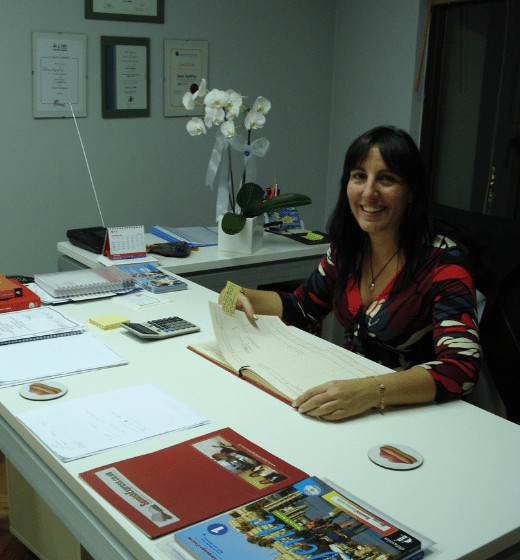
Travelling to Spain but don’t know how to say greetings and farewells in Spanish? I’m Mónica Romero, Founder and Director of Spanish Express. I’m a chartered linguist, Spanish teacher, examiner and teacher trainer with more than 20 years of experience in language education. Since founding Spanish Express in 2003, I’ve been helping adults and professionals speak Spanish with confidence, and I created our Spanish Homestay Immersion Programme (SHIP), where students live and study Spanish in their teacher’s home in Spain.
In this guide, I’ll share the Spanish basics that will help you start a conversation with native speakers. So, read on and learn.
Whether you’re greeting someone with a sunny “Buenos días” or bidding farewell with a heartfelt “Hasta mañana,” each phrase is a bridge to new adventures. From “¿Cómo va tu día?” to the informal “¿Qué tal?”, let me show you the variety of Spanish greetings and farewells. Get ready to chat like a native, impress friends across Spain and Latin America, and sprinkle a little Spanish charm into every “Hola” and “Adiós” you share. Let’s kick off this journey with a smile and a wave, Spanish style!
What are some basic Spanish words?
Your journey to learning Spanish as a beginner starts with a few basic greetings. I always tell my students that these will help you a lot when you’re in a Spanish-speaking country and need to say “hello” to a native speaker.
- Hola OH-lah – Hello
- Adiós ah-DYOHS – Goodbye
- Chao CHOW – Goodbye
- Por favor pohr fah-BOHR – Please
- Gracias GRAH-thyahs – Thank you
- Sí SEE – Yes
- No NOH – No
- Buenos días BWEH-nohs DEE-ahs – Good morning
- Buenas tardes BWEH-nahs TAHR-dehs – Good afternoon
- Buenas noches BWEH-nahs NOH-chehs – Good night
- Hasta el lunes AHS-tah ehl LOO-nehs – See you Monday
- Hasta pronto AHS-tah PROHN-toh – See you soon
- Todo bien TOH-doh BYEHN – All good
- ¿Cómo vas? KOH-moh BAHS – How are things with you?
- ¿Qué hay de nuevo? KEH eye deh NWEH-boh – What’s new?
- ¿Cómo andas? KOH-moh AHN-dahs – How are you?
How do you greet someone anytime in Spanish?
To greet someone in Spanish at any time of the day, you can simply say “Hola.” This greeting is timeless and works perfectly whether it’s morning, afternoon or night.
Hola is the go-to way to say hello and is recognised by all native Spanish speakers. It’s informal, friendly and a great start to any conversation.
What are 5 ways to say hello?
Here are five ways to say hello in Spanish, ranging from formal to informal and suitable for different times of the day:
- Hola OH-lah – The most basic and versatile greeting, meaning “Hello.”
- Buenos días BWEH-nohs DEE-ahs – Used in the morning until noon, meaning “Good morning.”
- Buenas tardes BWEH-nahs TAHR-dehs – Said from noon until the evening, meaning “Good afternoon.”
- Buenas noches BWEH-nahs NOH-chehs – Used in the evening and at night, meaning “Good evening” or “Good night.”
- ¿Qué tal? KEH TAHL – An informal way to say “How’s it going?” or “What’s up?”
These greetings help you navigate various social settings, from casual encounters to more formal introductions.
What can I say instead of Hola?
If you’re looking for alternatives to “Hola,” the time-of-day greetings and “¿Qué tal?” above already add variety to your greetings. One more option I’d offer you:
- ¿Cómo estás? KOH-moh ehs-TAHS – How are you?
Can you just say Buenas?
Yes, you can just say “Buenas” as a short form of greeting in Spanish. This informal greeting is often used when the time of day is understood from the context, making it unnecessary to specify “días” (days), “tardes” (afternoons) or “noches” (nights).
Buenas is a casual and friendly way to greet someone, showing warmth and familiarity. It’s commonly used in many Spanish-speaking countries and can be heard in various social settings.
Do you say buen día or buenos días?
Both “buen día” and “buenos días” are correct, but they’re used differently. “Buenos días” is more commonly used and means “Good morning.” It’s a polite greeting suitable for any morning occasion.
“Buen día”, on the other hand, translates directly to “Good day” and can be considered slightly more informal or versatile, used not just in the morning but throughout the day as well.
- Buen día BWEHN DEE-ah – Good day
How do you respond to Buenos días?
“Buenos días” means “Good morning” in Spanish. It’s a common greeting you might hear or use in the morning. The simple and polite response is to repeat the greeting back, and you can follow it with a question:
- Buenos días BWEH-nohs DEE-ahs – Good morning
- ¿Cómo estás? KOH-moh ehs-TAHS – How are you?
Can you say Bueno as hello?
While “Bueno” literally means “Good” in English, it’s not traditionally used as a greeting. However, in some contexts, especially on the phone, you might hear someone answer with “¿Bueno?” BWEH-noh
This is common in Mexico and some other Latin American countries, where it’s used as a way of saying “Hello?” when answering a call.
How do you say hi to someone in a cute way?
In Spanish, if you want to say hi in a cute or playful way, you might use these variations, or add diminutives for a more endearing effect:
- ¡Hola, hola! OH-lah, OH-lah – Hello, hello!
- Holita oh-LEE-tah – A little hello (diminutive)
- Holi OH-lee – Hiya (diminutive)
These variations of “Hola” are seen as more informal and affectionate, perfect for greeting friends, family or loved ones. Adding a smile or a cheerful tone can also convey warmth and friendliness, making the greeting feel even more inviting and cute.
How do you say hi in Spanish slang?
Saying hi in Spanish slang varies across Latin America and among different Spanish-speaking countries.
In Spain
- ¿Qué tal? KEH TAHL – How’s it going?
- ¿Qué pasa? KEH PAH-sah – What’s up?
In Latin America
- ¿Cómo estás? KOH-moh ehs-TAHS – How are you?
- ¿Cómo te va? KOH-moh teh BAH – How’s it going?
In Mexico
- ¿Qué onda? KEH OHN-dah – What’s up?
Each country has its own unique slang, so I find it fun to learn the differences.
What’s up in Spanish slang?
“¿Qué onda?” is the common way to say “What’s up?” in Mexico, while “¿Qué pasa?” is used widely across Spanish-speaking countries to mean “What’s happening?” or “What’s up?”. In some regions, you might also hear “¿Qué hay?” KEH EYE as a casual way of asking “What’s up?”.
These phrases vary by country, but they’re all informal and typically used among friends or people of the same age.
How do you respond to ¿Cómo estás?
When someone asks you “¿Cómo estás?” they’re checking in on your well-being in Spanish. You can reply with:
- Estoy bien, gracias ehs-TOY BYEHN, GRAH-thyahs – I’m fine, thank you
- Más o menos MAHS oh MEH-nohs – So-so
It’s also polite to return the question by asking “¿Y tú?” ee TOO or “And you?” to show interest in how they are doing.
This exchange is a basic part of everyday conversation in Spanish, and I see every day how it helps build a friendly rapport with others.
How would you respond to ¿Cómo está usted?
When someone asks “¿Cómo está usted?” KOH-moh ehs-TAH oos-TEHD they’re using a formal way to say “How are you?” in Spanish. A polite response could be:
- Estoy bien, gracias. ¿Y usted? ehs-TOY BYEHN, GRAH-thyahs. ee oos-TEHD – I’m well, thank you. And you?
This shows courtesy and interest in the other person’s well-being. It’s a respectful exchange, especially with someone you don’t know well or in a formal setting.
How do Spanish families greet each other?
Spanish families often greet each other with warmth and affection, showcasing the close-knit nature of family bonds in Spanish-speaking cultures.
Common greetings include “Hola” (Hello) followed by “¿Cómo estás?” (How are you?) or “¿Cómo te va?” (How’s it going?) among younger or more informal family members.
It’s also typical to use terms of endearment and ask about each other’s well-being, demonstrating care and interest.
How do you greet and introduce yourself in Spanish?
Greeting someone and introducing yourself in Spanish starts with a friendly “Hola” or a time-specific greeting like “Buenos días” (Good morning) or “Buenas tardes” (Good afternoon), depending on the time of day.
Follow this with a self-introduction, “Me llamo [Your Name]” (My name is [Your Name]), to let the person know who you are. To keep the conversation going and show interest in the other person, you can ask, “¿Y tú, cómo te llamas?” (And you, what’s your name?).
- Me llamo… meh YAH-moh – My name is…
- ¿Y tú, cómo te llamas? ee TOO, KOH-moh teh YAH-mahs – And you, what’s your name?
This approach is polite and opens the door for a friendly exchange, setting the stage for a pleasant conversation.
What is the meaning of Mucho gusto?
“Mucho gusto” MOO-choh GOOS-toh translates to “Nice to meet you” or “Pleased to meet you” in English. It’s a polite expression used when you’re introduced to someone for the first time.
It shows that you’re pleased to make their acquaintance. This phrase is part of basic etiquette in Spanish-speaking countries and is used in both formal and informal settings.
What are three ways to say “nice to meet you” in Spanish?
To express “nice to meet you” in Spanish, you can use several polite and friendly phrases:
- Mucho gusto MOO-choh GOOS-toh – The most common way to say “nice to meet you,” suitable in almost any situation.
- Encantado / Encantada ehn-kahn-TAH-doh / ehn-kahn-TAH-dah – Depending on your gender, this means “delighted” or “pleased.” It’s a bit more formal, showing that you’re delighted to meet the person.
- Un placer conocerte oon plah-THEHR koh-noh-THEHR-teh – This translates to “a pleasure to meet you,” offering a warm and slightly more personal touch to the greeting.
Each of these expressions can be used in both formal and informal contexts, helping you make a good impression when meeting someone new.
How do you respond to Mucho gusto?
When someone says “Mucho gusto,” which means “Nice to meet you,” there are some simple and polite responses I recommend:
- Igualmente ee-gwahl-MEHN-teh – Likewise
- El gusto es mío ehl GOOS-toh ehs MEE-oh – The pleasure is mine
These phrases show mutual respect and are a nice way to continue a conversation. Remember, interactions like these are great for practising formal and informal Spanish greetings and becoming more comfortable in conversations with native speakers.
What are three ways to say goodbye in Spanish?
In Spanish, you can say goodbye in several ways, but three common phrases are “Adiós,” “Hasta luego” and “Chao.”
- Adiós ah-DYOHS – A common way to say goodbye, suitable for both formal and informal situations.
- Hasta luego AHS-tah LWEH-goh – Means “See you later” and is commonly used as a friendly farewell.
- Chao CHOW – Means “Goodbye” and is used informally with friends, family and people you know.
All three are widely understood among Spanish speakers and are part of everyday vocabulary.
What are 6 greetings and farewells in Spanish?
In Spanish, greetings and farewells are part of everyday interactions, reflecting warmth and friendliness. If I had to choose just three greetings and three farewells to start with, I’d pick “Hola,” “Buenos días” and “¿Qué tal?” to say hello, and “Adiós,” “Hasta luego” and “Nos vemos” nohs BEH-mohs (See you) to say goodbye.
Each of these phrases can be used in various contexts, from casual to formal, and they’re essential for anyone looking to improve their Spanish fluency.

How do you spread festive cheer in Spanish at Christmas, New Year and beyond?
Greetings aren’t only for everyday hellos. In Spanish-speaking cultures we love a celebration, and knowing the right words for the occasion is one of the quickest ways I know to make a native speaker smile. Here are the phrases I’d keep ready for the festive calendar:
- ¡Feliz Navidad! feh-LEETH nah-bee-DAHD – Merry Christmas
- ¡Feliz Nochebuena! feh-LEETH noh-cheh-BWEH-nah – Happy Christmas Eve
- ¡Feliz Año Nuevo! feh-LEETH AH-nyoh NWEH-boh – Happy New Year
- Próspero Año Nuevo PROHS-peh-roh AH-nyoh NWEH-boh – A prosperous New Year
- ¡Feliz Día de Reyes! feh-LEETH DEE-ah deh RREH-yehs – Happy Three Kings’ Day
- ¡Felices fiestas! feh-LEE-thehs FYEHS-tahs – Happy holidays
- Te deseo una Navidad llena de alegría teh deh-SEH-oh OO-nah nah-bee-DAHD YEH-nah deh ah-leh-GREE-ah – I wish you a Christmas full of joy
- Que pases unas fiestas maravillosas keh PAH-sehs OO-nahs FYEHS-tahs mah-rah-bee-YOH-sahs – Have a wonderful holiday season
- ¡Feliz Día de la Madre! feh-LEETH DEE-ah deh lah MAH-dreh – Happy Mother’s Day
- ¡Feliz Día del Padre! feh-LEETH DEE-ah dehl PAH-dreh – Happy Father’s Day
- ¡Feliz santo! feh-LEETH SAHN-toh – Happy Saint’s Day
- ¡Enhorabuena! ehn-oh-rah-BWEH-nah – Congratulations
“Felices fiestas” means “Happy holidays” and is commonly used during the Christmas and New Year festive season. And don’t be surprised by “Feliz santo”: in Spain many people celebrate the feast day of the saint they’re named after, almost like a second birthday.
How do you make someone’s birthday special in Spanish?
A birthday is the perfect moment to go beyond the basics. “¡Feliz cumpleaños!” will always work, but a warmer, more personal wish shows real effort, and I promise it will be remembered. Try these:
- ¡Feliz cumpleaños! feh-LEETH koom-pleh-AH-nyohs – Happy birthday
- ¡Feliz cumple! feh-LEETH KOOM-pleh – Happy b-day (informal, for friends and family)
- ¡Felicidades en tu día! feh-lee-thee-DAH-dehs ehn too DEE-ah – Congratulations on your day
- Que cumplas muchos más keh KOOM-plahs MOO-chohs MAHS – May you have many more
- Te deseo un cumpleaños lleno de alegría teh deh-SEH-oh oon koom-pleh-AH-nyohs YEH-noh deh ah-leh-GREE-ah – I wish you a birthday full of joy
- Que todos tus deseos se hagan realidad keh TOH-dohs toos deh-SEH-ohs seh AH-gahn rreh-ah-lee-DAHD – May all your wishes come true
- Que pases un día inolvidable keh PAH-sehs oon DEE-ah ee-nohl-bee-DAH-bleh – Have an unforgettable day
- Un fuerte abrazo en tu día especial oon FWEHR-teh ah-BRAH-thoh ehn too DEE-ah ehs-peh-THYAHL – A big hug on your special day
- Le deseo un muy feliz cumpleaños leh deh-SEH-oh oon mwee feh-LEETH koom-pleh-AH-nyohs – I wish you a very happy birthday (formal)
Use the “tú” versions with friends, family and people your own age, and keep the formal “Le deseo…” for a boss, a client or someone older. And if someone wishes you a happy birthday, a simple “¡Muchas gracias!” MOO-chahs GRAH-thyahs is all you need.
Ready to Greet the World in Spanish with Confidence?
If you want to travel to Spain or Latin America, start real conversations with native speakers, and use greetings and farewells like a local, take your learning beyond phrases and join my Spanish Homestay Immersion Programme (SHIP).
You can explore more real immersion experiences here:
👉 SHIP Stories of Our Previous Students
For personalised guidance and programme details, you can contact me directly:
Mónica Romero
Founder and Director, Spanish Express
📞 Phone / WhatsApp: +44 7903 867 894
📧 Email: monicaromero@spanishexpress.co.uk
