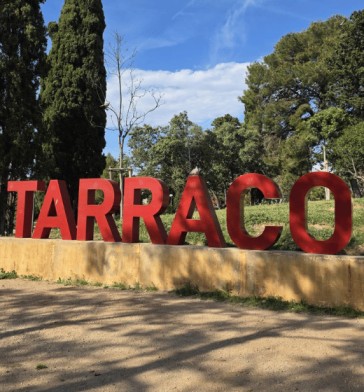
Some cities ask you to choose between history and the beach. Tarragona quietly refuses. Here, ancient Roman ruins sit a short stroll from golden sand, and the whole place moves to an easy, unhurried Mediterranean rhythm.
I am Ramo, a host teacher with Spanish Express, and I live right here near Tarragona. This is where I welcome my Spanish Homestay Immersion Program (SHIP) students into my home, sometimes for a week, sometimes for as long as a month.
Our program is a 1 to 4 week immersion where students live and learn with me. It is not a classroom or a series of private lessons. It is interactive learning, where the language is lived through customized lessons, shared meals, easy chats, walks and excursions.
Every single outing is part of that learning, and Tarragona is one of the places I love sharing most. So this guide gathers those favourite spots.
I have lost count of how many times I have walked these streets with a student beside me, helping them order a coffee in Spanish or read a sign on an old Roman wall. Whether you adore history, food or a slow walk by the sea, this Catalan city makes everyone happy. Let me take you through it.
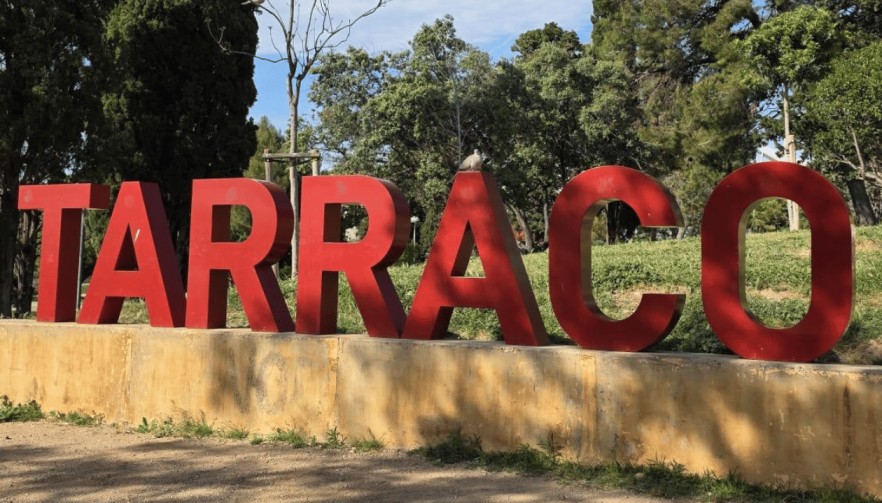
Why Tarragona Is Part of My Students’ Immersion
Because I live here in Catalonia, near Tarragona, this region becomes my students’ home during their stay. When they come to me for a week or more on the SHIP program, I want them to truly know the place, not just see it.
That is why so much of the learning happens out and about. An excursion to Tarragona is not a break from the lessons; it is the lesson, lived through real conversation, real food and real history. People often ask me if Tarragona, Spain is worth visiting, and my answer is always the same: absolutely.
For me, it is one of the prettiest cities to visit in Spain. This Catalan city was once ancient Tarraco, the oldest Roman settlement on the Iberian Peninsula. That history is not hidden away in a museum here. It lives in the streets, the walls and the views over the Mediterranean Sea.
What I love, and what my SHIP students always notice, is the blend. It is a modern city with modern shops, yet you turn a corner and there are two-thousand-year-old Roman ruins. The whole archaeological ensemble has been a UNESCO World Heritage Site since 2000.
Roman Amphitheatre
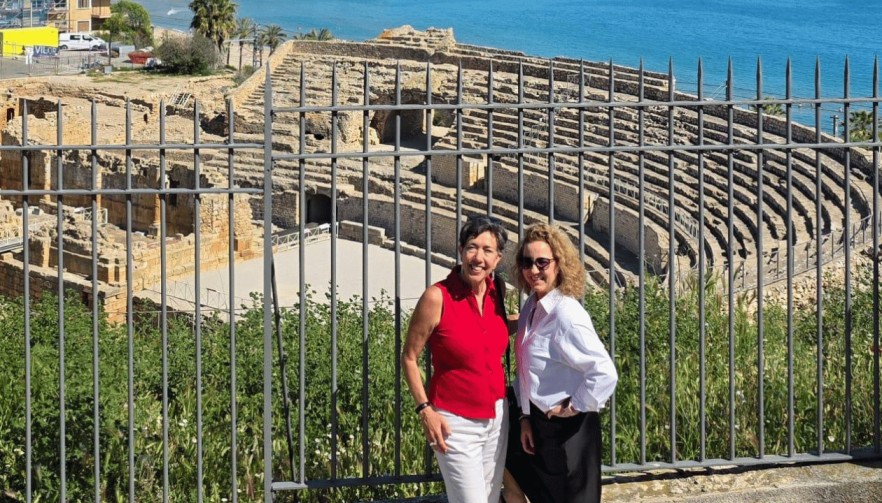
If I only had one hour with a student in Tarragona, I would spend it here. The Roman Amphitheatre is one of the city’s most iconic landmarks, and it is genuinely breathtaking.
What makes it so special is the setting. It is built right beside the coast, so as you stand among the ancient stone seats, the Mediterranean Sea stretches out blue behind it. I have never seen my students reach for their cameras so quickly.
Back in the 2nd century AD, this amphitheatre could hold around 14,000 spectators. I always pause and let that number sink in, because it helps you imagine the crowds, the noise and the life that once filled it.
It is a significant site of the ancient Tarraco, and one of my favourite places to begin a visit. Sitting on those steps, looking out at the sea, you really feel how close the past still is.
Balcó del Mediterrani
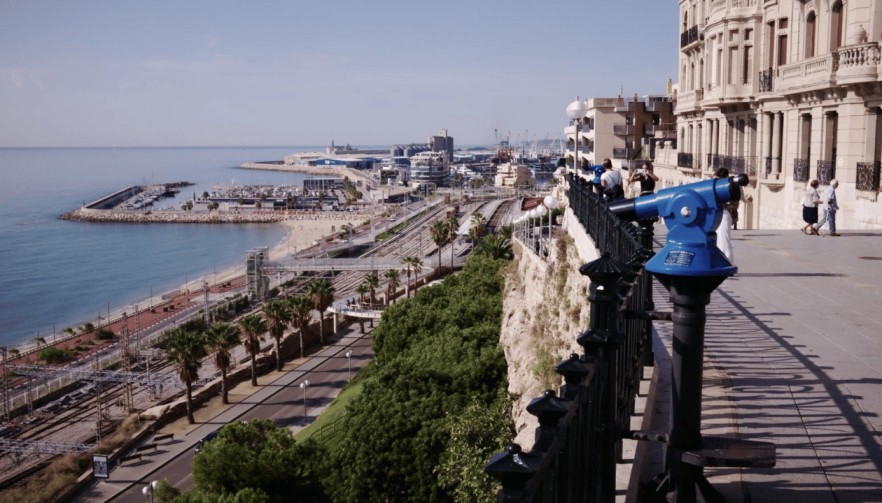
At the far end of Rambla Nova, you arrive at the Balcó del Mediterrani, which translates as the Mediterranean balcony. It is a beautiful viewpoint, and it offers wide, open views over the sea.
There is a lovely local custom here of “touching iron” at the railing for good luck, and I always tell my students about it. Watching them reach out and press their hand to the metal, laughing, is one of those small moments I treasure.
It is the perfect place to catch your breath. The breeze comes straight off the water, the horizon opens up, and for a minute nobody needs to say anything at all.
I often bring my SHIP visitors here at the start of our walk, so they can take in the whole coastline before we explore. It sets the mood for the entire day.
Rambla Nova
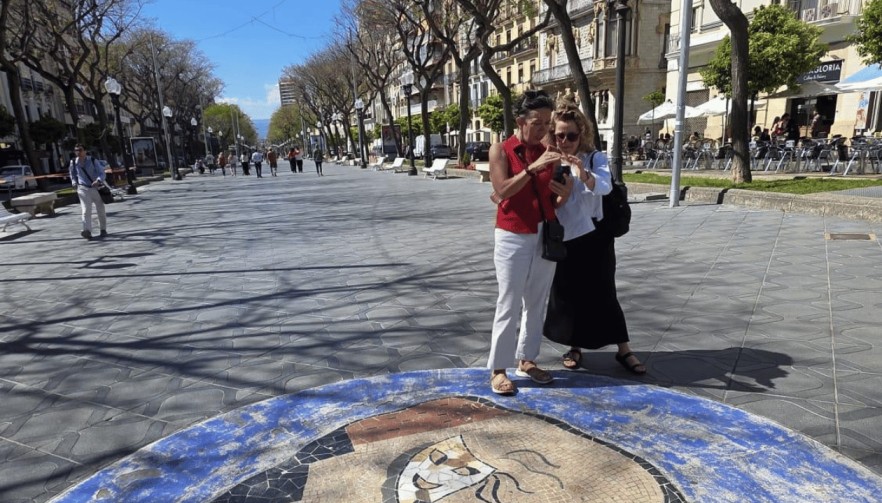
Rambla Nova is the city’s main promenade, and it is where I feel the real pulse of daily life. It is made for walking, lined with cafés, modern shops, sculptures and locals simply going about their day.
This is where I love to practise Spanish with my students, because it is so relaxed. We sit at a café, we order, we people-watch, and the conversation flows without any pressure. That is exactly how a language should be learned.
Halfway along, you will find the Monumento a los Castellers. It honours the famous human towers of Catalonia, built by groups called castellers during festivals and casteller events. The statue captures all that teamwork and balance frozen in bronze.
I explain to my visitors that these towers are a real source of local pride. It is one of those cultural details that helps a student understand not just the words, but the spirit of the place.
Tarragona Cathedral
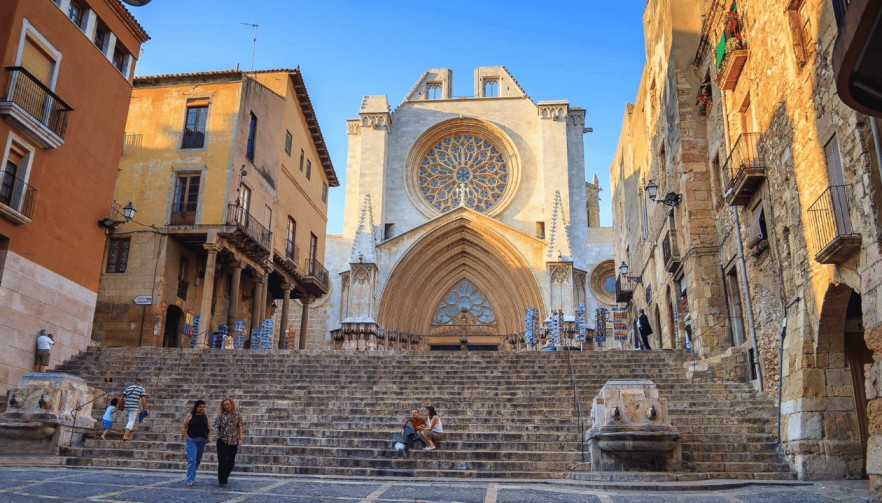
Tucked into the old town, Tarragona Cathedral always stops my students in their tracks. It sits on the highest point of the historic quarter, almost watching over the whole city.
It was built between the 12th and 14th centuries, and you can read that long span in its walls. The cathedral combines Romanesque and Gothic architecture, so part of it feels solid and ancient while another part soars upward in elegant arches.
What I find most fascinating, and what I love sharing, is that it stands on layers of older history. This same spot once held a Roman temple, so you have centuries upon centuries stacked in one place.
I usually recommend taking a guided tour inside. There is so much detail in the cloister and the chapels that a good guide really brings it to life, and it gives my students plenty of new vocabulary to practise afterwards.
The Old Town (Part Alta)
The Old Town, known locally as Part Alta, is the medieval quarter, and honestly it is my favourite part of the whole city. I never tire of its narrow streets and quiet narrow alleys.
This is where I encourage my SHIP students to wander and even get a little lost. Every corner reveals something: a small square, a historic building, a hidden restaurant or a glimpse of the old city walls.
Those walls are remarkable. The original cyclopean Roman walls form part of what is known as the Archaeological Walk, so you are literally walking alongside the defences of ancient Tarraco.
I love this area because it slows everyone down. There is no rush in the old quarter. You stroll, you talk, you stop for a drink, and somehow that is when my students speak their most natural Spanish.
Roman Circus and Praetorium Tower
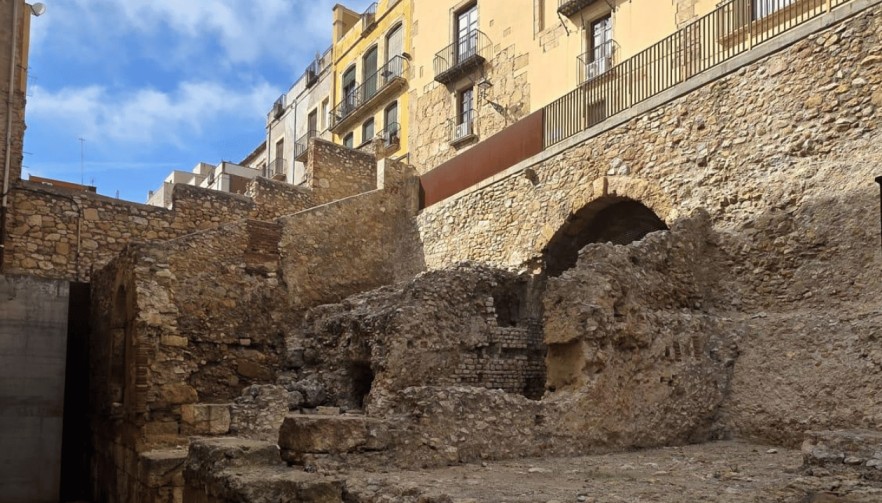
The Roman Circus and the Torre del Pretori, or Praetorium Tower, are where Tarragona’s past as Tarraco really comes alive. These ancient ruins once hosted thrilling chariot races.
The Roman Circus could hold over 30,000 spectators, and that figure always amazes my visitors. I ask them to picture the roar of the crowd as the chariots thundered around the track, and you can almost hear it.
The Praetorium Tower is wonderful too, because you can climb it. From the top you get a sweeping view across the city, the old quarter and the sea beyond. It is one of the best vantage points in town.
For any student who is curious about the Roman Empire, these sites are unmissable. They are part of the UNESCO world heritage listing, and they show just how important this city once was.
Plaça de la Font
Plaça de la Font is one of the liveliest squares in the city centre, and it is a place I return to again and again. It is lined with cafés, restaurants and the Town Hall, and it buzzes from morning until late.
This is where I introduce my students to one of my favourite Catalan rituals. Vermouth culture is prominent here in southern Catalonia, so we sit down, order a vermouth, and simply watch local life unfold.
I find these unhurried moments are some of the best for learning. There is no textbook, no exam, just real conversation over a drink in a beautiful square. That is immersion at its finest.
Nearby you will also find Plaça del Fòrum, another spot with that same warm, relaxed Catalan atmosphere. I like to wander between the two and let my visitors soak it all in.
El Serrallo
El Serrallo is the traditional fishing quarter, the heart of the fishermen’s district. It sits down by the port, about 3km from the centre, and it has a wonderfully genuine, local feel.
This is where I take my students when I want them to taste the real Tarragona. El Serrallo is famous for its seafood restaurants, and the catch here is honestly some of the freshest I know.
One place I love is El Pòsit, which serves a wonderful variety of seafood dishes right beside the water. Eating fresh fish while looking out at the boats is an experience I want every visitor to have.
It is also where my SHIP students try arròs negre, the black rice dish coloured with squid ink. Sharing a meal like this, learning the names of the dishes as we go, is one of the most delicious ways to practise the language.
Les Ferreres Aqueduct (Pont del Diable)
Just outside the city centre stands Les Ferreres Aqueduct, far better known by its nickname, Pont del Diable, the Devil’s Bridge. This spectacular Roman aqueduct is around 2,000 years old.
It always astonishes my students that something so old still stands so proudly. It is set in a peaceful natural environment, surrounded by greenery, which makes the visit feel like a real little escape.
You can actually walk across the top of it, which is a genuine adventure. I will not pretend it is not a bit of a thrill, and the views from up there are wonderful.
I love bringing visitors here because it shows the sheer engineering genius of the Romans. It is one of the most photographed ancient ruins around Tarragona, and it is well worth the short trip out of town.
Miracle Beach
Miracle Beach is a convenient city beach, sitting right near the Roman Amphitheatre. With its fine, golden sand, it is the perfect spot for a seaside walk between sightseeing stops.
I always remind my students that Tarragona sits on Spain’s Costa Daurada, also written as Costa Dorada, which means the golden coast. The name comes from exactly these golden beaches, and the coastline stretches for around 15 kilometres.
There is something special about studying in a place where you can finish the day with your feet in the sand. It keeps everyone relaxed, and a relaxed student learns far more quickly.
If you have more time, there are other lovely beaches nearby. Platja Llarga is a long, sandy stretch of about 675 metres, while Platja Arrabassada is another of the city’s best. For those who prefer it, Savinosa Beach is a popular nudist-friendly option.
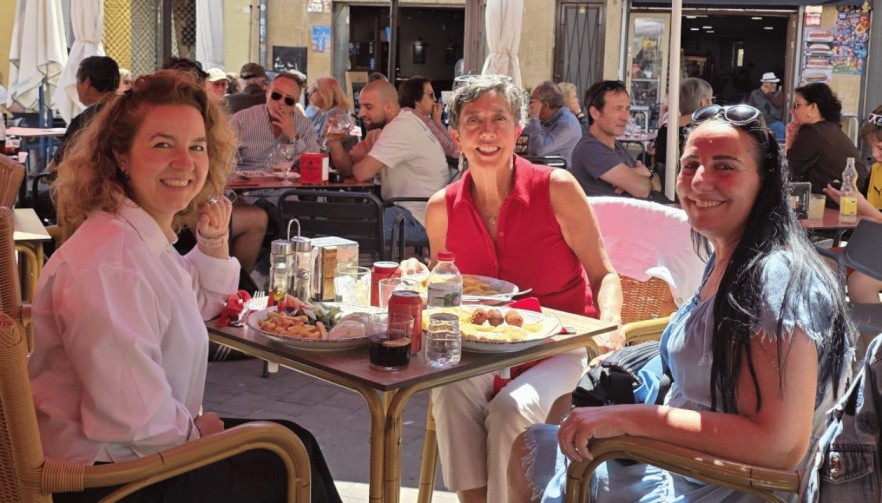
Where to Eat: Local Flavours
Food is a huge part of how my SHIP students learn, and Tarragona’s local cuisine never disappoints. I always make sure we eat well, because the table is one of the best classrooms there is.
A wonderful place to start is the Mercat Central, the central market, where you will find fresh produce and seafood piled high. Wandering the stalls and naming the ingredients in Spanish is a simple, fun exercise.
For a proper sit-down meal, Casa Balcells offers traditional Catalan cuisine and tapas in a warm, welcoming setting. Sharing small plates is the perfect way to taste a little of everything and chat between bites.
The flavours I most associate with this town are fresh seafood, arròs negre, and a chilled glass of vermouth before lunch. Eating like a local is, for me, the tastiest way to learn Spanish.
Getting Around the City
One of the things I love about Tarragona is how walkable it is. The historic centre is compact, so when I bring my students here we explore most of the major sites comfortably on foot, which keeps the day relaxed.
I am not with my students every minute of the day, and that is by design. They have some mornings and evenings to themselves, plus one full day off each week, usually the weekend, to explore the destination at their own pace.
When they head out alone, I always give them guidance first, so they know where to go and what to skip and never feel lost in an unfamiliar city. A little local advice turns a free day into a real adventure.
For readers planning their own visit, Tarragona is easy to reach: a direct train from Barcelona takes about one hour. One note I always share is that the main high-speed station sits about 7 miles from the city centre, with regular buses connecting the two. The local station is far more central.
If you fancy venturing further, the medieval village of Siurana is a beautiful add-on, with lovely views over its valley and river. It makes a peaceful contrast to the busy seaside city.
Frequently Asked Questions
Is Tarragona, Spain worth visiting?
Yes, very much so. In my experience hosting students here, it offers a rare combination of UNESCO-listed Roman ruins, golden beaches and a genuine, lively Catalan atmosphere. You get real history and a real coastline in one place, without the heavy crowds of the bigger cities. For anyone wanting an authentic taste of Catalonia, it is well worth the trip.
What is there to do in Tarragona for a day?
A full day is plenty for the highlights. I usually start at the Roman Amphitheatre by the sea, then walk along Rambla Nova to the Balcó del Mediterrani for the views. After that we explore the cathedral and the old town of Part Alta, and finish with fresh seafood down in the fishing quarter of El Serrallo. It is an easy, satisfying rhythm.
How many days do you need in Tarragona?
One full day is enough to see the main Roman sites and the old town comfortably. However, if you can spare two days, you will be able to add the beaches, visit the Pont del Diable aqueduct just outside the city, and enjoy a relaxed morning at the central market. With my SHIP students, even a single day leaves a lasting impression.
Is Tarragona a walkable city?
It certainly is, and that is one of the reasons I love bringing visitors here. The historic centre is compact and easy to explore on foot, with most of the major sites close together. The fishing quarter of El Serrallo is around 3km from the centre, but a short walk or bus ride gets you there. You really do not need a car to enjoy the city.
What food is Tarragona known for?
Tarragona is best known for its fresh seafood, thanks to its working fishing port. You will find wonderful rice dishes here, especially arròs negre, the black rice coloured with squid ink. There is also a strong vermouth culture, which is a lovely local tradition before lunch. For the freshest seafood, head to El Serrallo, and for fresh produce, visit the central market.
What day is market day in Tarragona?
The Mercat Central, the city’s central market, is open most weekday mornings, so you can enjoy fresh produce and seafood throughout the week. I love taking my students there in the morning when everything is at its freshest and the stalls are full of life. It is one of the simplest and most rewarding ways to practise everyday Spanish.
Past Visitors’ Stories
This guide is just one window into the experiences our SHIP visitors enjoy across Spain. Our host teachers open their homes to students of every age, profession and goal, and we treat each one like part of the family.
If you would like to read real stories from learners who have lived and studied Spanish with us, our diary blogs follow their full journeys, from the day they arrive to the day they leave.
There is nothing quite like learning a language while truly living it. Come and discover Tarragona, the Mediterranean and a warmer, more personal way to learn Spanish with Spanish Express.
You can explore more real immersion experiences here:
👉 SHIP Stories of Our Previous Students
Get in Touch
To learn more about our Spanish Homestay Immersion Program (SHIP) and start planning your own adventure, please reach out to our founder, director and host teacher in Menorca, Mónica Romero.

You could be the protagonist of our next story. At Spanish Express, you will learn Spanish in a different way.
Mónica Romero Founder and Director, Spanish Express
WhatsApp: +44 7903 867 894
Email: monicaromero@spanishexpress.co.uk