

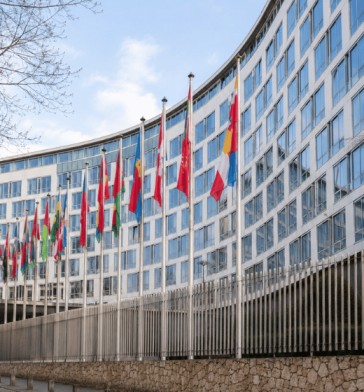
UNESCO is the United Nations Educational, Scientific and Cultural Organization, created in 1945 to promote peace through international cooperation in education, science, culture, and communication. Few labels can change the destiny of a place as quickly as a UNESCO plaque: overnight, a quiet town or historic centre stops being only local and becomes something all of humanity is invited to value, protect, and remember. However, that same plaque raises an uncomfortable question I think about often as I walk through my own city: does recognition sometimes put the very places it wants to protect at greater risk?
For travelers, students, cultural enthusiasts, and anyone interested in sustainable tourism or heritage preservation, that question shapes how we visit, study, and support the places UNESCO brings to global attention. In this article, I look at UNESCO’s history and mission, how World Heritage sites are chosen, the pressures tourism can place on fragile cultural and natural landmarks, the practical habits behind more responsible travel, and UNESCO’s wider work beyond monuments.
I am Mónica Romero, founder of Spanish Express, and through the Spanish Homestay Immersion Program (SHIP), I welcome students into daily Spanish life. They stay with local teachers, practice Spanish through real situations, share meals at the family table, and discover local communities through guided cultural experiences. Because SHIP treats culture as something you live rather than something you buy, I also use this article to show how cultural immersion can support the same goal UNESCO was built around: protecting heritage without reducing it to a product.
A Short History: What UNESCO Was Built For
UNESCO stands for the United Nations Educational, Scientific and Cultural Organization, a specialized agency of the United Nations established in 1945. Its core mission is to foster lasting peace, human rights, and sustainable development, and it promotes world peace and security through international cooperation. In practice, that means facilitating global collaboration in education, science, culture, and communication.
The organization has weathered political storms too. Palestine was admitted as a member in 2011, the United States withdrew in 2018, and Israel left in 2019 after 69 years of membership. Then, in 2023, the United States rejoined after five years away, although Nicaragua has since announced its withdrawal effective 2026. Even so, as of July 2023, UNESCO counts 194 member states, proof that the world still leans on this international framework.

UNESCO World Heritage and Outstanding Universal Value
Most travelers meet UNESCO through the World Heritage List, which protects cultural and natural heritage sites of outstanding universal value. The system rests on the World Heritage Convention, signed by states parties around the world, who also contribute financially to conservation. Today, 1,248 UNESCO World Heritage sites carry the world heritage emblem, and every new world heritage inscription is approved by the UNESCO World Heritage Committee with guidance from independent advisory bodies.
These world heritage properties range from natural sites and natural landscapes, such as the Galápagos Islands, to entire cities. Moreover, they span every region, from the Arab States to South Asia, Southeast Asia, and the Democratic Republic of the Congo. Therefore, world heritage conservation stands as a coordinated achievement of humanity, one designed to safeguard heritage for future generations.
When Protection Becomes Attraction
Here lies the contradiction. A place earns protection precisely because it is fragile, rare, or culturally important. Then, once recognized, it appears on travel lists, cruise itineraries, and social media feeds, and tourism arrivals surge. Global tourism often reads “protect this” as “promote this,” and natural and cultural heritage slowly turns into merchandise. The Galápagos Islands, designated a UNESCO World Heritage Site in 1978, have seen a 260% increase in tourism since 2003. In 2023 alone they hosted over 330,000 tourists, while land-based tourism grew from 80,000 visitors in 2007 to 250,000 in 2023.
As a result, mass tourism brings a negative impact that heritage conservation alone cannot absorb: waste generation, erosion, strain on public services, and economic inequality when economic benefits bypass local residents. Besides, climate change adds another layer, because fragile ecosystems must now survive both the crowds and a changing climate. Some destinations are already responding. Pompeii, for example, introduced a daily visitor limit and personalized tickets to spread visitors toward nearby archaeological sites. Even so, managing cultural assets can no longer mean attracting more people. Instead, it must mean attracting the right kind of visit, before living heritage becomes just another shelf of tourism products.
The Problem Is Not Tourism, It Is Mass Consumption
Tourism itself is not the enemy of heritage. Travel can build empathy, support local businesses, artisans, guides, and museums, and keep traditions alive by valuing them properly. In fact, a visitor who learns the language, eats local food, and respects local rhythms creates genuine cultural exchange. However, when culture is consumed quickly, superficially, and in large numbers, a living tradition becomes a performance and heritage fades into a background for photos.
This is exactly why SHIP exists. Instead of rushing from one famous landmark to another, students live Spanish language and culture from the inside: staying with a host teacher, sharing meals, practicing Spanish in real situations, and understanding the local context one conversation at a time. Instead of asking how many places they can visit, they ask how deeply they can understand one.

What Could UNESCO Change?
UNESCO is not standing still. Its World Heritage and Sustainable Tourism Programme, launched in 2011, follows a destination approach, promotes cooperation among tourism stakeholders, and offers technical assistance and capacity building so that tourism management fits each place. Still, in a world of cheap flights, cruise tourism, and viral destination trends, I believe the sustainable tourism programme could go even further.
First, visitor impact planning could become a compulsory condition before recognition, covering transport, housing, waste, seasonal pressure, and climate risk, so a site proves it can manage attention and not only outstanding universal value. Second, a conditional five-year candidate phase could require responsible tourism development before permanent status is granted. Third, empowering local communities should mean real decision power, through broad stakeholder engagement and a genuinely participatory process that includes residents, teachers, artisans, and small businesses alongside governments, international organizations, and the private sector.
Fourth, heritage protection could be separated from destination marketing, so campaigns say “come respectfully, learn deeply, contribute fairly” rather than “come before it disappears.” Fifth, visitor pressure could be reported publicly after inscription, tracking conservation condition, resident wellbeing, and local economic benefit. Finally, UNESCO could support sustainable tourism by spreading attention across wider cultural regions, quieter tourism destinations, community-led tourism activities, and products and services designed with residents rather than for them. In this way, the tourism sector helps create an enabling environment for sustainable tourism development, fully aligned with the sustainable development goals.
Beyond Monuments: A Mission Wider Than Plaques
To be fair, UNESCO’s vision was always bigger than famous sites. Its Man and the Biosphere Program includes 759 Biosphere Reserves, and each biosphere reserve protects biodiversity while people continue living inside it. The Memory of the World program preserves vital historical documents, and the organization safeguards intangible cultural heritage, including traditional music and crafts. It also promotes freedom of expression and access to reliable information, shares ideas through the UNESCO Courier, and develops ethical standards for emerging technologies.
Education anchors everything. UNESCO leads the UN’s Global Education 2030 Agenda, working toward inclusive and equitable quality education and lifelong learning opportunities for all. It helps countries strengthen their education systems, supports teacher training and education policy initiatives, and fosters scientific research to address global challenges. Because it connects culture and education, it encourages schools to integrate local heritage into learning. Meanwhile, through the MONDIACULT Conference series, which began in 1982, met in Mexico in 2022, and came to my own Barcelona in 2025, it promotes cultural policies that serve sustainable development.
From Checklist Tourism to Cultural Understanding
The future of heritage travel should not be about ticking places off a list. Instead, it should be about forming a relationship with a place, and language is the doorway. When you learn a language, you learn how people greet, celebrate, disagree, cook, and tell their stories. In Spain, heritage lives not only in cathedrals and listed cities but also around the table, in seasonal dishes, regional languages, and family memories passed from one generation to the next. For this reason, students who join us from around the world do not simply visit Spain; they live it, and the country answers back in Spanish.
UNESCO recognition should be a responsibility, not a trophy. Governments must protect places before they are overwhelmed, businesses must promote depth instead of volume, and travelers must arrive with humility and curiosity. The contradiction will never disappear completely, because recognition will always attract interest. However, that interest can be slowed, spread out, and made meaningful. Heritage does not need fewer people who care about it. It needs fewer people who consume it without understanding it.
So, Travel Deeper and Learn Spanish
If you want to be part of the answer, the Spanish Homestay Immersion Program (SHIP) turns travel into belonging. You live with a local teacher in Barcelona, Valencia, Menorca, or Cádiz, learn Spanish through daily life, and experience culture through guided local experiences rather than crowded checklists.

Therefore, every meal, market visit, and conversation deepens both your Spanish and your respect for the place that hosts you, one word and one tradition at a time.
You can also explore more cultural immersion stories here:
👉 Read Stories of Our Past Visitors Here
For personalised guidance and programme details, you can contact our founder directly:
Mónica Romero Founder & Director, Spanish Express
📞 Phone / WhatsApp: +44 7903 867 894
📧 Email: monicaromero@spanishexpress.co.uk
