

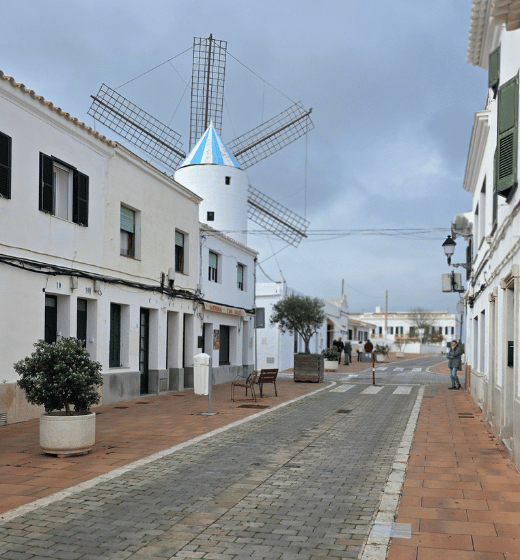
Sant Lluís, in Menorca, is a small, quiet village in the island’s southeast, known for its orderly streets, French influence, local markets, traditional Menorcan food, and easy access to beaches like Punta Prima. The first thing my students notice here is the quiet. Shutters stay half closed at midday, the white walls hold the light, and on some streets the loudest sound is a bicycle passing. However, this small white village is not sleepy at all. It simply keeps its own rhythm, and once you follow it, the rest of southeastern Menorca makes much more sense.
I’m Mónica, and through the Spanish Homestay Immersion Program (SHIP), I welcome students into ordinary daily life here. For travelers, language learners, and anyone drawn to local culture rather than resort routines, Sant Lluís offers a more authentic way to experience Menorca while practicing Spanish naturally.
Instead of learning only from a textbook, we practice Spanish while shopping at the market, walking to the beach, greeting neighbors, and talking naturally about whatever is in front of us. This guide looks at the village’s history, food, markets, beaches, places to stay, nearby towns, and what makes a homestay here such a practical way to learn the language.
A Short History You Can Read in the Streets
Although most visitors come for the coast, I always start with history, because Sant Lluís explains itself through its layout. The town was founded in 1761 by King Fernando VI, during a period when the island passed between foreign powers, and it was named in honour of King Louis IX of France. For this reason, many streets still carry the names of French military figures.
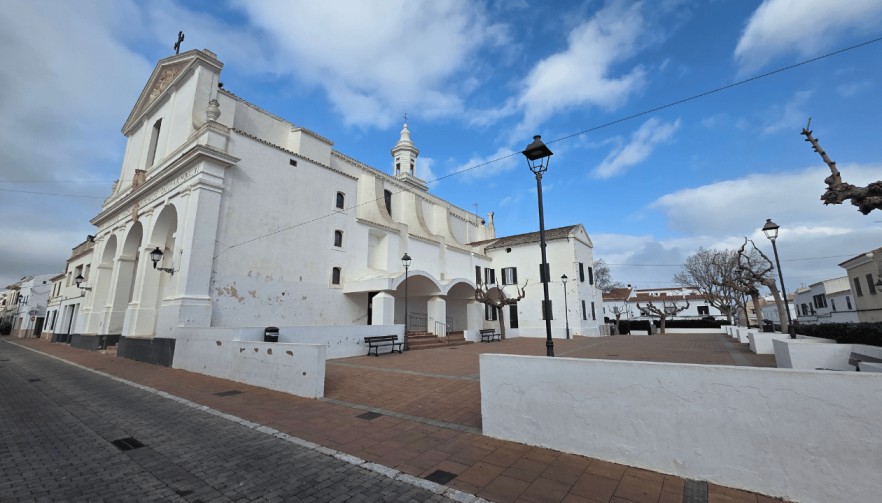
Also, the Sant Lluís Parish Church is neoclassical, was built during the French occupation, is dedicated to Sant Lluís, and dominated the historic townscape, which is unusual for Menorca. Even the grid plan comes from Enlightenment urban planning, so the town feels orderly rather than tangled. After that early period, Sant Lluís grew into an important agricultural center on the island. You may still see it written as San Luis on older maps and some hotel listings, a reminder of the town’s early development by settlers.
Things to Do in the Sant Lluís Area
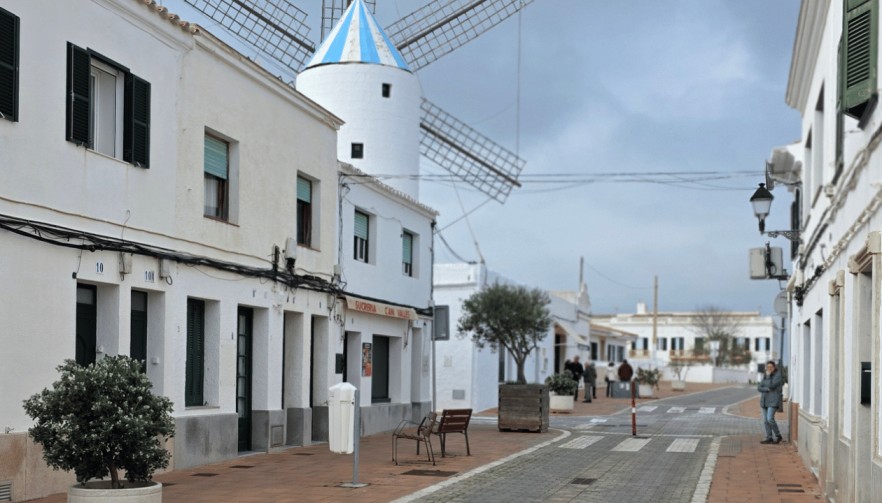
We usually begin at the centre, near the town hall, in the southeastern part of Menorca, where students order their first coffee entirely in Spanish. Then we walk to the Molí de Dalt, an 18th-century windmill that now houses a small ethnological museum about local farming and daily life, one of the main attractions in town. In fact, that museum gives us more vocabulary in twenty minutes than a whole grammar page does.
Meanwhile, the weekly market fills the square with fresh produce and artisanal products, and the pastry shops and bakeries nearby are where students finally stop translating in their heads. Besides that, restaurants here serve traditional Menorcan dishes, and vineyards in the surrounding area let you stop to taste Vi de la Terra, our local wine, which turns a tasting into a very natural conversation class.
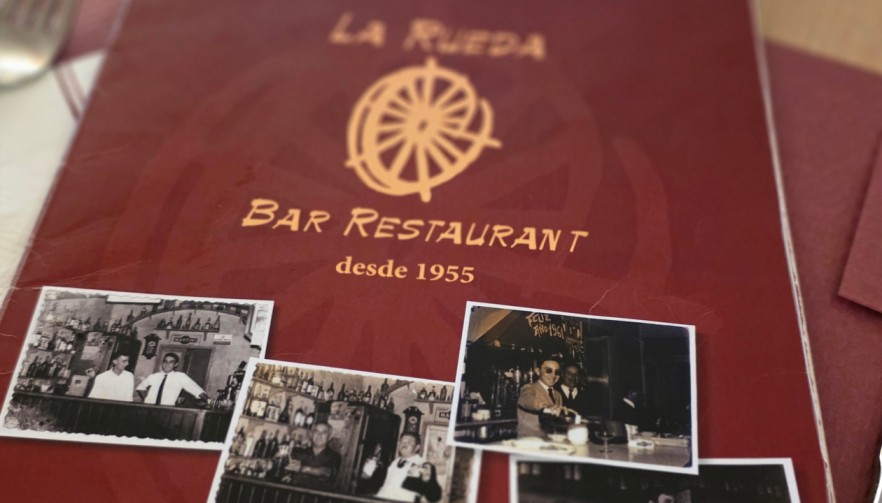
A yummy meal in La Rueda, the oldest restaurant in Sant Lluis
Whenever we visit Sant Lluis area with our SHIP students, we like to stop for a delicious meal at La Rueda, the oldest restaurant in the town. It is a wonderful place to relax after exploring the area, enjoy traditional local food and practise Spanish in a natural, everyday setting. Sharing a meal together is an important part of the SHIP experience, as conversations continue around the table and students discover more about Menorcan culture, cuisine and hospitality.
Punta Prima, Beaches and the Coastline
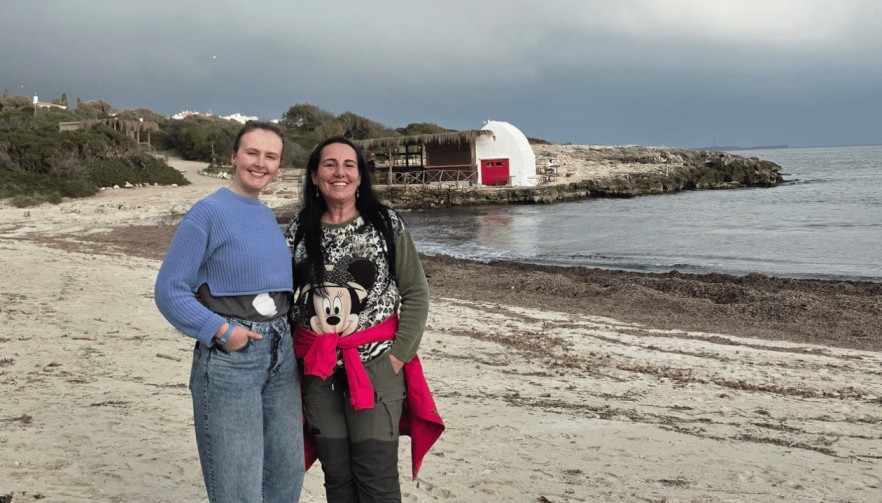
Sant Lluís is located in the southeastern part of Menorca, Spain, so the sea is always close. Punta Prima is the beach students get to know first, with shallow water and a relaxed atmosphere that suits families. It is perfect for families. Cala Binisafúller Beach is only 2.5 km away, and the coastline nearby hides several pristine coves with turquoise water. At the same time, S’Algar is where more active students go, since it offers diving and windsurfing.
The caves and coastal areas around us are also good for swimming and kayaking, so afternoons rarely repeat themselves. Instead of driving everywhere, we often take the bicycle and follow narrow paths through countryside framed by dry stone walls, a Menorcan tradition that has shaped these fields for centuries. One tip: visit Binibeca Vell, one of the nicest surroundings to explore, early in the morning.
Sant Lluís Hotels and Where I Recommend Staying
Accommodation here is limited compared with the island’s capital, and honestly, I think that is part of the charm. You will find small hostels, rural properties, and a handful of popular hotels rather than long resort strips, with some rural stays surrounded by countryside and gardens. However, the option I recommend first is my own home. SHIP students stay with me in Ciutadella, but we make lots of trips around the island and Sant Lluís area is one of our favorite visits, so Spanish starts at breakfast and continues through the market run, the drive to a cove, and dinner at the table. That is something no reservation can replicate.
If you are traveling with family or friends who are not joining the program, there are good alternatives close by. Agroturismo Hotel Rural Binissafullet Vell sits 2.5 km from Cala Binisafúller Beach, Barceló Nura is a five star hotel in Sant Lluís with a convenient location and bar, Casa Olivia Sant Lluis is a large villa accommodation site 6.1 km from Mahon Port, and Villa Bini Maria à Binibeca accommodates up to ten guests. Even so, I always say the same thing: Sant Lluís hotels give you a room, while a homestay gives you a household.
Getting Around: Maó, Es Castell and Practical Details
Sant Lluís works well as a base for exploring southeastern Menorca and the surrounding area. Maó, also written as Mahón and also shown as Mao, is close, and its harbor is one of the largest natural ports in the Mediterranean. Es Castell, another town with strong military history, sits just a short trip away on the same side of the island, near the convenient entrance from the airport to this part of Menorca. Airport shuttles and a rental car both work for arrivals, although private transfers mean you do not have to wait for other passengers, and many students discover they barely need to drive once they settle in. Therefore, most of our week happens on foot, in towns and around its outskirts.
Living the Mediterranean Rhythm
The Mediterranean climate here brings warm summers and long, unhurried evenings, which supports a slower village lifestyle. As a result, conversation becomes easy. Local festivities take place on August 25th for Sant Lluís IX, and the whole municipality turns out. Locals also still play Joc de Bolla, a traditional game that has taught more than one student how to argue politely in Spanish. This tranquility is exactly why immersion works so well here.
By the time students leave, they usually remember more than new vocabulary. They remember the bakery at eight in the morning, the walk between dry stone walls, the swim at Punta Prima, and the moment a neighbor answered them without switching to English. That is why I love teaching in Sant Lluís. The village becomes part of the lesson, and Spanish becomes something they have actually lived.
So, Come Learn Spanish Where Life Happens
If you want Spanish that stays with you, come and live it. Through SHIP with Spanish Express, you stay in my home, share meals, visit the market, explore the coast, and practice constantly in real situations instead of a classroom. We shape each week around your level and your interests, so the island itself becomes your teacher.

You can also explore more cultural immersion stories here:
👉 Read Stories of Our Past Visitors Here
For personalised guidance and programme details, you can contact our founder directly:
Mónica Romero
Founder & Director, Spanish Express
📞 Phone / WhatsApp: +44 7903 867 894
📧 Email: monicaromero@spanishexpress.co.uk
