

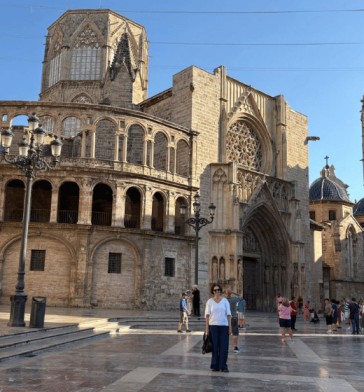
There is one sound my students never forget. Around noon, the bell tower of El Miguelete rings out over the rooftops, and wherever we are walking, we stop. I always smile, because that single sound tells you the heart of my city is close. The cathedral in Valencia Spain is not just a building. It is where Roman, Visigothic, Muslim, and Christian Valencia all meet in one historic and artistic landmark.
I am Pilar, and through the Spanish Homestay Immersion Program (SHIP), I welcome students into daily life here in Valencia. Instead of studying only from a textbook, we live the language together. We talk while walking through historic streets, while sharing meals, and while standing inside the Valencia Cathedral itself. As a result, Spanish stops being a subject and becomes something you truly experience, side by side with a local teacher.
A Short History You Can Feel in the Stones
I always begin with history, because the cathedral makes more sense that way. First, there was a Roman temple on this site. Later, the building became a mosque. Then, after the Christian reconquest, Valencia Cathedral was consecrated in 1238 over a former Visigothic cathedral. Construction began in 1262, and over the centuries it grew into the layered church you see today.
In fact, it was elevated to a metropolitan see in 1492, the home of the archbishop and once the seat of the first bishop. Although a fire during the Spanish Civil War damaged it in 1936, it had already been declared a historic landmark in 1931, and it endured.
The Architectural Styles Inside One Gothic Building
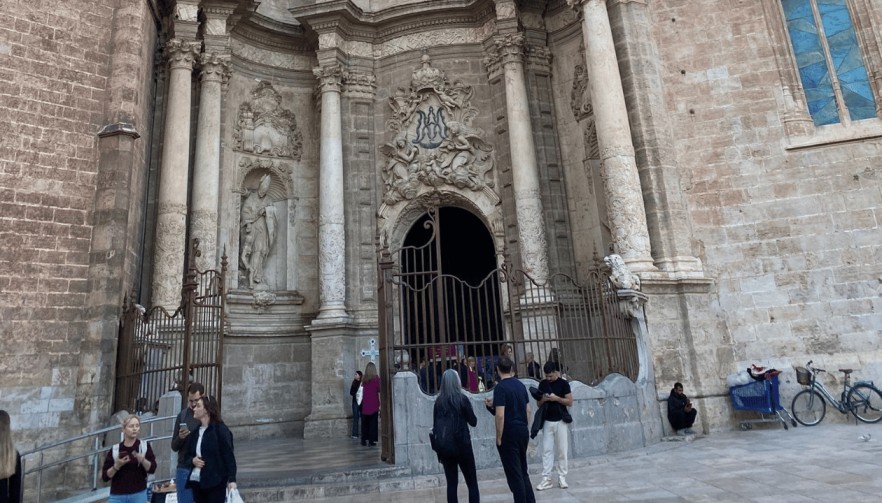
What surprises students most is that this is not one single style. Instead, the cathedral mixes Romanesque, Baroque, Gothic, and even Renaissance touches in the same walls. For this reason, I tell students to look up often.
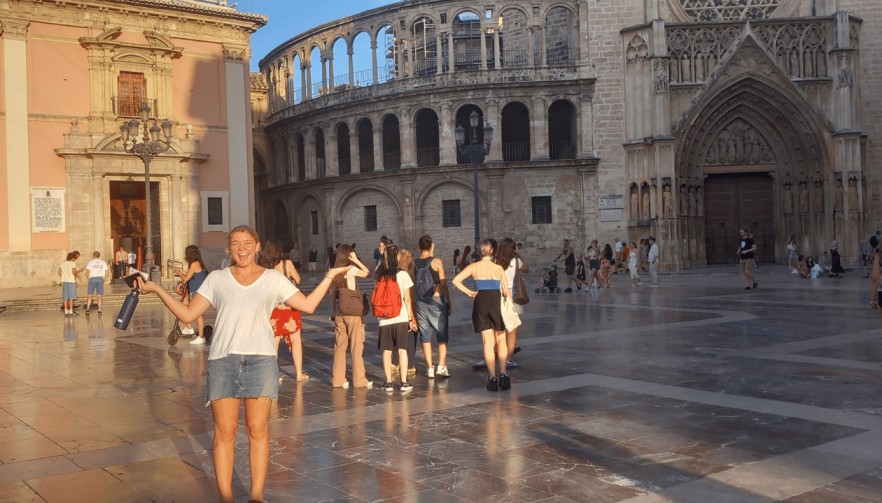
The Apostles Gate, with its carved apostles, shows the Gothic spirit beautifully, and beside it stands the area linked to the famous Water Tribunal. Because each style belongs to a different century, walking past the high altar and through the chapels feels like walking through time. Therefore, every visit becomes a quiet lesson in how this Gothic building, this true cultural and artistic landmark, changed over centuries.
The Holy Chalice, the Holy Grail, and Saint Vincent
Now for the part that fascinates everyone. Inside the Santo Cáliz Chapel rests the Holy Chalice, the revered cup that many believe is the Holy Grail from the Last Supper of Jesus. Although stories about the Holy Grail and the Last Supper travel across the world, this one stays here in Valencia. Besides the chapel, the cathedral guards relics of Saint Vincent the martyr, one of our most worshipped figures. For this reason, students often pause in silence, and some stay praying for a moment before we continue.
The Cathedral Museum: Paintings and Treasures
After the chapel, we visit the Cathedral Museum, which holds around 90 art pieces. Here you find paintings, including works by Goya, alongside religious treasures gathered across centuries. I love this room because it shows the artistic side of a building most people know only for worship.
In fact, the museum is what turns the cathedral from a place of prayer into a full cultural visit. Together with the New Cathedral additions and the chapels, these treasures tell the story of faith, art, and the Valencian community in one space.
Climbing El Miguelete
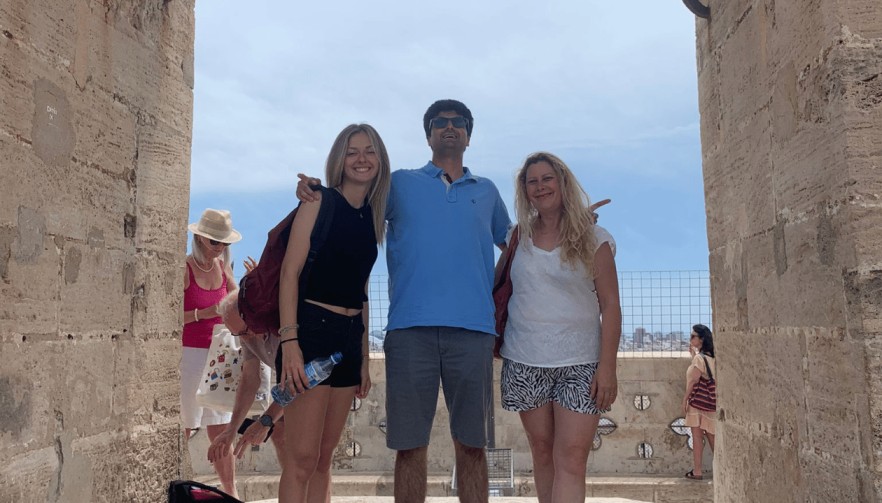
After the calm of the chapels, we go up. The Miguelete tower, known locally as El Micalet, stands 51 meters tall and has 207 steps to climb. The staircase winds tightly, so we go slowly and practice counting in Spanish as we rise. At the top, the effort pays off completely.
From there, you see the whole city and the surrounding fields stretching toward the sea. Even so, I warn students to save some energy, because the climb is steeper than it looks. Climbing El Miguelete is, without doubt, worth every step.
Practical Details for Your Visit
Let me share the practical things I tell every student. The cathedral sits in Plaza de la Reina, right in the historic center. Tickets are available at the entrance ticket offices, although a separate ticket is required to climb the bell tower. If you hold the Valencia Tourist Card, you get free entry.
To arrive, buses 4, 6, and 31 all stop nearby. Opening hours shift around public holidays, so check before you come, and note the last entry time, since the doors close earlier than many expect. From Monday through Saturday the rhythm is steady, while Sundays and friday mornings often center on worship.
So, Come Learn Spanish Where History Lives
This is exactly the kind of place where SHIP comes alive. With the Spanish Homestay Immersion Program (SHIP), you do not simply tour a cathedral. Instead, you live with your teacher, share daily routines, and learn Spanish through real interaction in real places. We climb the tower together, talk about the Holy Chalice over coffee, and turn each landmark into a guided, cultural conversation.

Through Spanish Express, the city itself becomes your classroom, and your teacher becomes your guide into everyday Valencian life. Therefore, the language you learn here stays with you, because you have truly lived it.
You can also explore more cultural immersion stories here:
👉 Read Stories of Our Past Visitors Here
For personalised guidance and programme details, you can contact our founder directly:
Mónica Romero
Founder & Director, Spanish Express
📞 Phone / WhatsApp: +44 7903 867 894
📧 Email: monicaromero@spanishexpress.co.uk
FAQs
Why is the Valencia Cathedral famous?
It is famous above all for the Holy Chalice, which many believe is the Holy Grail. Besides that, it is known for its mix of Romanesque, Baroque, and Gothic styles, its bell tower, and its relics of Saint Vincent.
Is it worth going inside Valencia Cathedral?
Yes, very much so. Inside, you find the Santo Cáliz Chapel, the high altar, and a museum with around 90 art pieces, including paintings by Goya. The inside tells the real story of the building.
Can you see the Holy Grail in Valencia Cathedral?
You can. The cup in the Santo Cáliz Chapel is the one many revere as the Holy Grail from the Last Supper. Standing before it is a moving moment for most students.
Is it free to enter Valencia Cathedral?
Usually there is an entrance ticket from the ticket offices. However, with the Valencia Tourist Card, you get free entry to the cathedral.
What is special about Valencia Cathedral?
It is built over a Roman temple and a former mosque, blends several architectural styles, and holds the Holy Chalice. Few churches carry so much history in one place.
Whose arm is in the Valencia Cathedral?
The cathedral holds a relic of Saint Vincent the martyr, one of the city’s most revered and worshipped figures, connecting the building to Valencia’s earliest Christian history.
