


After more than 144 years of construction, the wait is finally coming to an end. What once felt like an unfinished dream is now reaching its most breathtaking stage.
Every time I walk my students toward the Sagrada Familia, one of my favorite Unesco World Heritage Site, I can feel the excitement growing. This is not just another building in Barcelona; it is a living story that is finally nearing its completion.
For years, I have watched visitors stand in front of this incredible basilica, trying to imagine what it would look like fully completed. Now, with the Sagrada Familia completion 2026 approaching, that imagination is becoming reality. The temple that Antoni Gaudí devoted his life to is finally revealing its full form.
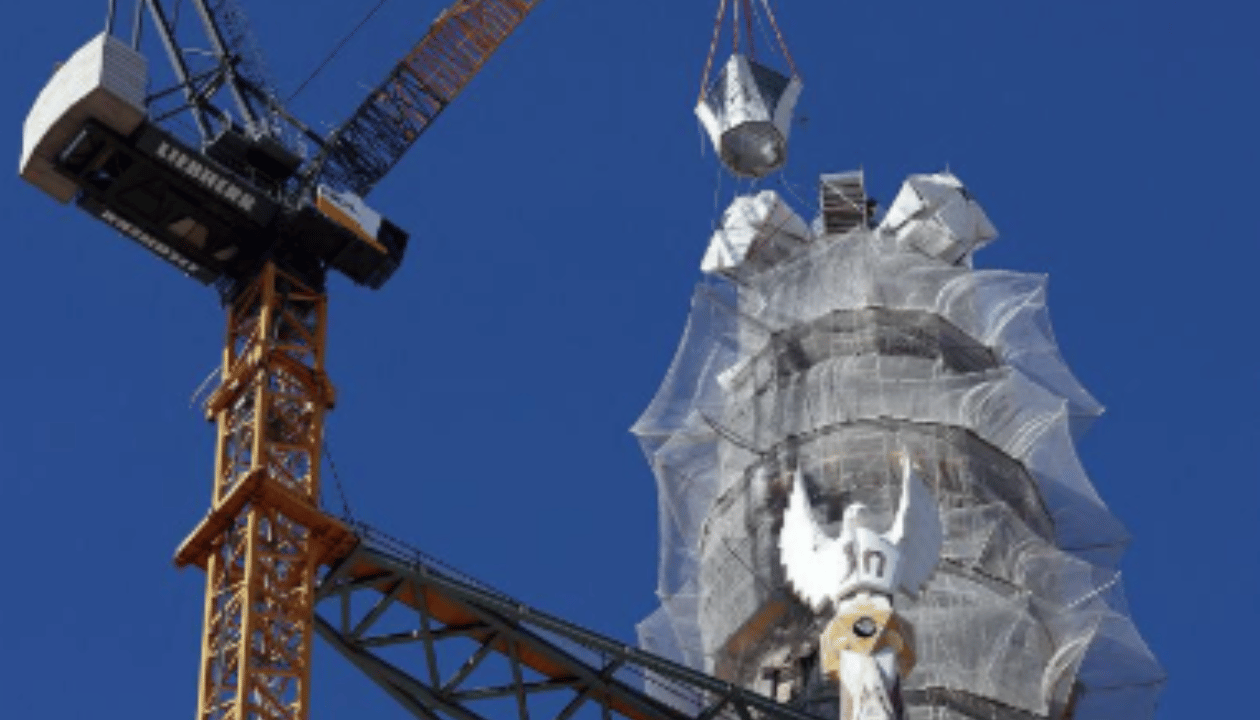
A world record that changes everything
One of the most exciting updates I share during my tours is that the central tower has now reached 172.5 meters. This officially makes the Sagrada Familia the world’s tallest church, surpassing Ulm Minster in Germany. It is a proud moment not only for Barcelona but for all of Spain.
The tower dedicated to Jesus Christ is the highlight of this achievement. Gaudí designed it with deep intention, making it the tallest point of the structure while still respecting nature. In fact, the Tower of Jesus Christ is exactly one meter shorter than Montjuïc hill, because Gaudí believed that human work should never exceed God’s creation.
When I explain this to my students, they always pause for a moment. It is not just architecture it is philosophy, faith, and design coming together in a way that feels truly amazing.
Walking through Gaudí’s vision with my students
Every week, I take my students through the streets of Barcelona toward La Sagrada Familia. We usually start near Passeig de Gràcia, passing Casa Batlló and La Pedrera, both masterpieces by Antoni Gaudí. By the time we reach the basilica, they already begin to understand his unique approach to architecture.
Standing in front of La Sagrada Família, I always point out the three main façades — the Nativity Façade, the Passion Façade, and the Glory Façade. Each one tells a different part of the story of Jesus Christ and the Holy Family.

The Nativity Façade is full of life and intricate details, celebrating birth and hope. The Passion Façade feels more dramatic and emotional, reflecting sacrifice and suffering. The Glory Façade, which is still under construction, will represent the path to God.
Inside, the main nave feels like stepping into a forest of stone. The stained glass windows fill the interior with light, creating a peaceful and almost spiritual atmosphere. It is one of those places where even the busiest tourists become quiet.
Read Our Blog: Everything You Need to Know About Sagrada Familia
Why 2026 matters so much
The year 2026 is not random. It marks the centenary of Gaudí’s death, making the completion feel like a full circle moment. Antoni Gaudí passed away in 1926, and exactly 100 years later, his greatest work is expected to be completed.
This connection always resonates with my students. It feels poetic. The man who dedicated his life to this project will be honored in the most meaningful way possible.
Even though Gaudí never saw the finished building, his published plans and models have guided generations of construction workers, architects, and site management teams. Every stone placed today still follows his original vision.
The “almost finished” reality
Of course, there is always a small “but.” While the main structure, including the central tower and the Tower of Jesus Christ, is expected to be completed by 2026, some decorative work will continue.
The Glory Façade still requires additional details and artistic elements, which may take a few more years. However, the overall form of the basilica will finally be visible as Gaudí intended.
I always tell my students not to wait for perfection. Even now, the experience of visiting La Sagrada Familia is unforgettable. The building has been evolving for over a century, and that ongoing construction is part of its identity.
A story shaped by history and resilience
The history of the Sagrada Familia is not simple. Construction began in 1882, and it has faced many challenges along the way. One of the biggest setbacks came during the Spanish Civil War, when Gaudí’s workshop was destroyed, and many original models were lost.

Despite this, architects and builders continued the project using remaining materials and reconstructed plans. It is a powerful reminder of resilience and dedication.
Unlike many large projects, the basilica has been funded mostly through private donations and visitor contributions. This is another reason why its progress has been slow but meaningful.
Every time I share this part of the story, my students gain a deeper appreciation for what they are seeing. This is not just a building — it is a symbol of persistence.
Details that make it unforgettable
What makes the Sagrada Familia truly unique is the level of detail in every part of the structure. From the exterior stone carvings to the interior columns, everything has meaning.
The cross at the top of the Tower of Jesus Christ is designed with precision, extending through the upper arm of the structure and forming a powerful visual mark on the Barcelona skyline. The arm of the cross is not just decorative it represents faith in a very physical way.
The towers, which represent different biblical figures including the Virgin Mary and the apostles, create a vertical rhythm that draws your eyes upward. Each tower is carefully designed, adding to the overall harmony of the basilica.
Even Gaudí himself once criticized conventional architecture, calling many buildings “hideous.” His goal was to create something completely different a structure inspired by nature, light, and faith.
Why no visit to Barcelona is complete without it
As the founder and host teacher of Spanish Express, I always make sure that visiting the Sagrada Familia is part of every student’s experience. It is not just about sightseeing. It is about understanding Barcelona, Spain, and the vision of Antoni Gaudí.
We walk around the exterior, explore the façades, and step inside to experience the light and space of the basilica. I encourage my students to look closely, ask questions, and take their time.
Barcelona has many beautiful places, from Park Güell to the Gothic Quarter, but the Sagrada Familia stands above them all. It is the heart of the city and a symbol of its creative spirit.
With the Sagrada Familia completion 2026 approaching, there has never been a better time to visit. The building is reaching its final form, and the energy around it is something you can truly feel.
If there is one place you should never miss in Barcelona, this is it.
Experience Barcelona with Spanish Express
Reading about the Sagrada Familia completion 2026 is exciting. Experiencing it in person, walking through its story step by step, is something truly unforgettable.
With the Spanish Homestay Immersion Program (SHIP)in Barcelona, I take my students beyond just visiting La Sagrada Familia. We explore the details together, from the Nativity Façade to the Passion Façade, and stand beneath the Tower of Jesus Christ to understand Gaudí’s vision in a deeper, more meaningful way.

SHIP – Barcelona Immersion Experience
My programs combine cultural immersion, daily Spanish practice, and authentic local living, all while staying and learning in my home here in Barcelona. Each visit is guided, personal, and designed to help you connect with the city, not just see it.
La Sagrada Família is one of the highlights of the week, but it is just one part of a much richer experience that includes places like Park Güell, the Gothic Quarter, and Passeig de Gràcia.
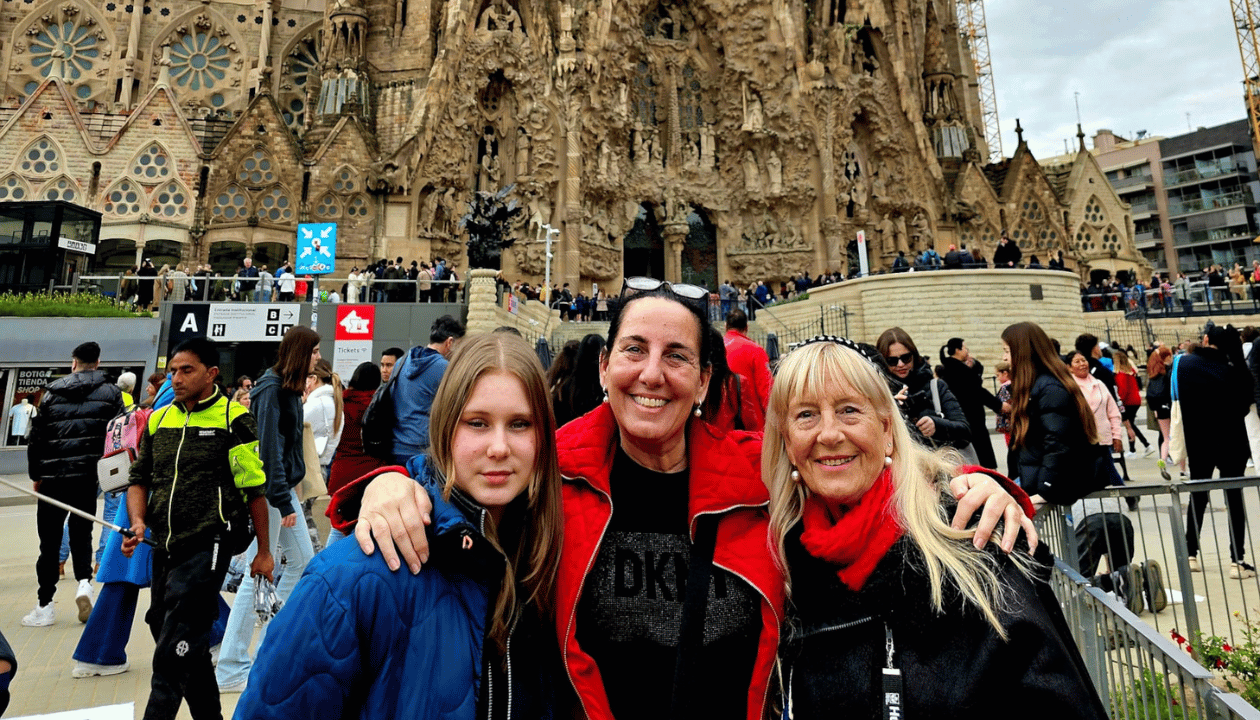
Read Our Student Experience Stories
Join Me in Barcelona
If you would like to experience the Sagrada Familia at this historic moment, explore Barcelona through guided cultural visits, or find out if my homestay immersion programme is the right fit for you or your students, I would love to hear from you.
Mónica Romero
Founder & Host Teacher, Spanish Express Barcelona
📞 Phone / WhatsApp: +44 7903 867 894
📧 Email: monicaromero@spanishexpress.co.uk
Who consecrated the Sagrada Familia, and why is it important?
Pope Benedict XVI consecrated the basilica in 2010, officially declaring it a place of worship.
This moment marked a major milestone in the journey of de la Sagrada Familia.
It showed how the project had evolved from a construction site into a functioning church.
Did Gaudí really criticize other buildings?
Yes, Gaudí once referred to many structures as hideous buildings, even calling some the most hideous buildings.
He believed architecture should reflect nature, faith, and creativity.
That vision is clearly visible in every detail of the Sagrada Familia.
What happened to Gaudí’s original designs?
During the Spanish Civil War, much of Gaudí’s workshop was destroyed. Many models and plans were lost, making the work more challenging. Later, architects carefully reconstructed his ideas to continue the project.
Who is leading the project today?
The project has seen different leaders, including a head architect and a chief architect, over time. They continue working on de la Sagrada Familia using Gaudí’s vision. The final piece is now closer than ever to being completed.
