

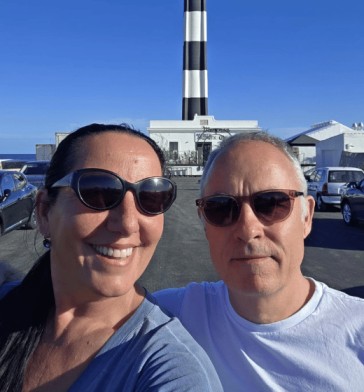
Most people learn a language to tick a box. Daniel? He came to Menorca to belong here, to wander the old streets, chat with the people, and feel the island’s rhythm in his own Spanish. And honestly, four weeks later, he had.
I’m Mónica, host teacher with Spanish Express, and I opened my home in Ciutadella to Daniel, who’d travelled all the way from New York, for a month-long Spanish Homestay Immersion Program (SHIP). I’m a native speaker and teacher, and I build every single day around the learner and the life happening around us.
So this is Daniel’s story, straight from the host teacher who lived it with him, from that first slightly jet-lagged morning to a goodbye that felt far more like family leaving than a student checking out.
Meet Daniel – A Learner Who Came to Live the Language and food
Daniel didn’t want to sit and study Spanish. He wanted to live it, to wake up and be part of island life the way a local is, sailing, seeking out quiet unspoilt beaches, and lingering over good food. From day one, his curiosity and warmth made him an absolute joy to host.
There was a real purpose behind his trip too. Daniel runs his own accountancy practice and works remotely with Spanish-speaking clients, so he needed Spanish that actually works in calls, meetings, and emails, not just textbook theory.
That’s exactly why he chose four weeks of immersion. He’d had his fill of grammar drills and wanted active, everyday usage, the kind that only comes from really living the language alongside the people who speak it.
A Homestay Where Spanish Becomes Daily Life
Here’s the secret of SHIP: the language never clocks off. In my home, Spanish was just there, over breakfast, on errands, during evening strolls, and across those long, lazy dinners we never rushed.
His mornings often started with a lesson, and because of his work, we leaned into business Spanish. We practised the language of client calls and meetings, drafting professional emails, and the vocabulary an accountant actually needs, from invoices and figures to polite, confident small talk.
We kept it lively, not stuffy. One lesson we took to a local café, another to an unspoilt beach, with plenty more woven through the day as we wandered the island together.
And that café morning summed it up really. All that everyday chatting did more for his vocabulary and confidence than any worksheet ever could, one real moment at a time.
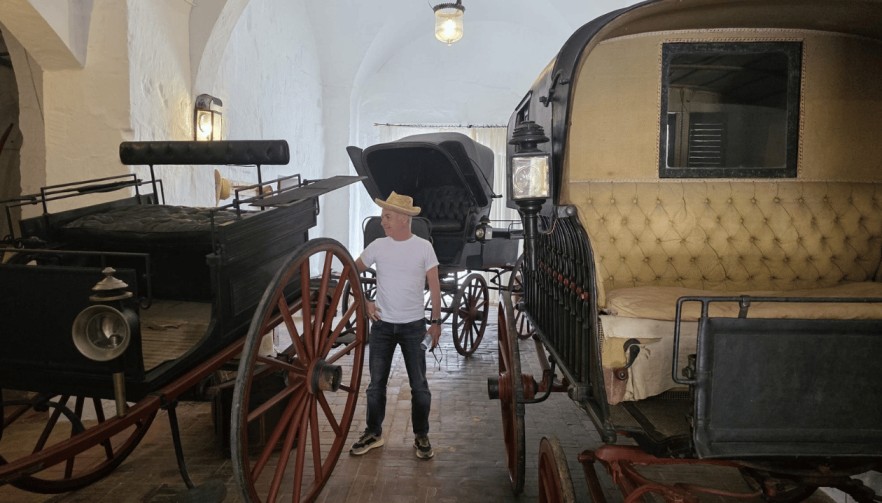
Noble Ciutadella – Palaces and Old Streets
We started right where Daniel was living, in the noble old town of Ciutadella. We stood beneath Palau Torre-saura and Casa Olivar, those grand façades that practically whisper stories of the city’s aristocratic past.
As we wandered the honey-coloured streets, Daniel described everything he saw out loud, and just like that, architecture turned into vocabulary. Every doorway seemed to spark a new conversation.
Ciutadella has this slow, elegant pace, and it turned out to be the perfect place for him to settle in and let his confidence quietly bloom.
Mahón – Menorca’s Capital and Its Great Port
Then we hopped over to Mahón (Maó), and suddenly Daniel was seeing a whole different side of the island. We walked its enormous natural port, one of the biggest in the world, and there was simply so much to talk about.
The capital buzzes in a way Ciutadella doesn’t, all lively streets and waterfront cafés. Daniel ordered, asked for directions, chatted with shopkeepers, proper Spanish, in proper real life.
And of course, we got onto the island’s famous gin. Honestly, is there a more perfectly local topic to keep a conversation going? His curiosity ran away with him.
Ancient Menorca – Naveta des Tudons and the Talaiots
Daniel completely fell for Menorca’s prehistoric side. At the Naveta des Tudons, that iconic stone burial monument, you’re standing with history that’s thousands of years older than the Spanish language itself.
We poked around the talaiotic settlement of Trepucó, where Daniel described those ancient walls aloud and picked up a whole new set of words rooted in the island’s deep past.
Moments like these stopped feeling like grammar practice and started feeling like storytelling, language tied right back to the very roots of Menorcan identity.
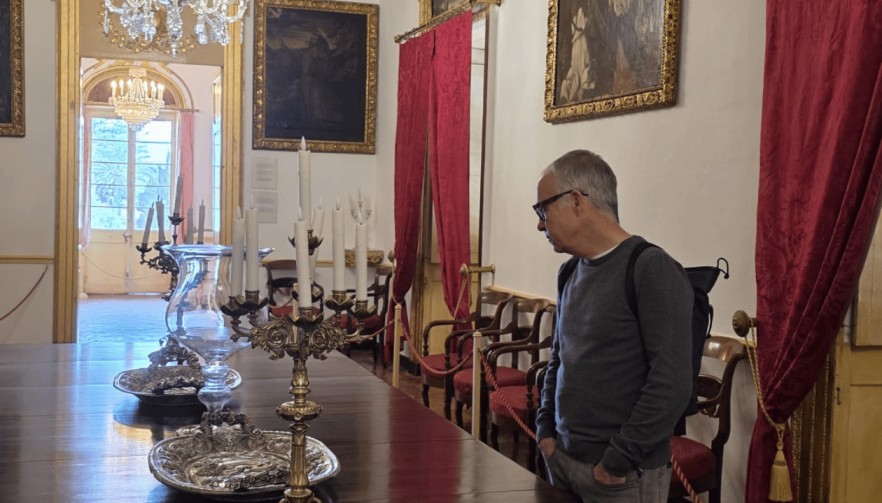
Heritage and Museums – Ciutadella’s Living History
Back in town, the museums became our classroom with no walls. At Can Saura and the Museu de Ciutadella, Daniel uncovered the island’s story room by room.
Describing the exhibits in Spanish gave him fresh vocabulary and real context. Suddenly history was something he could chat about, not just squint at on a plaque.
We also walked down to Castell de Sant Nicolau for those golden views over the water. Calm, beautiful, and exactly the kind of spot where conversation just flows.
Hidden Nature – Caves and Monte Toro
Out beyond the towns, the landscapes genuinely floored him. At Cova de s’Aigua we wandered caves carved out over millennia, the kind of place that leaves you reaching for new words in any language.
We also climbed Monte Toro, the highest point on the island, where the whole of Menorca opens up beneath you. Describing that view in Spanish? One of Daniel’s proudest little victories.
Both spots handed him easy, spontaneous conversation, miles away from any desk or worksheet.
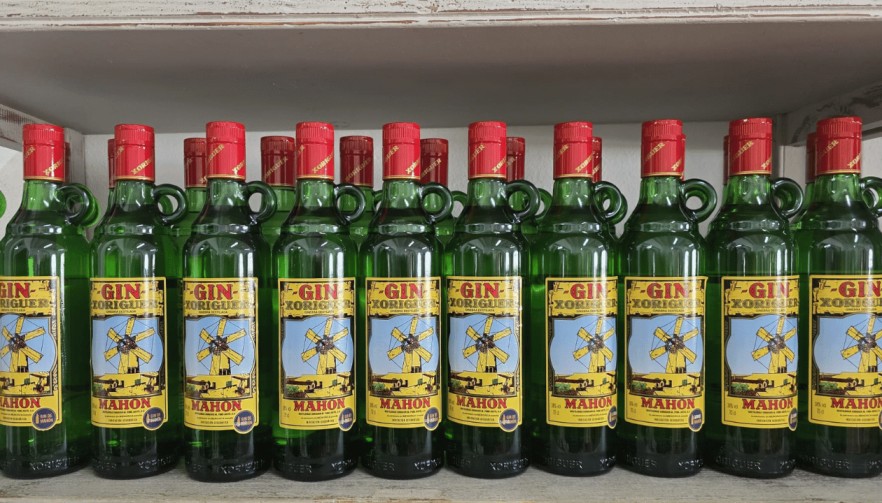
Island Flavours – Gin and Local Tables
Food and drink are sneaky little language lessons. At the Gin Xoriguer distillery in Mahón, Daniel learned the story behind Menorca’s most famous spirit while chatting away in Spanish with the makers themselves.
We also shared tapas at Tritón in the port of Ciutadella, where ordering, chatting, and laughing with locals built his confidence beautifully. Real restaurants really are the best practice rooms.
These warm, social moments plugged Daniel straight into island life through its kitchens, its bars, and the people who run them.
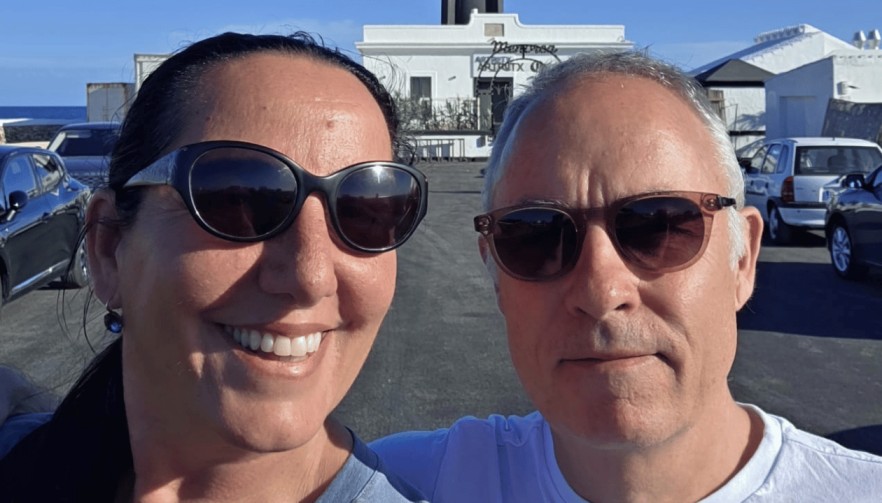
A Beach a Week – Menorca’s Calm Waters
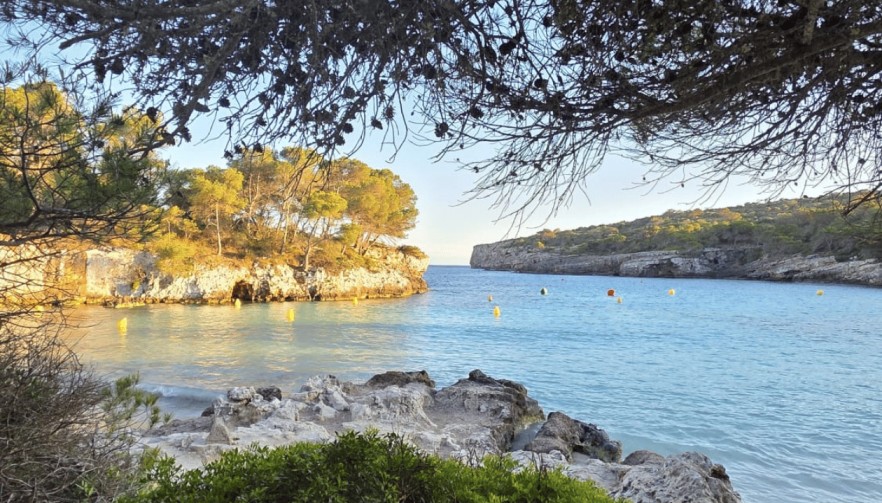
With a whole month on the island, there was no rush, so we saved a beach for most weeks rather than cramming them in. One week it was the easy calm of Cala en Turqueta, another the wild beauty of Cala’n Bosch through the Camí de cavalls route
Those slow afternoons by the sea were some of our best for relaxed Spanish. No agenda, no pressure, just sun, water, and easy conversation drifting along.
It’s amazing how naturally the words come when you’re not trying to force them. The beach became Daniel’s favourite kind of lesson.
Daniel’s Own Adventures – A Day Off Each Week
One of the joys of a longer stay is space to breathe, so Daniel had a day off every week to explore the island on his own terms. Some mornings and evenings were his too, to roam or simply relax.
He used that freedom brilliantly, often coming home buzzing about something he’d found and eager to tell me all about it in Spanish. He even added a few extra excursions as supplements, just because his curiosity got the better of him.
Those solo days did wonders. Out on his own, he had to use his Spanish, and every time he came back a little more confident than before.
Daniel’s Progress – Confidence Rooted in Culture
By the end of his four weeks, Daniel was speaking with real ease and genuine confidence. And better still, his Spanish had personality, full of island expressions and culture.
He’d got exactly what he came for. Not just tidier grammar, but a true connection to Menorca and its people. He left understanding this island from the inside out.
His curiosity and warmth made this one of my most rewarding immersions, and honestly, I’d welcome him back to Ciutadella any time.
Ready to Begin Your Own SHIP Journey in Menorca?
Daniel’s month in Ciutadella shows what happens when you stop studying Spanish and start living it, surrounded by Menorca’s traditions, flavours, and wonderfully friendly people. Your own story could be next.

You can explore more real immersion experiences here:
👉 SHIP Stories of Our Previous Students
For personalised guidance and programme details, contact:
Mónica Romero
Founder and Director
📞 Phone / WhatsApp: +44 7903 867 894
📧 Email: monicaromero@spanishexpress.co.uk
