
New Year’s Eve in Spain is called Nochevieja, which means Old Night. It’s the goodbye to the old year and the welcome to the new year. It’s also one of the biggest year’s eve celebrations in the country. People don’t just “watch the countdown.” They live it. New Year’s Eve in Spain is recognized around the world as one of the most unique and vibrant celebrations, drawing visitors from across the globe.
Across Spain, year’s eve in Spain is marked by people gathering with families early on, then meeting friends later. It’s a special celebration that mixes food, local traditions, and nightlife. It usually runs into the early hours. In many places in Spain and Latin America, it goes until sunrise.
Don’t forget—celebrating New Year’s Eve in Spain is an unforgettable experience you won’t want to miss.
What happens on New Year’s Eve in Spain
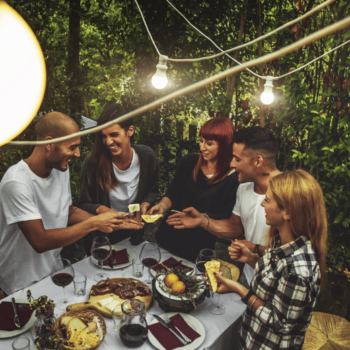
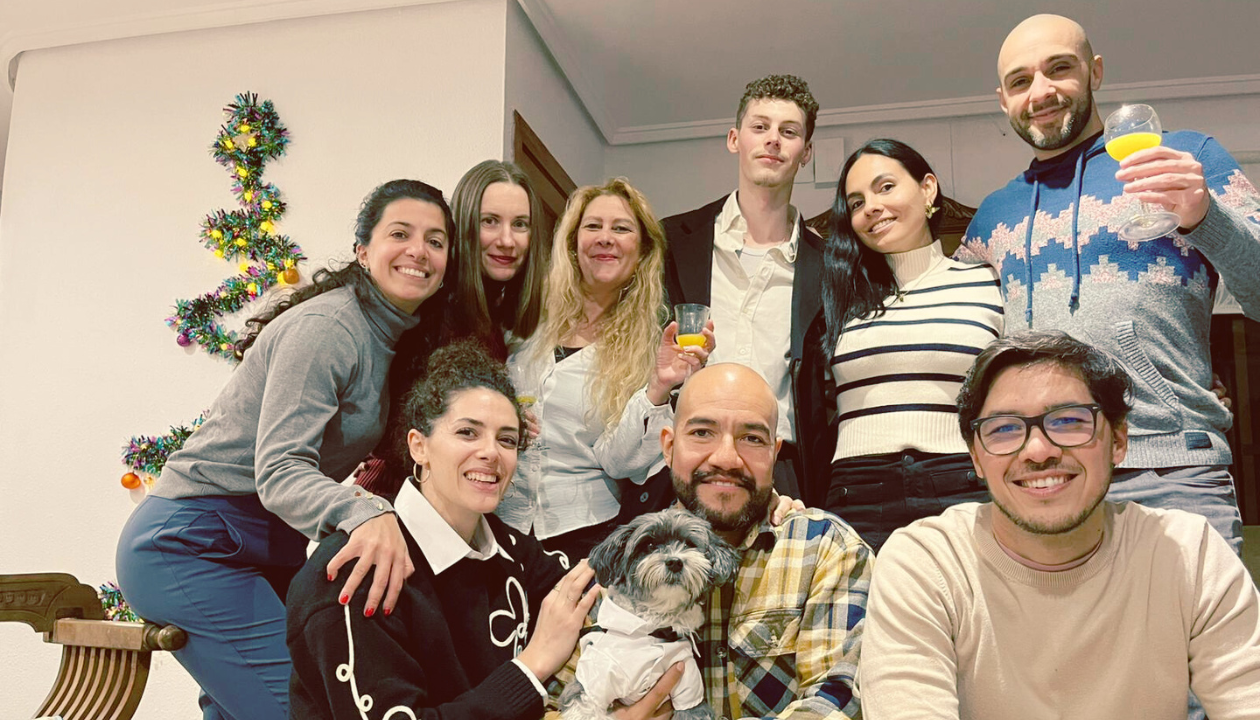
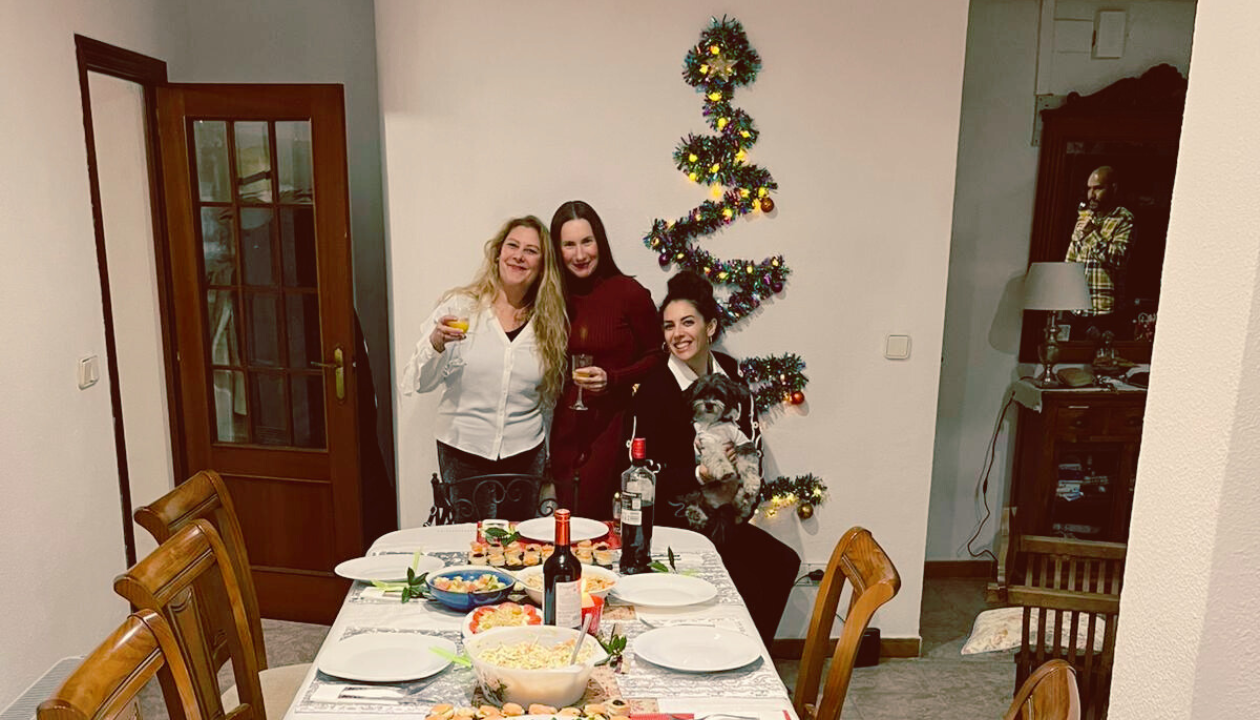
Most people start the night with a festive dinner at home. The table is full of food, and the mood is warm. It feels like the official closing chapter of the year. In Spain, New Year’s Eve celebrations take place on the dates of December 31st into January 1st. It’s also part of the wider holiday season, right after Christmas.
Later, the night shifts. On new year’s eve, people dress up and head out. The streets start filling with party people. You’ll hear music, laughter, and the city’s sounds changing as midnight gets closer. In many areas, the street becomes part of the year’s eve celebrations.
The tradition that defines Spanish New Year Eve: twelve grapes at midnight
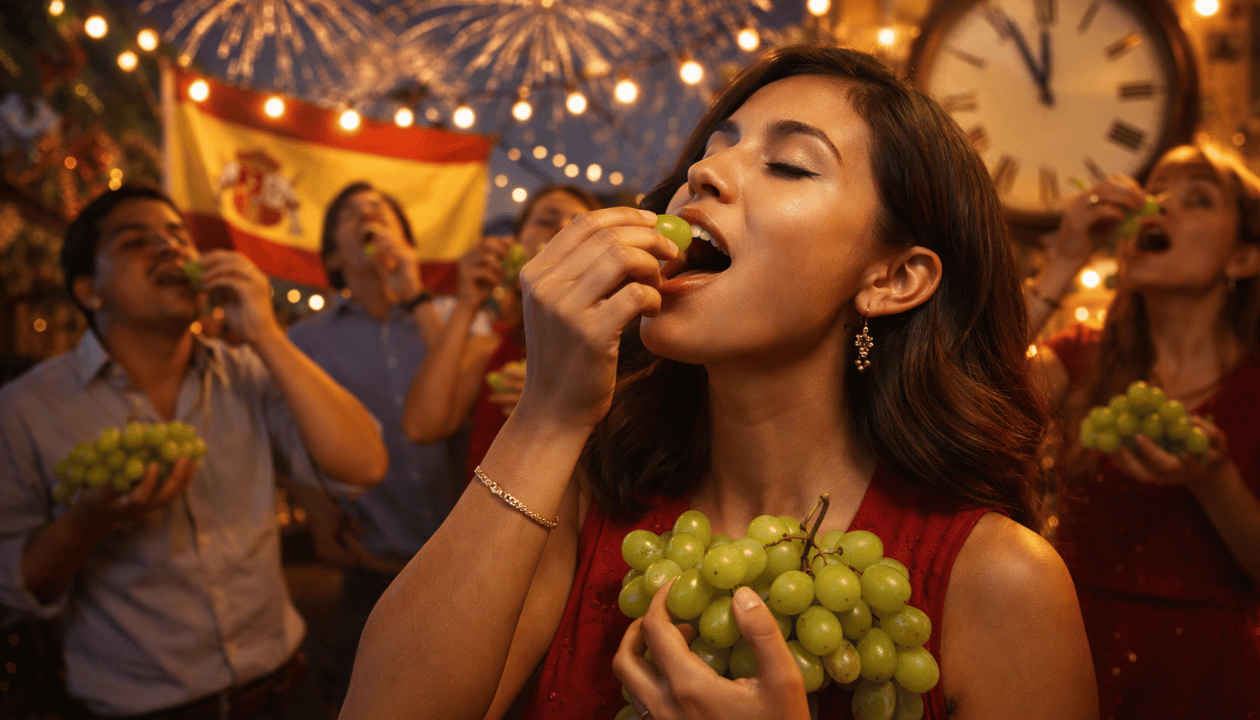
The most famous Spanish tradition on Spanish New Year’s Eve is eating twelve grapes at midnight. This is the core ritual of Spanish New Year’s Eve celebrations and a highlight of year’s eve customs across Spain. The rule is simple but stressful in real life.
When the clock strikes midnight, you eat one grape per chime. You keep going until you finish twelve grapes. Each grape represents one month of the year. Finally, as the bell chimes, the grape-eating ritual begins, marking the climax of the countdown and the start of the celebration. The tradition of eating twelve grapes at midnight on New Year’s Eve in Spain is believed to bring good luck for the year ahead.
It’s widely practised across the country. It happens in homes, restaurants, bars, and in public spaces. The tradition is especially popular in public squares during the countdown to the New Year, where crowds gather to participate together.
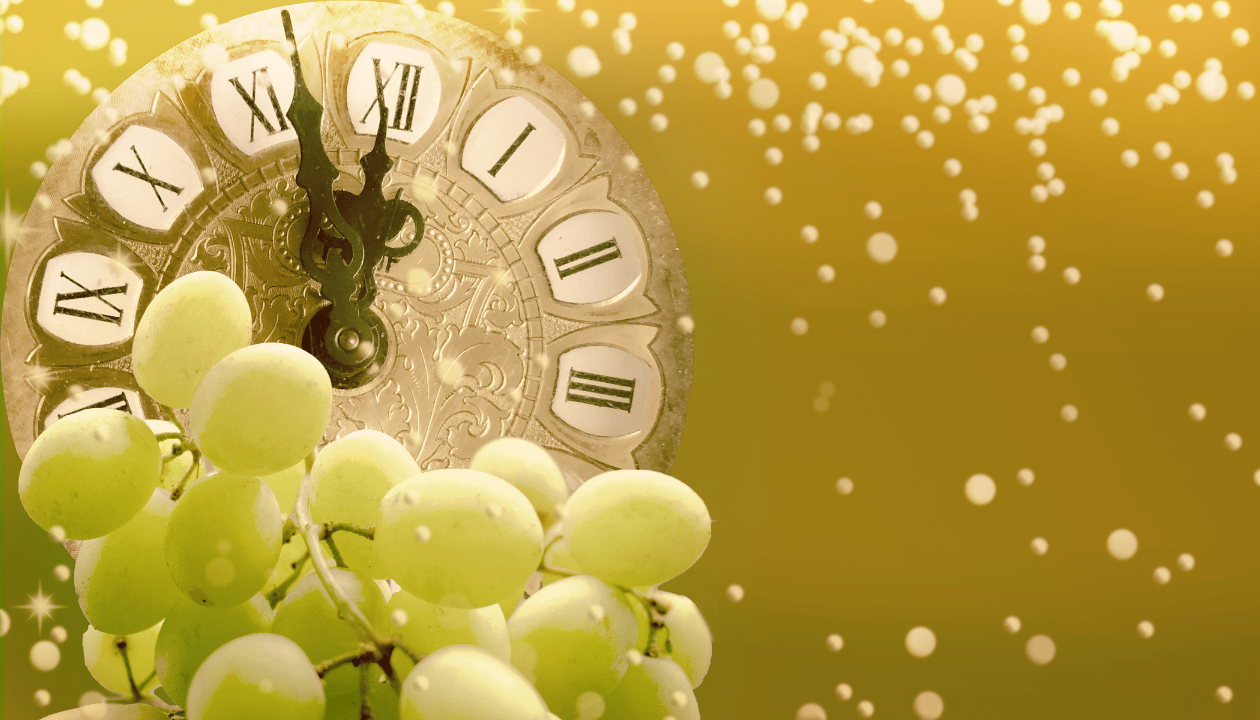
Where did the grapes tradition come from?
A commonly shared origin story points to 1909. Grape producers in Alicante had an overproduction. They promoted the consumption of grapes for New Year celebrations. Over time, this became one of Spain’s most deeply rooted traditions.
Puerta del Sol: Spain’s Times Square moment
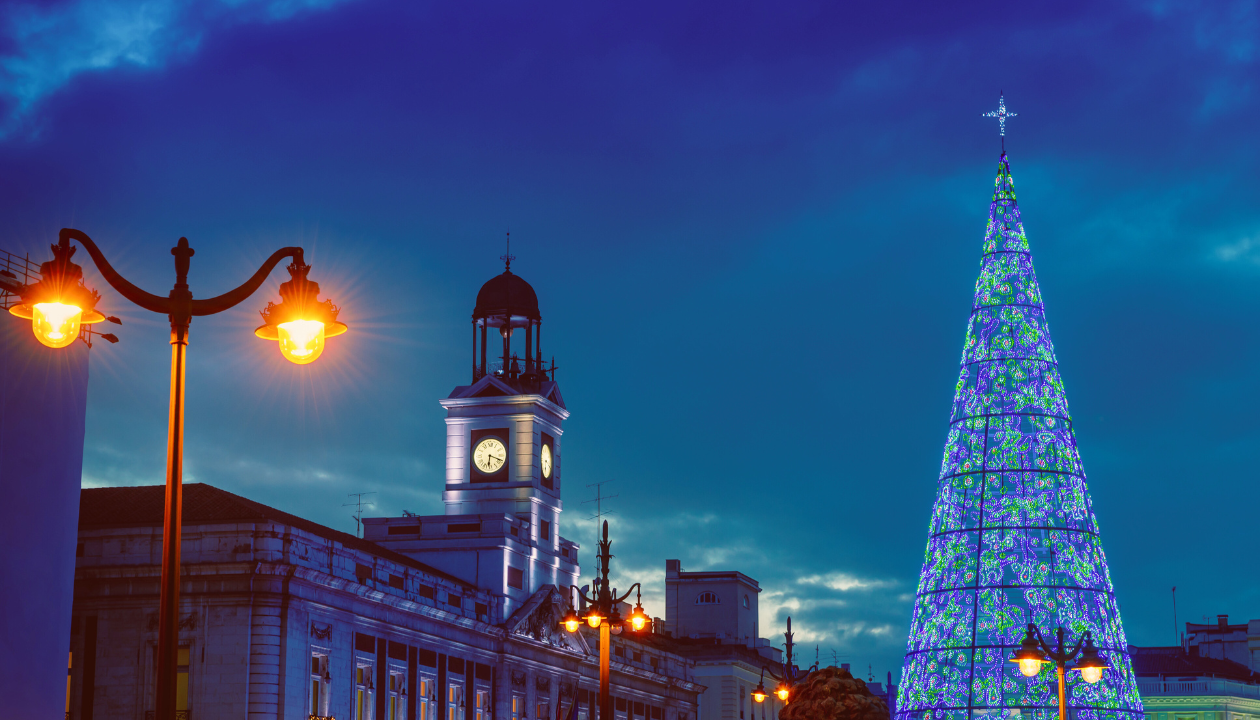
If you want the most iconic year’s eve in Spain experience, head to Puerta del Sol. It’s in Madrid, and it’s the country’s most famous New Year’s Eve location. Many describe it as Spain’s version of Times Square.
Every year, thousands of people gather at Puerta del Sol. Thousands gather here to eat grapes and celebrate the New Year. They come to eat grapes together. They also come to follow the “main” countdown. The clock at Puerta del Sol in Madrid is the most important clock for the New Year’s Eve grape-eating tradition.
Even if you’re not in Madrid, you’ll notice something. Many Spaniards are watching Puerta del Sol on TV. That’s how central it is to the night.
Right after the grapes: hugs, cava, and fireworks
Once people finish the grapes, the mood flips instantly. Spaniards typically hug and congratulate each other. They wish each other the best for the new year. It’s a sweet moment, even in a huge crowd.
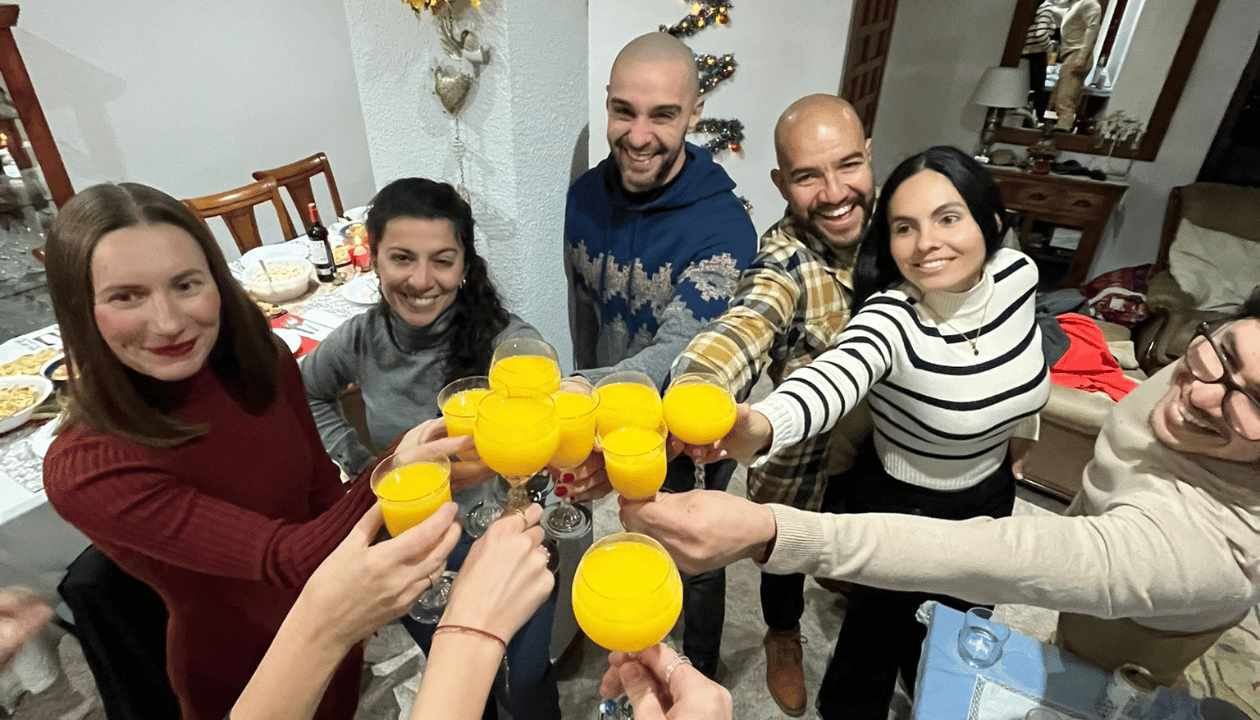
Then the drinks come out. A toast with cava is common. Cava is Spain’s sparkling wine, and people often treat it like champagne. You’ll see plenty of raised glass moments.
There’s also a prosperity ritual that many people love. Some place a gold object in the drink while toasting. It’s meant to symbolise prosperity and money for the year ahead.
After midnight, fireworks displays are common across Spain. Many cities light up the sky. It’s part of what makes the event feel big.
Parties and nightlife: New Year celebrations go on until the early hours
In Spain, New Year’s Eve doesn’t end at midnight. It’s more like it begins. After the grape-eating ritual, people keep celebrating, often until the early hours.
Many bars and clubs organise special New Year’s Eve events. These parties are often ticketed. They can include music, dancing, and sometimes a drink package. Many hotels and restaurants also organise special celebrations. These can include dinner, grapes, dancing, and entertainment.
If you want a specific place, book it. Reservations for tables or tickets should be made in advance because demand is high. This matters even more in big cities.
Outside, the energy stays high. The streets can fill with groups of young people celebrating. Music plays. Cars may honk to greet the new year. It feels loud, communal, and very Spanish.

Other Spanish traditions for luck, love, and “good things”
The grapes are the headline. But Spain has many extra traditions people do for fun. They are connected to luck and attracting good things.
1. Wear red underwear
A classic ritual is to wear red underwear on New Year’s Eve. Many people believe it helps attract love. It’s also linked to luck and good fortune. You’ll hear this tip everywhere in late December. It’s one of those traditions people follow “just in case.”
2. Lentils on January 1
On January 1st, many Spaniards eat lentils. Lentils are symbolic of financial abundance. People connect them with prosperity for the year ahead.
3. Step with the right foot first
Another simple tradition is stepping into the new year with your right foot first. People do it to ensure a positive start. It takes one second, but it’s widely known.
4. Walk with a suitcase
Walking around with a suitcase is also a tradition connected to travel. The idea is to attract future trips. Some people will literally take the suitcase outside and walk down the street. It’s playful, but it’s still part of the folklore.
Where to celebrate: Barcelona, Menorca, Valencia, and more
Spain offers many great places to celebrate. Each one has its own vibe and unique year’s eve celebrations.
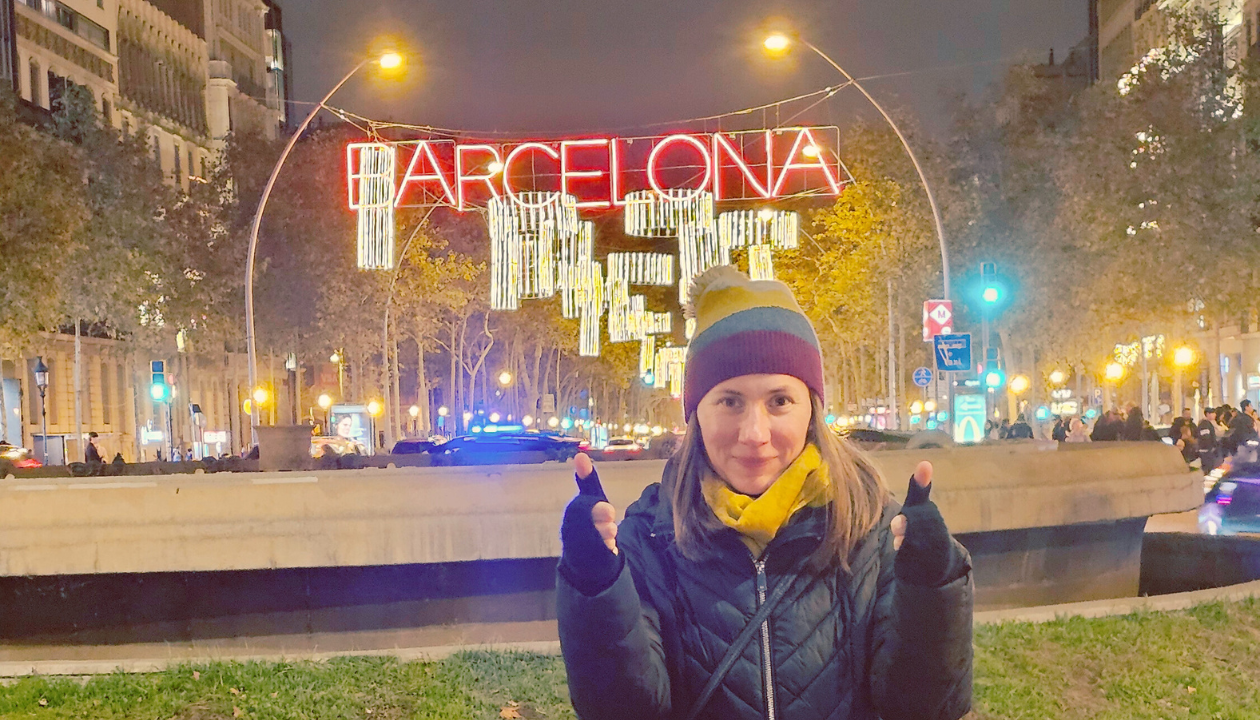
Barcelona throws an unforgettable street party at Plaça Catalunya for New Year’s Eve, lighting up the city with energy and excitement. It’s one of the biggest and most anticipated public celebrations of the year!
Ciutadella de Menorca kicks off the New Year with an unforgettable fireworks display at Plaça des Born. Set against the stunning backdrop of this beautiful island, it’s one of Menorca’s most anticipated celebrations, lighting up the night sky and filling the air with excitement.
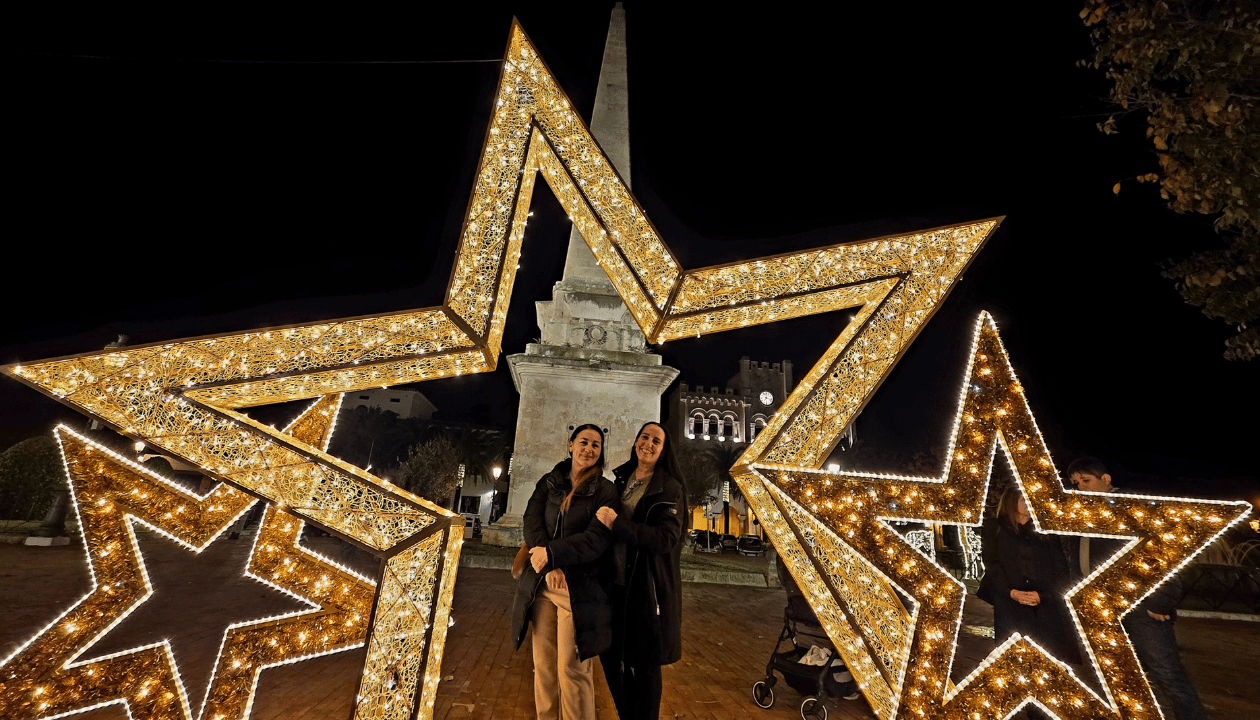
Valencia is known for its lively New Year’s Eve celebrations, with the explosive firework display lighting up the sky over La Albufera. It’s the perfect mix of energy, tradition, and excitement, making it one of the city’s top festivities.
Sevilla and Cádiz, Burgos and Cáceres welcome the New Year with public fireworks displays that illuminate the night sky as midnight approaches. These celebrations offer a festive and inclusive way for residents and visitors to mark the start of the year.
The islands are big too. Mallorca hosts musical events and concerts for New Year’s Eve. Tenerife is known for its parties and fireworks on New Year’s Eve. Ibiza is famous for its nightlife and parties during New Year’s Eve.
Many cities also run major public celebrations. These often include music and fireworks. Barcelona and Valencia are common examples. New Year’s Eve celebrations in Spain often include fireworks displays after midnight.
Practical planning tips for New Year’s Eve in Spain
A few practical notes can save your night.
- Public transport often ends earlier on December 31. It starts later on January 1.
- It’s advisable to order a taxi by phone in advance. Demand is very high after midnight.
- Many hotels and restaurants organise special celebrations. These can include dinner, grapes, dancing, and entertainment.
- Make reservations early. Tickets and good tables sell out.
- Expect crowds in central squares and popular streets.
This kind of planning makes the night smoother. It also helps you enjoy the celebration more.
The classic post-party food: churros and hot chocolate
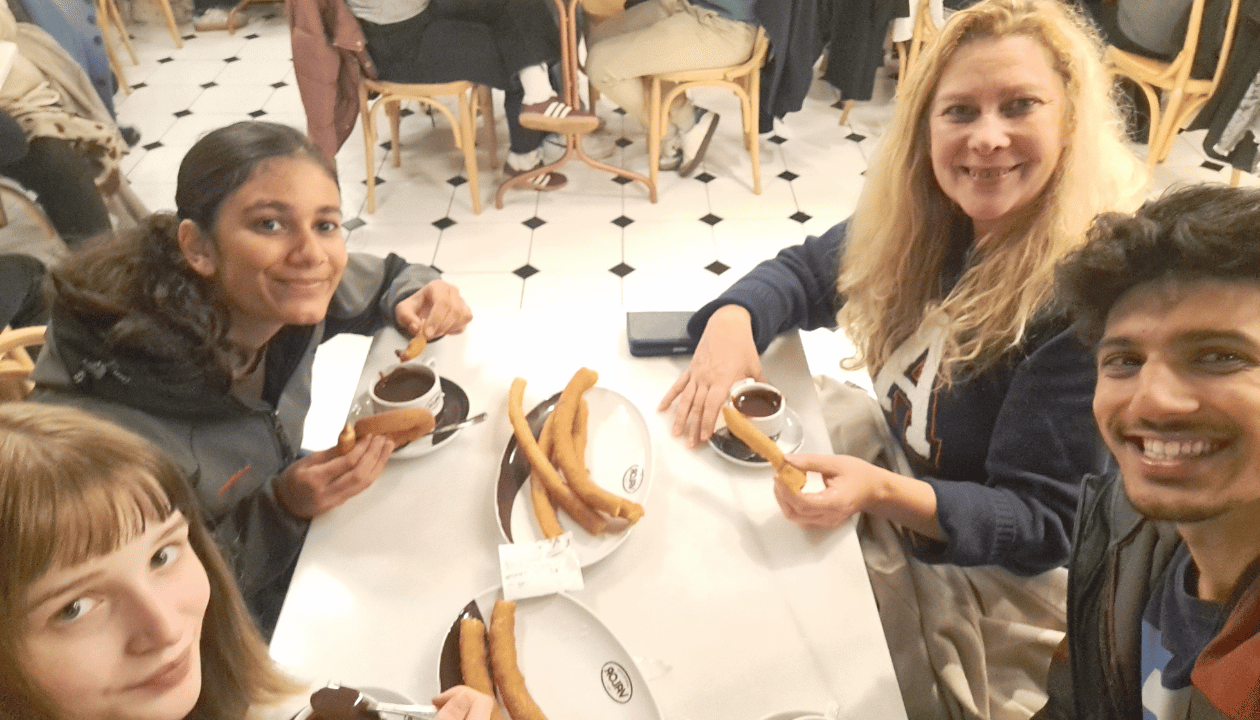
After the parties, many people end the night with churros and hot chocolate. It’s common after New Year’s Eve celebrations. It helps people recharge after hours of celebration and dancing. It’s also delicious, which helps.
Why New Year’s Eve in Spain is a wonderful way to celebrate
New Year’s Eve in Spain feels like a shared national moment. The traditions are simple, but meaningful. The grapes ritual brings everyone onto the same rhythm. The hugs, fireworks, and late-night parties make it unforgettable. New Year’s Eve in Spain is considered one of the most unique celebrations in the world.
If you visit Spain for this holiday, you’ll realize something quickly. It’s not just a party. It’s a full cultural event.

Start your year with Spanish Express
If experiencing traditions like Nochevieja has inspired you to connect more deeply with Spanish culture, the next step is not just visiting—it’s living the language from the inside.
👉 Discover our Spanish Homestay Immersion Programme (SHIP) and experience Spanish as it’s spoken, shared, and celebrated in everyday life.

It’s the most natural way to turn your interest in Spanish culture into real confidence and fluency.
Get in Touch With Our Founder
Planning your Spanish journey for the year ahead, and want personal guidance on immersion options? You can speak directly with our founder
Mónica Romero
Founder and Director, Spanish Express
📞 Phone / WhatsApp: +44 7903 867894
📧 Email: monicaromero@spanishexpress.co.uk