

Some announcements arrive with fireworks. This one arrived as a confirmation email on a quiet Tuesday morning in Ciutadella, Menorca Island, while I was making coffee and thinking about which market I would take my next student to. Even so, I sat down and read it twice. After years of talking with students about why we travel the way we do, the paperwork finally matched the practice.
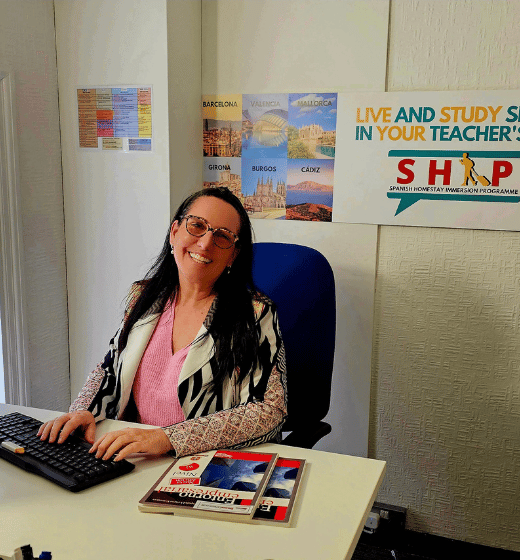
I’m Mónica Romero, founder of Spanish Express and host teacher of our Spanish Homestay Immersion Program (SHIP). Through SHIP, students live with a local teacher, learn Spanish through real daily situations, share meals and conversations, and explore the destination through guided cultural experiences rather than sightseeing lists.

What the GSTC Actually Is
Because the acronym does the rounds without much explanation, let me be clear about it. The Global Sustainable Tourism Council was formed in 2010 as a nonprofit registered in the United States, and it establishes and manages the global standards for sustainable travel and tourism known as the GSTC Criteria. There are two sets: Destination Criteria for policy makers and destination managers, and Industry Criteria for tourism businesses. More importantly for anyone reading a claim like ours, the GSTC does not certify products or services itself; it accredits the certification bodies that do. Its network runs from UN agencies to national tourism boards and large tour operators. Spanish Express is tiny by comparison, and that is rather the point.
What Membership Means, and What It Does Not
Here I want to be careful, because this is where tourism marketing often gets sloppy. Membership and certification are distinct and separate statuses. Membership does not require certification, and it does not confer certification status or guarantee compliance with the GSTC Standards. So no, we have not been audited, and I will not suggest otherwise.
What membership does involve is a pledge. Members commit to publicly supporting the mission of the GSTC, raising awareness of the Criteria as the global standard, and working to apply those Criteria within their own operations and supply chains. It is a starting line rather than a finishing tape, and I would rather you hear that from me.
Small Groups Instead of Mass Tourism
This is where our position gets specific. We work with one to three students at a time. In a few places we accept a closed group of four, and that is the ceiling. It is not a capacity limit that we would happily raise if demand allowed. It is a deliberate refusal.
Mass tourism is the problem that every sustainability framework keeps circling back to, because scale changes everything. Four people walking into a family restaurant are guests. Forty arriving by coach are an event that the neighborhood has to absorb.
In Barcelona, where students work with me on the mainland, that pressure is visible on the street. Meanwhile, a homestay leaks almost nothing out of the local economy. When a student stays in my home, the money goes to the woman who sells me tomatoes and the small producers whose names I actually know.
Responsible Travel Means Sharing, Not Selling
We do not sell tours. I say that plainly because the difference shapes everything else. Behind every square, festival, and dish there is a story about who built it, why it survived, and what it means to the people who keep it going. A tour hands you the facade. We hand you the story, and we tell it as people who grew up inside it.
Then there is the language, which is the part I care about most. Students do not observe Spanish culture from behind glass; they speak to it, in Spanish, with the people who live it. The UNWTO Global Code of Ethics of 2001 and the Cape Town Declaration of 2002 both set out travel that respects culture and engages communities. Speaking someone’s language is the most direct form of that respect I know.
In Valencia, Pilar walks students slowly through the market because the city makes sense at that pace. In Cádiz, Óscar begins with history, since a city that old cannot be read any other way.
Here in Menorca, I take students to coves, festivals, and megalithic monuments. As a GSTC counselor, I treat those principles as a working checklist rather than a poster on the wall.
What This Changes for Students
Honestly, your week with us will look much the same as it did before. You will still walk to the market, stumble over subjunctives, and laugh about it over lunch. What changes sits behind the scenes, in the standards we now measure ourselves against and the community we answer to. I like that the commitment came before any certificate did. It means we chose it rather than earned it for display, and that feels like the right order.
So, Come Learn Spanish Responsibly With Us
If this way of traveling appeals to you, Spanish Homestay Immersion makes it concrete. You stay in a local teacher’s home, practice Spanish in real conversations rather than exercises, eat what we eat, and understand each place through someone who has lived there for years.

There will be three of you at most, sometimes only you. Your stay supports one household directly, your Spanish improves because you use it all day, and you leave connected to a place instead of being photographed in front of it.
You can also explore more cultural immersion stories here:
👉 Read Stories of Our Past Visitors Here
For personalised guidance and programme details, you can contact our founder directly:
Mónica Romero
Founder & Director, Spanish Express
📞 Phone / WhatsApp: +44 7903 867 894
📧 Email: monicaromero@spanishexpress.co.uk
